PMC employees' strike chokes Patna sanitation, 1,200 tonnes daily waste at risk

Synopsis
Patna's streets are filling with uncollected waste as 8,000 PMC employees hold an indefinite strike over regularisation and career-progression demands. With 1,200 tonnes of garbage going uncleared daily during the monsoon, the city's top hospital superintendent has already flagged a rising dengue and malaria threat — and talks with the Urban Development Minister have already failed once.
Key Takeaways
PMC employees launched an indefinite strike on 30 July , involving around 8,000 permanent, daily-wage, and outsourced workers.
Patna's daily waste load of approximately 1,200 tonnes is going uncollected, with garbage piling up across multiple localities.
PMCH Superintendent Dr Rajiv Kumar Singh warned of heightened dengue and malaria risk due to waste accumulation during the monsoon.
Employees' three demands: regularisation of daily-wage workers, abolition of outsourcing, and restoration of ACP/MACP career-progression benefits.
Talks with the Urban Development and Housing Minister on 28 July failed to break the deadlock.
An earlier protest on 23 June over unpaid salaries had been resolved temporarily after contractor Mauryan Carts gave assurances that were reportedly not fully honoured.
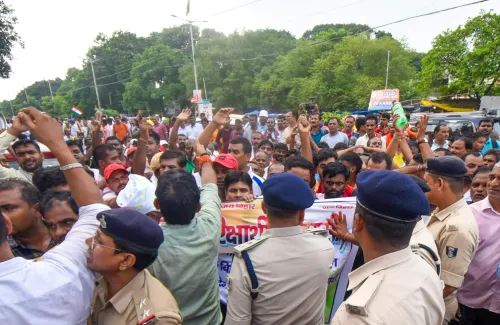
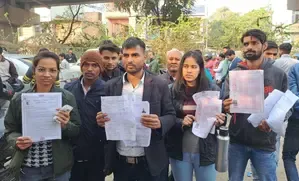
An indefinite strike by Patna Municipal Corporation (PMC) employees has severely disrupted sanitation services across the Bihar capital since 30 July, halting door-to-door garbage collection and routine street cleaning in multiple localities. Around 8,000 permanent, daily-wage, and outsourced municipal workers are participating in the statewide agitation, leaving thousands of tonnes of waste piling up on city roads.
Where Waste Has Accumulated
Garbage mounds were reported at several key locations across Patna on the morning of 31 July, including Kavi Raman Path in Kidwaipuri, the service lane of Atal Path in Indrapuri, Naveen Kishore Sinha Path, Mithapur Main Road, and Rajiv Nagar Main Road. Municipal garbage vehicles were also seen parked idle on Harding Road, a visible sign of the near-total work stoppage.
Under normal operations, Patna generates approximately 1,200 tonnes of waste daily — roughly 60 per cent wet waste and 40 per cent dry waste. With collection suspended, that volume is now accumulating untreated on public streets.
Public Health Warning Issued
PMCH Superintendent Dr Rajiv Kumar Singh cautioned that waste accumulation during the monsoon season creates ideal conditions for mosquito and fly breeding, significantly raising the risk of vector-borne diseases such as dengue and malaria. The warning underscores the urgency of resolving the standoff before public health consequences escalate further.
What the Employees Are Demanding
The Municipal Corporation Employees' Joint Coordination Committee has put forward three core demands: regularisation of daily-wage workers; abolition of the outsourcing system and absorption of outsourced staff into municipal bodies; and restoration of ACP (Assistant City Planner) and MACP (Modified Assured Career Progression) benefits. Workers had been conducting a phased agitation for nearly a month before escalating to the current indefinite strike.
A Month of Failed Negotiations
Protests and sit-ins were held between 30 June and 25 July, followed by talks with the Urban Development and Housing Minister on 28 July — which ended without resolution. A torchlight procession was held on 29 July before the indefinite strike commenced the following day. This latest agitation also follows an earlier protest on 23 June over delayed salary payments, when workers had briefly returned to duty after their contractor, Mauryan Carts, assured them pending salaries would be cleared by 25 June and arrears from a salary hike paid in July — commitments that reportedly went unmet.
What Happens Next
With the monsoon season intensifying the public health stakes, pressure is mounting on the municipal administration to reach a settlement quickly. If the strike continues without intervention, sanitation conditions in Patna are expected to deteriorate sharply in the coming days, particularly in densely populated residential corridors.
Point of View
Most essential labour have the least job security. Ministerial talks collapsed on 28 July, and the city is now paying the price in uncollected monsoon waste. The public health risk flagged by PMCH is real and time-sensitive — dengue and malaria outbreaks do not wait for bureaucratic timelines. Bihar's urban administration needs to move beyond assurances and offer a legally binding resolution, or this strike will become a template for similar agitations in other PMC-equivalent bodies across the state.
NationPress
14 Sept 2026
Frequently Asked Questions
Why are PMC employees on an indefinite strike in Patna?
Around 8,000 Patna Municipal Corporation employees launched an indefinite strike on 30 July over three demands: regularisation of daily-wage workers, abolition of the outsourcing system with absorption of outsourced staff into municipal bodies, and restoration of ACP and MACP career-progression benefits. A phased agitation had been under way for nearly a month before the strike was declared.
How is the PMC strike affecting Patna's sanitation?
Door-to-door garbage collection and street cleaning have been suspended across several areas of Patna. The city normally processes around 1,200 tonnes of waste daily, and that volume is now accumulating on roads and thoroughfares, with garbage reported at Kavi Raman Path, Atal Path, Mithapur Main Road, and Rajiv Nagar Main Road, among others.
What are the public health risks from the strike?
PMCH Superintendent Dr Rajiv Kumar Singh has warned that waste piling up during the monsoon season accelerates mosquito and fly breeding, raising the risk of dengue and malaria. The combination of uncollected wet waste and monsoon rains creates conditions for rapid vector proliferation.
Have there been any talks to resolve the PMC strike?
Negotiations with the Urban Development and Housing Minister were held on 28 July but failed to produce a settlement. Prior to that, protests and sit-ins ran from 30 June to 25 July, followed by a torchlight procession on 29 July before the indefinite strike began.
Is this the first time PMC workers have protested recently?
No. Sanitation workers held an earlier protest on 23 June over delayed salary payments. They returned to work after contractor Mauryan Carts assured them that pending salaries would be cleared by 25 June and arrears from a salary hike paid in July — assurances that reportedly were not fully honoured, contributing to the current escalation.