Rahul Gandhi bets on student protests and alliances to revive Congress
Synopsis
Rahul Gandhi is running two bets simultaneously — a street-level campaign on alleged police brutality against students and a coalition-building drive with formal coordination committees. Both are aimed at reversing Congress's electoral slide ahead of Uttar Pradesh polls. The Bihar debacle, where a similar dual strategy collapsed on execution, looms large over every calculation.
Key Takeaways
Rahul Gandhi escalated his campaign against alleged police excesses on students, moving protests from Parliament to a police station on Friday .
The BJP has denied police brutality and cited a Supreme Court-appointed five-member panel probing the matter.
Congress suffered a significant defeat in the Bihar Assembly election despite aggressively pushing the SIR electoral rolls issue.
Gandhi reportedly failed to secure a larger seat share for Congress from RJD leader Tejashwi Yadav in Bihar; formal coordination committees have since been set up.
The Congress-SP alliance in Uttar Pradesh is banking on BJP incumbency, caste dynamics, and the student issue ahead of upcoming state elections.
Congress is also raising alleged misappropriation of Ram Janmabhoomi Trust funds as an additional political issue in Uttar Pradesh.
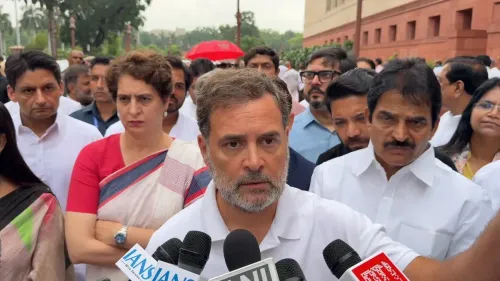
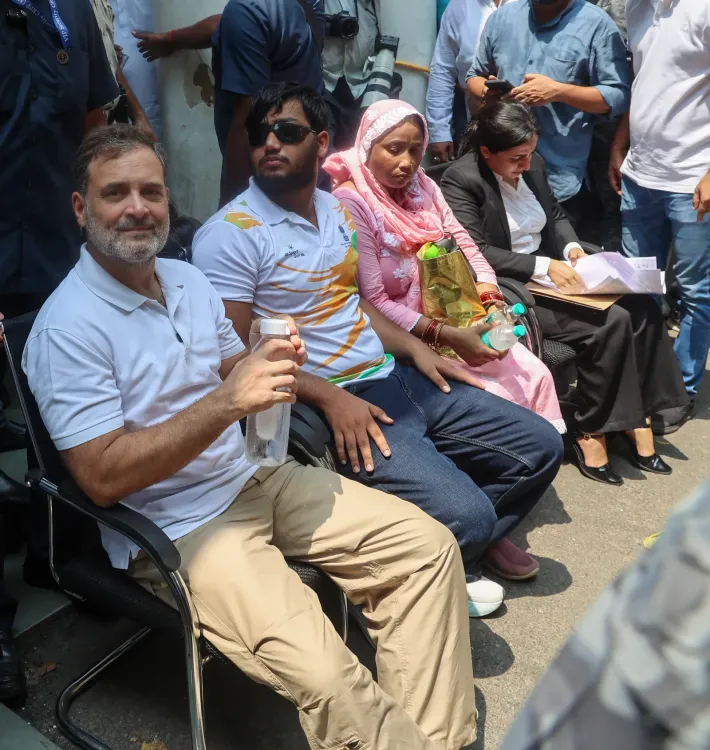
Congress leader and Leader of Opposition in Lok Sabha Rahul Gandhi is doubling down on two parallel strategies — championing the cause of protesting students and forging structured poll alliances — in a bid to breathe life into a party that has suffered successive electoral setbacks. On Friday, Gandhi escalated his campaign against alleged police excesses on students, moving his protest from Parliament to a police station, signalling his intent to keep the issue alive ahead of upcoming state elections.
The Student Protest as Political Weapon
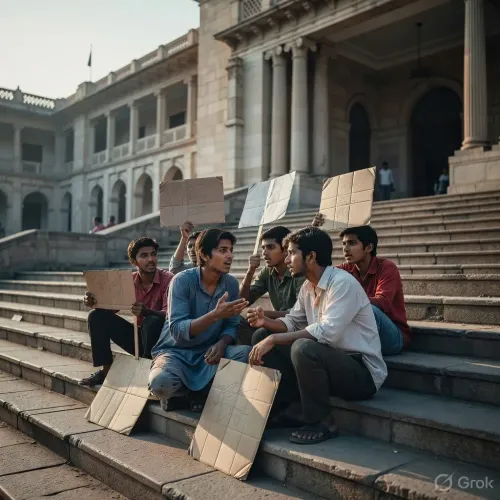
Rahul Gandhi has positioned himself as the face of Congress's response to what the party describes as police brutality against protesting students. The Bharatiya Janata Party (BJP), however, has denied any police misconduct and pointed to a five-member panel constituted by the Supreme Court to independently probe the allegations. Despite that, Gandhi has chosen to press ahead, framing the issue as one of democratic rights and government insensitivity.
With Uttar Pradesh and other states gearing up for elections, Gandhi is reportedly seeking to carry the students' issue from Jantar Mantar to Lucknow, targeting younger voters who critics argue feel alienated from the political mainstream. The strategy is a calculated gamble — seeking to channel grassroots anger into electoral momentum for a party struggling to convert its historical legacy into votes.
Bihar: A Cautionary Tale
Gandhi's current approach bears the imprint of lessons — and missteps — from the Bihar Assembly election held last year. There, he aggressively pushed the Election Commission's Special Intensive Revision (SIR) of electoral rolls as a political flashpoint, even as allies within the Mahagathbandhan remained lukewarm. The opposition alliance, buoyed by a close finish in the previous state poll, entered the contest with confidence — only to suffer a decisive defeat, with the National Democratic Alliance (NDA) returning to power by a wider margin than before.
The Bihar outcome also exposed fault lines within the alliance. Congress reportedly failed to persuade Rashtriya Janata Dal (RJD) leader Tejashwi Yadav to accommodate a larger seat share, leading to last-minute friction. To prevent a repeat, the Congress has since established official coordination committees aimed at managing coalition dynamics more systematically.
Uttar Pradesh: High Stakes, Familiar Challenges
Uttar Pradesh, with its massive electorate and outsized influence on national politics, has historically been a graveyard of Congress ambitions. Once the dominant force in the state, the party has been reduced to a marginal player, eclipsed by regional parties and the BJP's formidable organisational machinery.
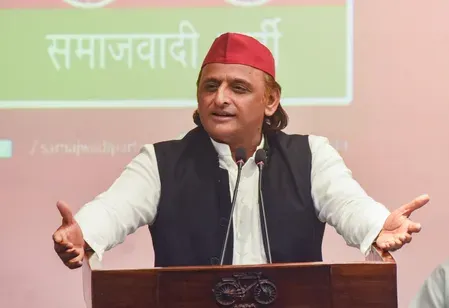
The 2024 Lok Sabha results in Uttar Pradesh offered a rare bright spot for Congress, which contested in alliance with the Samajwadi Party (SP). However, the much-hyped 'UP ke ladke' combine of Rahul Gandhi and SP chief Akhilesh Yadav had failed to deliver in earlier Assembly elections. The prospective alliance now banks on what the duo perceives as an incumbency disadvantage for the BJP — a party that has won the state twice consecutively, a feat without precedent in Uttar Pradesh's electoral history.
Beyond the student issue, Congress is also raising the alleged misappropriation of Ram Janmabhoomi Trust funds as a political rallying point, attempting to carve out a distinct identity in a state where caste and religious dynamics remain decisive.
The Broader Congress Crisis
Each successive defeat has deepened the perception of an organisation in structural decline, making the upcoming polls as much about breaking a psychological losing streak as about winning seats. Alliances, once a tactical choice, have become an existential necessity for the Congress — a recognition that the party can no longer contest major states on its own strength.
Rahul Gandhi's twin-track approach — issue-based mobilisation combined with structured coalition-building — represents an attempt to rewrite that narrative. Whether it succeeds will depend on whether the issues he picks resonate beyond the party faithful, and whether alliance partners remain cohesive under electoral pressure. The next round of state polls will serve as a critical litmus test.
Point of View
Amplify it in the streets, and hope it cements an alliance that delivers votes. The Bihar template, however, showed that emotive issues without allied buy-in collapse at the ballot. The student protest campaign carries real resonance, but its electoral translation depends on whether SP and other partners see it as a shared cause or a Congress-only narrative. More fundamentally, Congress's problem in Uttar Pradesh is not messaging — it is organisation. No coordination committee fixes a cadre deficit, and no street protest substitutes for booth-level presence.
NationPress
21 Aug 2026
Frequently Asked Questions
Why is Rahul Gandhi championing the student protest issue?
Rahul Gandhi is using the alleged police excesses on protesting students to frame Congress as a defender of democratic rights, particularly targeting younger voters ahead of Uttar Pradesh and other state elections. The campaign is part of a broader effort to generate political momentum for a party that has suffered successive electoral defeats.
What is the BJP's response to the student protest allegations?
BJP leaders have denied any police brutality and have pointed to a five-member panel set up by the Supreme Court to independently probe the allegations against the police. The party disputes the Congress narrative on the issue.
How did Congress perform in the Bihar Assembly election and what went wrong?
Congress and its Mahagathbandhan allies suffered a decisive defeat in the Bihar Assembly election, with the NDA returning to power by a wider margin than in the previous poll. Congress reportedly could not convince RJD leader Tejashwi Yadav to allocate it a larger seat share, leading to internal friction within the alliance.
What is the Congress-SP alliance strategy for Uttar Pradesh?
The Congress-Samajwadi Party alliance in Uttar Pradesh is banking on BJP incumbency — the ruling party has won the state twice consecutively, a first in its history — combined with caste dynamics and the student protest issue. Congress is also raising the alleged misappropriation of Ram Janmabhoomi Trust funds as a political issue.
What structural changes has Congress made to manage its alliances better?
Following the Bihar experience, Congress has established official coordination committees to manage coalition dynamics more systematically and prevent the last-minute seat-sharing disputes that hampered the Mahagathbandhan ahead of that election.