Pradhan Champions Preventive Healthcare Under Modi's Health Vision
Synopsis
Union Education Minister Dharmendra Pradhan on June 14, 2026, called for a national pivot from curative to preventive healthcare under PM Modi's leadership, linking the Samagra Swasthya vision to India's Viksit Bharat 2047 development goal and citing Ayushman Bharat's decade-long policy lineage.
Key Takeaways
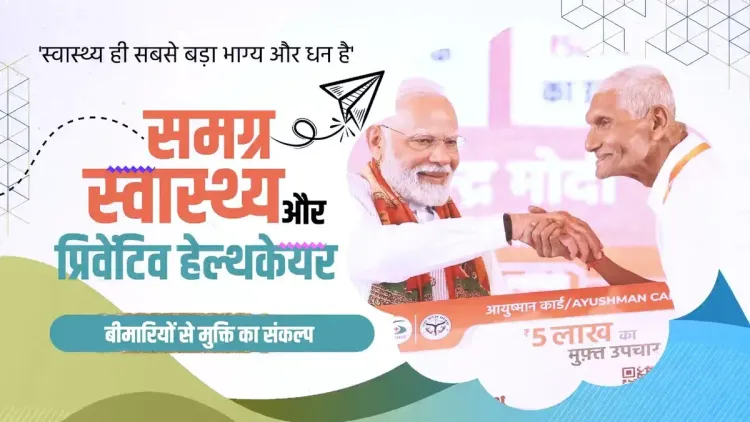
Dharmendra Pradhan on June 14, 2026 amplified the government's preventive-health agenda, calling for a shift 'from treatment to prevention, from illness to wellness.' The post invokes Samagra Swasthya (holistic health) as the framework, emphasising preventive care, early diagnosis and inclusive access.
The National Health Policy 2017 and Ayushman Bharat programme — including Health and Wellness Centres and PM-JAY insurance — form the policy backbone of this vision.
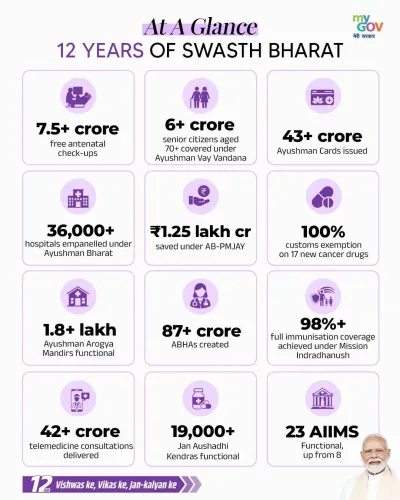
The hashtag #12YearsOfSwasthBharat marks what the ruling party frames as over a decade of health reform since 2014 .
Health outcomes are explicitly linked to the Viksit Bharat 2047 goal of making India a developed nation by the centenary of Independence.
State health departments and primary care providers remain central to translating the Centre's preventive-health vision into ground-level impact.
Union Education Minister Dharmendra Pradhan on Sunday, June 14, 2026, invoked the government's overarching health philosophy, calling for a national shift 'from treatment to prevention, from illness to wellness' — framing good health as the foundation of India's Viksit Bharat 2047 ambition.
Context
Pradhan's post centres on the concept of Samagra Swasthya (holistic health), positioning preventive care, early diagnosis and inclusive access as the three pillars of the government's health strategy. While Pradhan holds the Education portfolio, senior BJP leaders routinely amplify cross-ministerial policy priorities, reflecting the party's integrated communication approach ahead of the 2047 development milestone.
The post also carries the hashtag #12YearsOfSwasthBharat, signalling a commemoration of what the ruling dispensation frames as a decade-plus journey in public health reform under Prime Minister Narendra Modi, who took office in May 2014.
Policy Backdrop
The ideological shift toward preventive and primary care has deep roots in recent central policy. The National Health Policy 2017 formally reoriented India's public health focus from curative to preventive services, emphasising wellness at the community level. This was followed by the rollout of Health and Wellness Centres from 2018 onward under the Ayushman Bharat programme, designed to deliver comprehensive primary care closer to underserved populations.
The flagship Ayushman Bharat Pradhan Mantri Jan Arogya Yojana (PM-JAY), also launched in 2018, extended hospitalisation insurance cover to low-income households, complementing the wellness-centre network. Together, these two arms of Ayushman Bharat represent the government's dual approach: catch illness early through primary care, and protect families financially when hospitalisation becomes necessary.
Pradhan's emphasis on making healthcare 'accessible and inclusive' echoes language used consistently across health, education and skilling policies, all of which are being positioned as enablers of the Viksit Bharat 2047 vision — India's official blueprint to attain developed-nation status by the centenary of Independence.
Stakeholders and Impact
The beneficiaries of the preventive-health push span the general public, particularly rural and semi-urban populations who have historically relied on under-resourced primary health centres. State health departments bear the primary implementation responsibility, as health remains a concurrent subject under the Indian Constitution, making Centre-state coordination critical to outcomes.
Primary care providers — including community health officers posted at Health and Wellness Centres — stand at the operational front of this vision. Expanding their diagnostic and screening capacity is seen as key to translating the 'early diagnosis' goal from rhetoric to measurable health outcomes. Cross-sectoral convergence with nutrition, sanitation and digital health-record initiatives further widens the circle of stakeholders.
What's Next
Analysts and health-sector observers will watch for concrete follow-through in the next Union Budget, where any increase in allocations to primary health infrastructure or new legislative proposals on universal coverage would signal whether the government's wellness-first rhetoric translates into fiscal commitment. State-level adoption of expanded wellness and screening programmes will also serve as a key indicator of how effectively the Centre's preventive-health vision percolates to the last mile.
With the Viksit Bharat 2047 deadline lending urgency to every social-sector metric, health outcomes — life expectancy, infant mortality, non-communicable disease burden — are likely to feature prominently in the government's progress narrative in the years ahead.
Point of View
Suggesting a deliberate effort to build a unified ideological arc around Viksit Bharat. The invocation of '#12YearsOfSwasthBharat' is as much electoral as it is administrative, anchoring the party's health record to the Modi era. The real test, however, lies in budget allocations and state-level implementation data, which will determine whether the preventive-health pivot is policy substance or political messaging.
NationPress
13 Sept 2026
Frequently Asked Questions
What is Samagra Swasthya or SamagraHealth that Dharmendra Pradhan mentioned?
Samagra Swasthya refers to the concept of holistic or comprehensive health, emphasising preventive care, early diagnosis and universal access rather than a purely curative approach to medicine. The government has used this framing to describe its integrated health strategy under PM Modi.
What is Ayushman Bharat and how does it relate to preventive healthcare?
Ayushman Bharat, launched in 2018, has two main arms: Health and Wellness Centres that provide comprehensive primary and preventive care at the community level, and PM-JAY, which offers hospitalisation insurance to low-income families. Together they represent India's most significant recent push toward both preventive and financial-protection aspects of universal health coverage.
What is Viksit Bharat 2047 and why is health central to it?
Viksit Bharat 2047 is the Indian government's official vision to make India a developed nation by 2047, the centenary of Independence. Health is positioned as a core enabler because a productive, disease-free population is seen as essential to achieving the economic and social targets the vision sets out.
Why is the Education Minister posting about healthcare?
Senior BJP leaders routinely amplify cross-ministerial policy priorities as part of the party's coordinated communication strategy. Dharmendra Pradhan, as a senior cabinet minister and party figure, frequently posts on themes beyond his Education portfolio to reinforce the government's broader governance narrative.
What does #12YearsOfSwasthBharat mean?
The hashtag marks what the ruling party frames as over twelve years of health reform since the Modi government took office in May 2014, encompassing policies such as the National Health Policy 2017, the Ayushman Bharat programme and the expansion of Health and Wellness Centres across India.