Pradhan Backs India's Climate Justice Stand at Global Stage

Synopsis
Senior BJP minister Dharmendra Pradhan has publicly endorsed Piyush Goyal's articulation of India's climate position, insisting development aspirations and energy security of 1.4 billion Indians will not be traded away and that accountability must reflect historical emissions.
Key Takeaways
Dharmendra Pradhan on 23 October 2026 backed Piyush Goyal's statement on India's climate justice position at an international forum.
India insists climate responsibility must account for historical emissions by developed nations, not impose equal burdens on developing ones.
India's Panchamrit pledges at COP26 (2021) include net-zero by 2070 and 500 GW non-fossil fuel capacity by 2030 .
Under its Paris Agreement NDCs , India committed to emission intensity reductions — not absolute cuts — preserving development space.
India's position serves as a reference point for developing nations across Africa and Southeast Asia facing the same climate-versus-growth tension.
India's updated NDC and stance at upcoming UNFCCC conferences will be the next test of how far these red lines hold.
India will not barter its development future for climate optics — and Union Education Minister Dharmendra Pradhan made that unmistakably clear on Friday, 23 October 2026, throwing his weight behind Union Minister Piyush Goyal's articulation of India's national position at an international forum.
Goyal's statement and what Pradhan is signalling
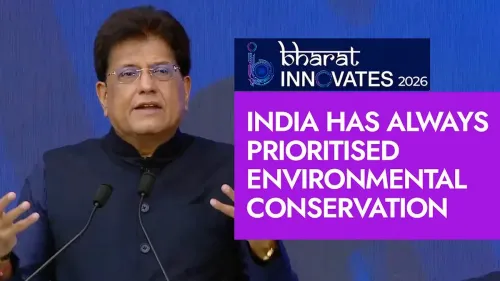
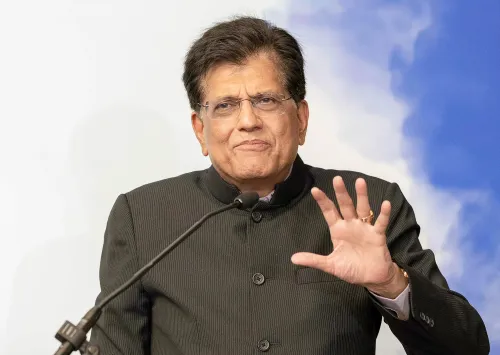
Pradhan's post is direct: 'Shri Piyush Goyal ji has rightly put the facts and India's national priorities to the world.' The endorsement from a senior cabinet colleague amplifies the message — this is not one minister's view, it is a coordinated government position. At its core: the development aspirations, energy security, and future of 1.4 billion Indians are non-negotiable at any climate negotiating table.
The framing Pradhan deploys — 'historical emissions, present realities and the development needs of every nation' — is the precise language of climate justice, a principle India has championed since the 1992 Rio Earth Summit. It demands that responsibility be proportional to who caused the crisis, not just who is living in it.
India's 'common but differentiated' doctrine — and its limits
India's climate diplomacy rests on the doctrine of Common But Differentiated Responsibilities (CBDR): wealthy industrialised nations built their prosperity on two centuries of unchecked carbon emissions; developing nations should not bear an equal burden correcting that imbalance. Under the Paris Agreement's 2015 Nationally Determined Contributions (NDCs), India committed to reducing emission intensity of GDP — not absolute cuts — and scaling renewable energy capacity, a distinction that preserves space for growth.
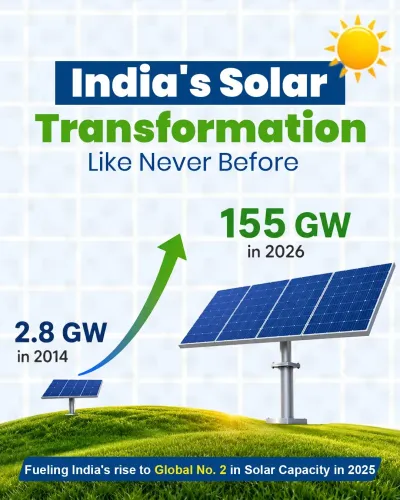
At COP26 in Glasgow in 2021, Prime Minister Modi's Panchamrit pledges raised the ambition: net-zero by 2070, 500 GW of non-fossil fuel capacity, and 50 percent of energy from renewables by 2030. Bold numbers — but with a net-zero deadline two decades beyond most Western targets, precisely because India insists its development arc must be respected.
The tension is real. India remains one of the world's largest coal consumers, a fact Western negotiators regularly press. New Delhi's answer is consistent: finance and technology transfers promised by developed nations have not materialised at scale, and penalising growth before those commitments are honoured is neither fair nor functional.
Why this moment matters for the Global South
India does not speak only for itself at these forums. Its position is a template for dozens of developing nations — from Africa to Southeast Asia — who face the same bind: greatest vulnerability to climate impact, least historical responsibility for it, and the most to lose from blunt emissions mandates that freeze economic mobility. When Pradhan says 'every nation,' that is the audience he is writing for as much as any domestic voter.
With India's next updated NDC and positioning at upcoming UNFCCC conferences on the horizon, statements like today's are calibration signals — telling negotiating partners in advance where the red lines sit. Development aspirations are not concessions India will make. That is the message, and it just got one more senior voice behind it.
Point of View
Rather than a purely environmental one, has grown more assertive since COP26, and this statement sharpens that posture further. The invocation of '1.4 billion people' is a well-tested rhetorical anchor that makes any demand for faster action a moral argument the government can publicly resist. The real watch-point is whether this public firmness translates into a concrete updated NDC that shifts the dial on absolute emissions — or remains a holding position.
NationPress
23 Oct 2026
Frequently Asked Questions
What is India's position on climate justice?
India's position holds that climate responsibility must be proportional to historical emissions — meaning wealthy industrialised nations, which caused most cumulative carbon buildup, must take on greater burdens and provide finance and technology transfers before demanding equal cuts from developing countries.
What did Piyush Goyal say about India's climate stance?
The specific forum or event for Goyal's statement on India's climate priorities in October 2026 has not been independently verified, but Pradhan's post confirms Goyal articulated India's national position — centred on development aspirations, energy security, and historical emission accountability — to an international audience.
What are India's Panchamrit climate commitments?
India's Panchamrit pledges, announced at COP26 in Glasgow in 2021, include achieving net-zero emissions by 2070, reaching 500 GW of non-fossil fuel energy capacity, sourcing 50 percent of energy from renewables by 2030, and reducing emission intensity of GDP.
Why does India oppose equal climate obligations for all countries?
India argues under the 'Common But Differentiated Responsibilities' principle that developed nations built wealth through two centuries of unchecked emissions, so developing nations like India — still lifting hundreds of millions out of poverty — should not face identical cuts that would stifle growth and energy access.
What is India's net-zero target year?
India has committed to achieving net-zero carbon emissions by 2070, a target announced at COP26 in Glasgow, which is later than the 2050 goals set by many developed nations, reflecting India's insistence on space for economic development.