Piyush Goyal: India's resolve beat 21st century energy crisis
Synopsis
Union Commerce Minister Piyush Goyal declared on 4 July 2026 that India's resolve and efforts have prevailed over the 21st century's biggest energy crisis, citing the country's dual-track strategy of securing fossil fuel supplies and aggressively scaling domestic renewable energy capacity.
Key Takeaways
Commerce Minister Piyush Goyal posted on 4 July 2026 that India's will and efforts have overcome the biggest energy crisis of the 21st century.
India is the world's third-largest energy consumer and has historically been heavily import-dependent on crude oil and natural gas.
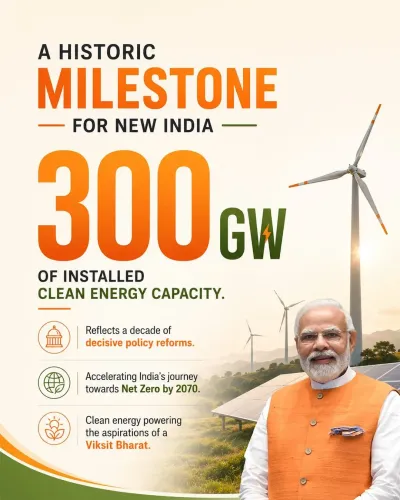
At COP26 in 2021 , India committed to 500 GW of non-fossil fuel capacity by 2030 and net-zero emissions by 2070 .
The PLI scheme for solar PV manufacturing , notified in 2021, aims to reduce India's dependence on imported solar components.
The Atmanirbhar Bharat programme (2020) included measures to boost domestic energy production and refining capacity.
Upcoming Union Budget allocations for energy PLI and green hydrogen will be the next key indicator of policy commitment.
Union Commerce and Industry Minister Piyush Goyal on Saturday, 4 July 2026 declared that India's political will and sustained efforts have prevailed over what he described as the biggest energy crisis of the 21st century. The post, shared on X, reflects the government's confidence in the country's energy security trajectory.
Context
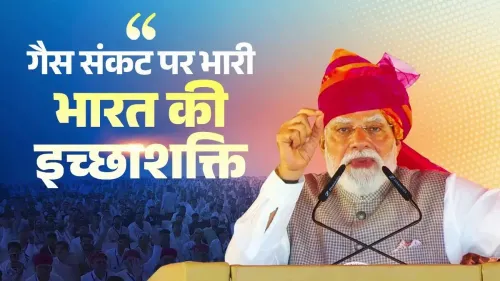
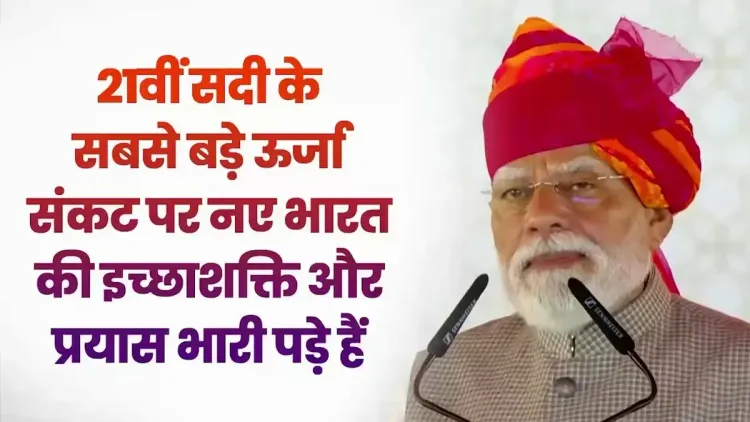
Goyal's post, in Hindi, states: '21वीं सदी के सबसे बड़े ऊर्जा संकट पर नए भारत की इच्छाशक्ति और प्रयास भारी पड़े हैं' — translated: 'The resolve and efforts of new India have prevailed over the biggest energy crisis of the 21st century.' The statement frames India's energy journey as a national achievement, invoking the 'new India' idiom closely associated with the ruling dispensation's development narrative.
Global energy markets experienced severe turbulence in the early 2020s, driven by supply-chain disruptions, geopolitical conflict, and the post-pandemic demand surge. As the world's third-largest energy consumer, India — heavily import-dependent on crude oil and natural gas — faced acute pressure on its trade balance and industrial competitiveness during this period.
Policy Backdrop
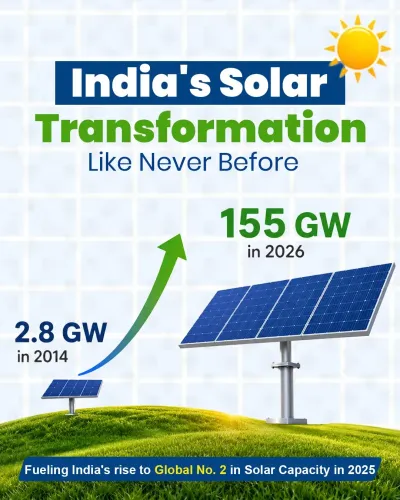
India's response to energy vulnerability has followed a dual track: securing near-term fossil fuel supplies while aggressively scaling domestic renewables. At the COP26 summit in Glasgow in 2021, India committed to achieving 500 GW of non-fossil fuel electricity capacity by 2030 and reaching net-zero emissions by 2070.
On the manufacturing side, the Production Linked Incentive (PLI) scheme for solar photovoltaic modules, notified in 2021, was designed to reduce dependence on imported solar components and build a domestic supply chain. The broader Atmanirbhar Bharat programme, launched in 2020, included specific measures to boost domestic energy production and refining capacity — directly addressing the import vulnerability that makes energy crises especially costly for India.
The International Solar Alliance, an India-initiated global platform launched in 2015, has also been a vehicle for positioning India as a leader in the global clean-energy transition, lending diplomatic weight to its domestic policy choices.
Stakeholders and Impact
The constituencies most affected by India's energy security push include energy-intensive industries — steel, cement, chemicals, and textiles — which faced input-cost shocks during the crisis years. Renewable energy developers have been direct beneficiaries of accelerated capacity targets and PLI incentives, while oil and gas importers have had to navigate volatile global pricing.
For ordinary consumers, energy price stability has direct implications for household electricity tariffs and fuel costs. The Commerce Ministry, which Goyal heads, has consistently linked energy security to the country's trade deficit, since a large share of India's import bill is accounted for by crude oil and petroleum products.
What's Next
The government's energy ambitions will face their next major test in the forthcoming Union Budget, where allocations for energy-sector PLI schemes and strategic petroleum reserves will signal the fiscal commitment behind the political rhetoric. Parliamentary discussions on green hydrogen targets — an emerging priority — are also expected to sharpen in the months ahead.
Goyal's statement, coming from the Leader of the House in the Rajya Sabha, carries legislative as well as executive weight, and is likely to frame the government's messaging on energy policy ahead of the budget session. India's ability to sustain its renewables build-out while managing fossil fuel import costs will remain the definitive test of whether the crisis has truly been overcome.
Point of View
Framing India's energy resilience as a vindication of the 'new India' governance model ahead of what is expected to be a budget season dominated by energy and industrial policy. The statement connects the Commerce Ministry's trade-balance mandate directly to energy security — a linkage that has become central to the BJP government's economic messaging since the global price shocks of the early 2020s. By invoking 'resolve' and 'effort,' the minister is also laying groundwork to defend the PLI and Atmanirbhar Bharat programmes as having delivered tangible results. Whether the claim holds up will depend on hard data — renewable capacity additions, import-bill trends, and strategic reserve levels — that Parliament is likely to scrutinise closely.
NationPress
3 Oct 2026
Frequently Asked Questions
What did Piyush Goyal say about India's energy crisis?
Piyush Goyal posted on 4 July 2026 that India's resolve and efforts have prevailed over the biggest energy crisis of the 21st century, framing it as a national achievement of 'new India.'
What is India's renewable energy target by 2030?
India committed at the COP26 summit in Glasgow in 2021 to achieving 500 GW of non-fossil fuel electricity capacity by 2030 and reaching net-zero emissions by 2070.
How is India reducing its energy import dependence?
India has used the Production Linked Incentive scheme for solar PV manufacturing, the Atmanirbhar Bharat programme, and the International Solar Alliance to build domestic energy production capacity and reduce import vulnerability.
What is the PLI scheme for solar manufacturing in India?
The PLI scheme for solar photovoltaic modules, notified in 2021, provides financial incentives to domestic manufacturers to produce solar panels in India, reducing dependence on imported components primarily from China.
Why does India's energy security matter for its trade balance?
Crude oil and petroleum products account for a large share of India's import bill, so high global energy prices directly widen the trade deficit — a key reason the Commerce Ministry under Goyal has consistently linked energy security to trade competitiveness.