Pradhan Chairs RPDAC Meet on NLC India's Talabira Projects
Synopsis
Union Education Minister Dharmendra Pradhan attended an RPDAC sub-committee meeting reviewing NLC India's Talabira coal mining and thermal power project in Odisha's Sambalpur and Jharsuguda districts, with discussions centring on rehabilitation, fair compensation, and socio-economic development for project-affected communities.
Key Takeaways
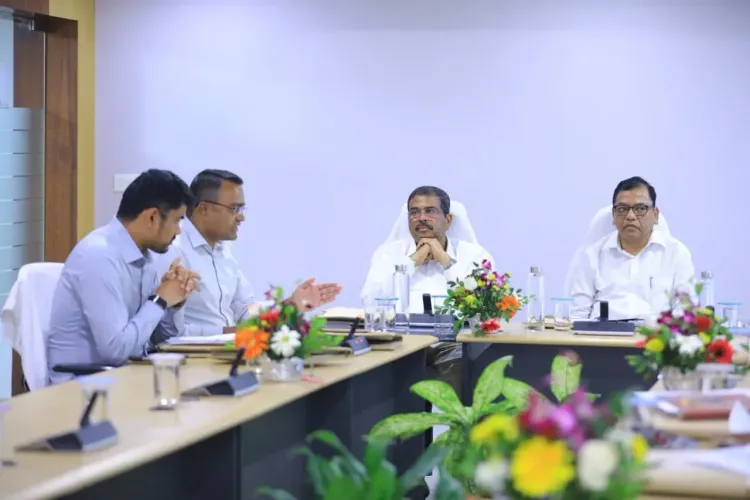
Dharmendra Pradhan participated in an RPDAC sub-committee meeting on 30 September 2026 focused on NLC India Limited 's Talabira projects in western Odisha.
The meeting covered the Talabira coal mining area and the Talabira Thermal Power Project across Sambalpur and Jharsuguda districts.
Attendees included Jharsuguda MLA Tankadhar , the Regional Development Commissioner , district administration, and NLC company management.
Key agenda points: proper rehabilitation, fair compensation, and socio-economic development of project-affected families.
NLC India's Talabira-II and III coal blocks were allocated through post-2014 auctions following the Supreme Court's cancellation of earlier allotments.
The RPDAC is a statutory body mandated by Odisha state policy, aligned with the central land acquisition and R&R law of 2013 .
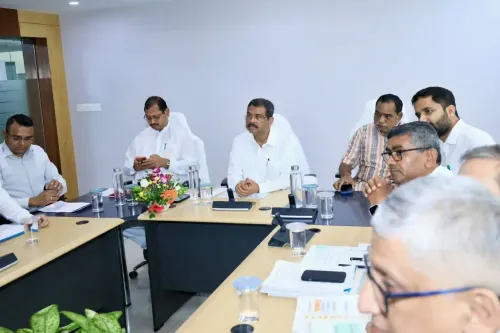
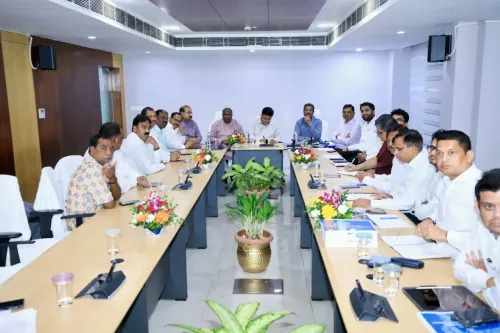
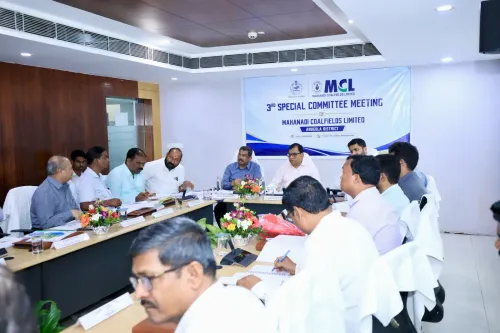
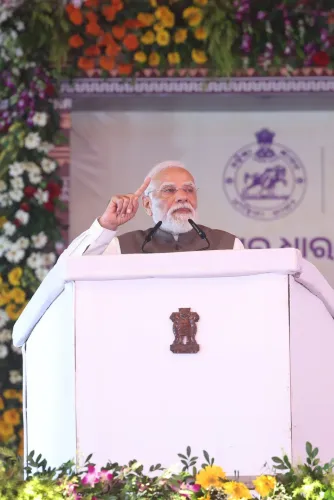
Where coal meets community — that tension sat at the centre of a high-stakes sub-committee meeting on Wednesday, 30 September 2026, when Union Education Minister Dharmendra Pradhan joined the RPDAC sub-committee to scrutinise resettlement and development progress around NLC India Limited's sprawling operations across Sambalpur and Jharsuguda districts in western Odisha.
Posting in Odia, Pradhan wrote that the meeting covered NLC India's Talabira Khani Anchal (Talabira coal mining area) and the Talabira Thermal Power Project, bringing together Jharsuguda MLA Tankadhar (@tankadharbjp), the Regional Development Commissioner (RDC), district administration officials, and company management. 'Protecting the interests of local residents alongside industrialisation is our primary priority,' he stated, adding that the session included detailed discussion on 'proper rehabilitation of the public in the project area, fair compensation, their socio-economic development, and progress of various developmental works.'
What the Talabira belt means for Odisha's energy map
NLC India Limited, a Navratna public sector enterprise under the Ministry of Coal, operates lignite and coal mines alongside thermal power stations nationally. Its Talabira-II and Talabira-III coal blocks in western Odisha were allocated through the transparent auction process that followed the Supreme Court's 2014 cancellation of earlier arbitrary coal block allotments. The thermal power plant attached to this cluster is designed to convert the mined coal directly into electricity — a pit-head power model that can sharply reduce transmission losses.
Western Odisha's districts of Jharsuguda and Sambalpur sit atop some of India's richest coal seams, making the region a cornerstone of the country's thermal power expansion. But coal country also means land acquisition, displacement, and decades of friction between large projects and the communities whose fields and forests give way to excavators.
RPDAC: Odisha's statutory safeguard for project-affected families
The Rehabilitation and Peripheral Development Advisory Committee (RPDAC) is constituted by the Odisha government for every major mining and power project. Its mandate — periodic review of resettlement, compensation, and peripheral development spending — is aligned with the Right to Fair Compensation and Transparency in Land Acquisition, Rehabilitation and Resettlement Act, 2013. Sub-committee meetings like Wednesday's are a statutory requirement, not a courtesy call.
The agenda on the table covered the three pillars the central law demands: proper rehabilitation of displaced households, fair monetary compensation, and socio-economic uplift of surrounding villages — schools, roads, health infrastructure. The presence of the RDC and district administration signals that ground-level implementation, not just policy intent, was under review.
Pradhan's political stake in western Odisha
Dharmendra Pradhan, a native Odia leader who has held the petroleum, steel, and now education portfolios at the Centre, retains a close political and personal association with western Odisha. His attendance at what is structurally a state-level statutory meeting — alongside the local BJP MLA — underscores the BJP's strategy of keeping central ministers visible in industrial-corridor constituencies where livelihoods and land displacement remain live electoral issues.
Follow-up RPDAC decisions on compensation packages and the commissioning timeline of the Talabira Thermal Power Plant will be the real test of Wednesday's commitments. For thousands of families in the Talabira belt, the meeting's minutes matter far more than its optics.
Point of View
Where land acquisition and displacement remain politically sensitive. The Talabira cluster represents a broader pattern: post-2014 coal block auctions have accelerated project development, but statutory R&R mechanisms are still catching up with ground-level implementation. With assembly elections always on the horizon in Odisha, the balance between industrial output targets and community welfare in districts like Jharsuguda will continue to define the political narrative in western Odisha.
NationPress
30 Sept 2026
Frequently Asked Questions
What is the Talabira project in Odisha?
The Talabira project refers to NLC India Limited's coal mining operations at the Talabira-II and Talabira-III coal blocks, along with an associated thermal power plant, located across Sambalpur and Jharsuguda districts in western Odisha.
What is RPDAC in Odisha?
RPDAC stands for Rehabilitation and Peripheral Development Advisory Committee, a statutory body constituted by the Odisha government to oversee resettlement, compensation, and peripheral development for communities affected by major industrial and mining projects.
Why did Dharmendra Pradhan attend the Talabira RPDAC meeting?
As a senior BJP leader and native Odia politician, Pradhan participated to review progress on rehabilitation, fair compensation, and socio-economic development for people displaced or affected by NLC India's Talabira coal mine and power plant.
What are NLC India's coal projects in Odisha?
NLC India Limited, a Navratna PSU under the Ministry of Coal, operates the Talabira-II and Talabira-III coal blocks in Odisha, which were allotted through auctions after the Supreme Court cancelled earlier coal block allocations in 2014.
What compensation are Talabira project-affected families entitled to?
Under the central Right to Fair Compensation and Transparency in Land Acquisition, Rehabilitation and Resettlement Act of 2013 and Odisha's R&R policy, affected families are entitled to fair monetary compensation, proper rehabilitation, and socio-economic development support — the key items discussed at Wednesday's RPDAC sub-committee meeting.