Pradhan Meets Yuva Sangam Phase 6 Youth from Chhattisgarh, Delhi
Synopsis
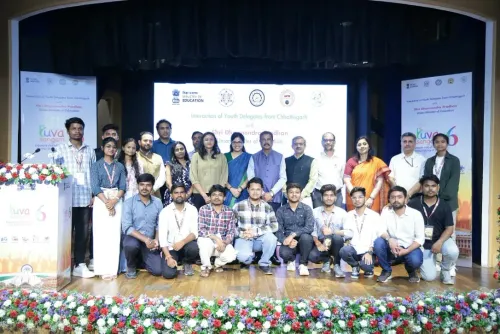
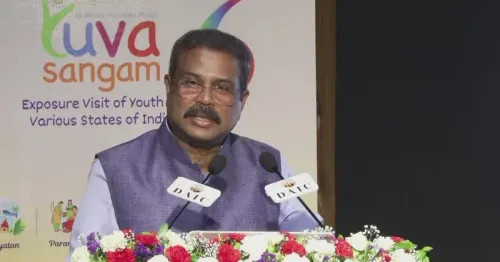
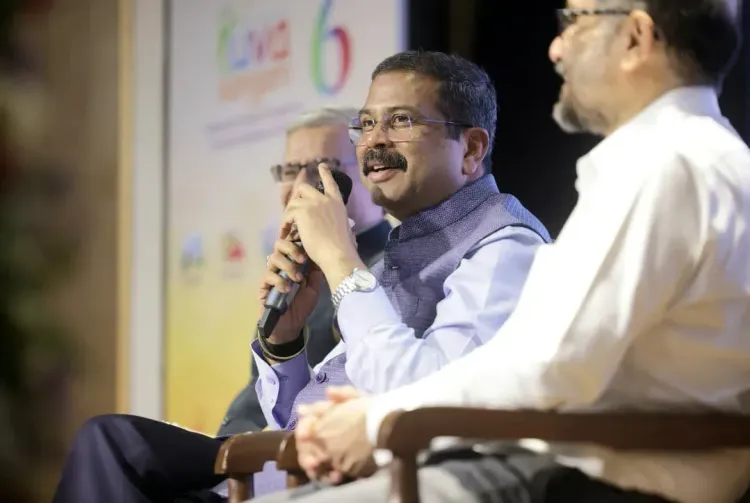
Union Education Minister Dharmendra Pradhan interacted with Yuva Sangam Phase 6 youth participants from Chhattisgarh and Delhi on 11 June 2026, framing the cultural exchange programme as a live expression of NEP 2020's experiential learning vision and a building block for Viksit Bharat 2047.
Key Takeaways
Union Education Minister Dharmendra Pradhan met Yuva Sangam Phase 6 participants from Chhattisgarh and Delhi on 11 June 2026 .
Yuva Sangam operates under the Ek Bharat Shreshtha Bharat framework, launched in 2015 to foster state-to-state cultural ties.
Participants reported that visits to historical sites and cultural landmarks gave them first-hand understanding of India's diversity and unity.
A cultural programme based on Chhattisgarh's traditions was held, showcasing 'unity in diversity.' The minister linked the programme to NEP 2020 's push to move learning beyond textbooks toward lived experience.
Pradhan invoked the Viksit Bharat 2047 vision, saying India's youth power would drive national and global problem-solving in the coming years.
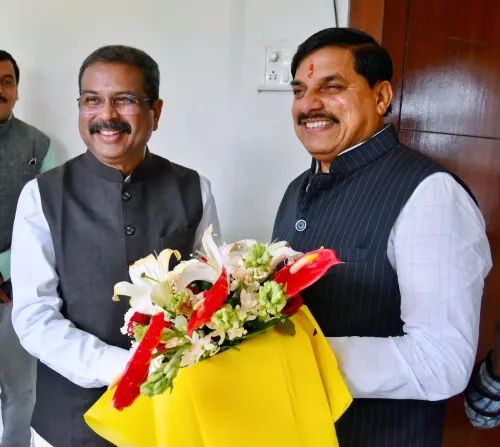
Union Education Minister Dharmendra Pradhan on Thursday, 11 June 2026 interacted with youth participants from Chhattisgarh and Delhi under Yuva Sangam Phase 6, describing the programme as a celebration of the spirit of the National Education Policy (NEP) 2020 and its emphasis on experiential learning rooted in India's cultural diversity.
Context
Posting in Hindi on X, Minister Pradhan said the exchange gave him the opportunity to 'converse with young participants and understand their experiences and ideas' (unke anubhavon aur vichaaron ko jaanne ka avsar mila). Participants shared that visits to historical sites, cultural heritage landmarks and different regions had allowed them to understand India's diversity, culture and unity through first-hand experience — what the minister termed 'Experiential Learning.'
A cultural programme rooted in Chhattisgarh's rich traditions was also held during the event, which Pradhan described as beautifully representing the spirit of 'unity in diversity.'
Policy Backdrop
Yuva Sangam is a youth exchange initiative under the Ek Bharat Shreshtha Bharat (EBSB) framework, which was announced by Prime Minister Narendra Modi in 2015 to strengthen state-to-state cultural and people-to-people ties across India. The programme pairs states and Union Territories and enables students to travel to partner regions for cultural immersion.
NEP 2020, approved by the Union Cabinet in July 2020, replaced India's 1986 education policy and placed significant emphasis on experiential, value-based and multidisciplinary learning — moving education, as Pradhan put it, 'beyond books and into lived experience.' Yuva Sangam is presented by the Ministry as a direct operational expression of that philosophy.
Stakeholders and Impact
The immediate beneficiaries are student and youth participants from Chhattisgarh and Delhi who took part in Phase 6 exchanges, gaining exposure to each other's cultural heritage, historical sites and regional identities. The broader cohort of young Indians enrolled in higher education institutions linked to the EBSB network stands to benefit as further phases are rolled out.
Minister Pradhan framed the programme's long-term significance in terms of national development, stating that India's 'Yuva Shakti' — youth power — would solve the problems of both India and the world in the coming years, realising the Viksit Bharat 2047 vision of transforming India into a developed nation by the centenary of independence.
What's Next
The Ministry of Education is expected to continue rolling out subsequent phases of Yuva Sangam, with periodic updates on participant states and cultural pairings. The programme's trajectory will be closely watched as a practical benchmark for how NEP 2020's experiential learning goals are being implemented at scale beyond the classroom.
As India advances toward the 2047 development milestone, youth exchange initiatives like Yuva Sangam are likely to remain central to the government's strategy of harnessing the country's demographic dividend through cultural integration and experiential education.
Point of View
The Ministry is weaving together three distinct policy threads into a single youth-centric narrative. This approach allows the government to demonstrate implementation momentum on NEP 2020 through relatively low-cost, high-visibility youth events. The consistent invocation of 'unity in diversity' and demographic dividend language also signals that these programmes are as much about political messaging on national integration as they are about educational outcomes.
NationPress
15 Sept 2026
Frequently Asked Questions
What is Yuva Sangam and who runs it?
Yuva Sangam is a youth exchange programme run by the Ministry of Education under the Ek Bharat Shreshtha Bharat initiative. It pairs students from different states and Union Territories for cultural immersion visits to each other's regions.
What is Yuva Sangam Phase 6?
Phase 6 is the latest round of the Yuva Sangam youth exchange programme. In this phase, participants from Chhattisgarh and Delhi were among those who took part in cross-state cultural and heritage visits.
What is Ek Bharat Shreshtha Bharat?
Ek Bharat Shreshtha Bharat is a central government initiative announced by Prime Minister Narendra Modi in 2015. It aims to strengthen national unity by promoting sustained cultural, educational and people-to-people exchanges between paired states and Union Territories.
How is Yuva Sangam connected to NEP 2020?
The National Education Policy 2020 emphasises experiential and value-based learning beyond classroom instruction. The government presents Yuva Sangam as a direct implementation of this philosophy by giving students first-hand exposure to India's diverse cultures and heritage.
What is Viksit Bharat 2047?
Viksit Bharat 2047 is the Indian government's stated vision to transform India into a fully developed nation by 2047, the centenary of independence. Education Minister Pradhan linked Yuva Sangam to this goal, saying India's youth will drive national and global problem-solving in the years ahead.