Pradhan: Kendriya Vidyalayas Are Hubs of NEP-Driven Holistic Growth
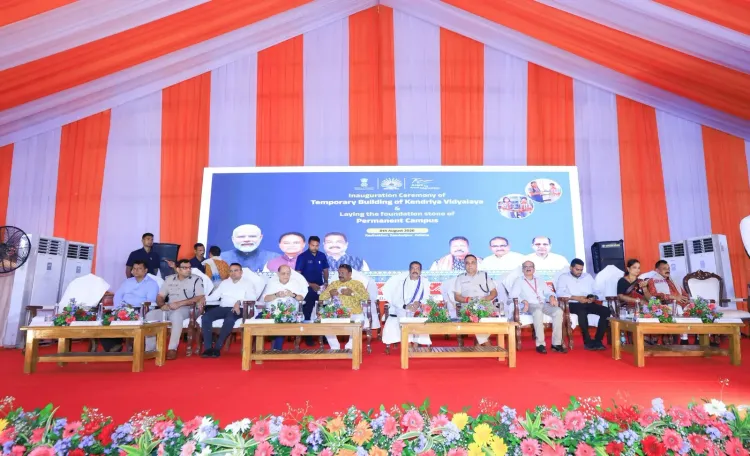
Synopsis
Union Education Minister Dharmendra Pradhan has described Kendriya Vidyalayas as far more than schools — positioning them as the institutional frontline of NEP 2020's vision for multidisciplinary, holistic, and employability-focused education across India.
Key Takeaways
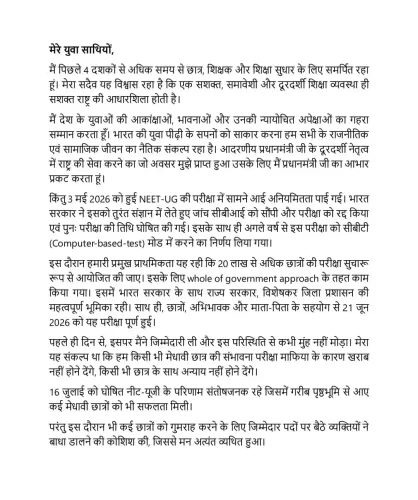
Dharmendra Pradhan posted in Odia on 8 August 2026 , reframing Kendriya Vidyalayas as centres of quality education, discipline, and national spirit.
He cited the National Education Policy 2020 as the guiding vision for multidisciplinary learning in KVs.
The minister emphasised building students into 'employable and self-reliant' individuals — language tied to the broader Atmanirbhar Bharat agenda.
The Kendriya Vidyalaya Sangathan , established in 1963 , runs one of India's largest centrally-administered school networks, primarily serving children of transferable government employees.
NEP 2020 replaced India's 1986 education policy, shifting focus to multidisciplinary and skill-oriented outcomes.
Curriculum and assessment reforms under NEP are still being phased into KVs, making Pradhan's statement a political benchmark for implementation.
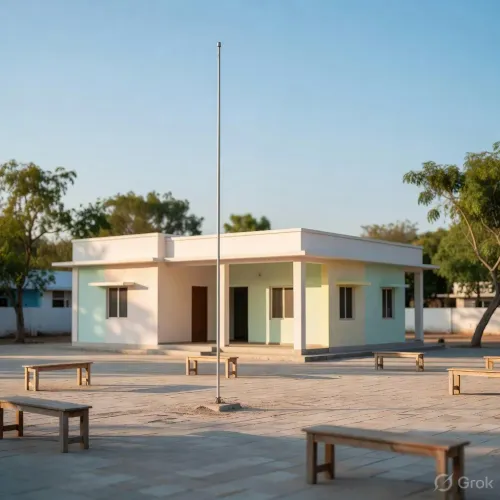
Union Education Minister Dharmendra Pradhan has reaffirmed the central government's vision for Kendriya Vidyalayas — not as mere schools, but as crucibles of quality education, discipline, national consciousness, and all-round development aligned with the National Education Policy 2020.
Posting in Odia on Saturday, 8 August 2026, Pradhan declared: 'A Kendriya Vidyalaya is not just a school — it is a primary centre of quality education, discipline, national spirit, and holistic development. In line with the vision of the National Education Policy, our core goal is to provide children with multidisciplinary education and build them into employable and self-reliant individuals for the future.'
From 1963 to NEP 2020: What KVs Were Built to Do
The Kendriya Vidyalaya Sangathan was established in 1963 to deliver uniform, high-quality schooling primarily for children of transferable central government employees — families uprooted by postings across states, who needed continuity in curriculum and standards. Today the network spans hundreds of schools nationwide, making it one of the largest centrally-administered school systems in the world. The National Education Policy 2020, approved by the Union Cabinet in July 2020, replaced India's 1986 education framework with a sweeping new architecture — one that centres multidisciplinary learning, experiential pedagogy, and a deliberate pivot toward employability and self-reliance. Pradhan's framing of KVs as the institutional embodiment of these goals signals a clear push to make central schools the flagship proof-of-concept for NEP implementation.Employability and Self-Reliance at the Heart of the Message
The minister's emphasis on making students rojgarkshama o atmanirbhara — 'employable and self-reliant' — is not incidental. It mirrors the government's broader economic vocabulary around Atmanirbhar Bharat and the skill-development agenda that has run alongside NEP rollout. Embedding that language inside the KV framework signals that central schools are expected to deliver not just academic results, but workforce-ready graduates. For the families of central government employees — who have long relied on KVs for seamless, quality schooling across transfers — the message is one of institutional ambition: the school your child attends anywhere in India should be shaping a future-ready citizen, not just a board-exam candidate. With curriculum and assessment reforms under NEP still being phased into KVs, and with parliamentary and budgetary attention on central school expansion, Pradhan's statement sets the political benchmark clearly: Kendriya Vidyalayas must become the living standard-bearers of India's education transformation.Point of View
Signalling outreach to Odisha, a state the BJP has invested in heavily since winning it in 2024. Linking KV outcomes to 'self-reliance' and 'employability' also pre-empts criticism that NEP remains aspirational on paper; it sets a measurable, citizen-facing standard. Watch for whether budgetary allocations and curriculum timelines at KVS actually match this elevated rhetoric.
NationPress
8 Aug 2026
Frequently Asked Questions
What did Dharmendra Pradhan say about Kendriya Vidyalayas?
He said Kendriya Vidyalayas are not just schools but primary centres of quality education, discipline, national spirit, and holistic development, aimed at making students employable and self-reliant under the NEP 2020 framework.
What is the National Education Policy 2020?
The National Education Policy 2020 was approved by the Union Cabinet in July 2020 , replacing the 1986 policy. It emphasises multidisciplinary learning, holistic development, and building employability and self-reliance among students.
What is Kendriya Vidyalaya Sangathan?
The Kendriya Vidyalaya Sangathan (KVS) is an autonomous body established in 1963 that runs central government schools across India, primarily for children of transferable central government employees, providing uniform and high-quality education.
How are Kendriya Vidyalayas implementing NEP 2020?
KVs are being positioned to deliver multidisciplinary education, emphasise discipline and national values, and focus on employability — though specific curriculum and assessment reforms are still being phased in across the network.
Why did Pradhan post in Odia about Kendriya Vidyalayas?
The minister posted in Odia, likely to connect with audiences in Odisha, a state of growing political significance for the BJP. The post underlines the government's push to embed NEP principles in central schools nationwide.