Pradhan hails Centre's nod for Odisha coastal highway
Synopsis
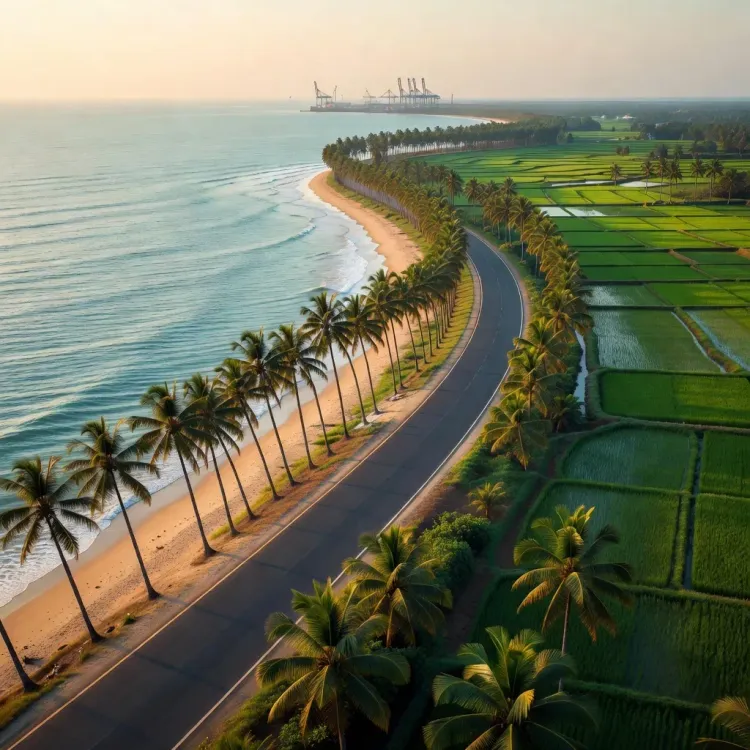
Union Education Minister Dharmendra Pradhan thanked PM Modi and Nitin Gadkari after the Cabinet cleared a 160.18-km greenfield coastal highway from Rameshwar through Konark to Paradip at over Rs 8,300 crore. He said the project, under the Purvodaya Mission, will boost Odisha's Blue Economy, coastal tourism, industry and youth employment.
Key Takeaways
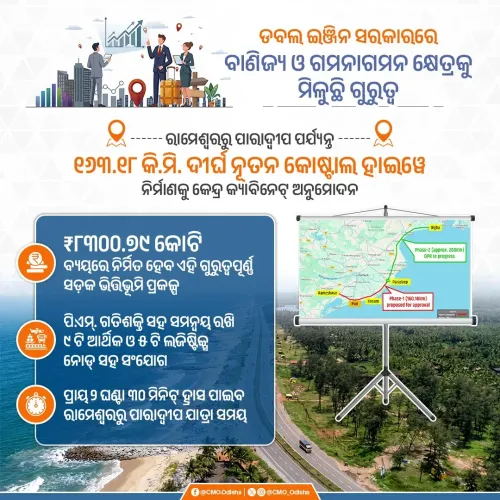
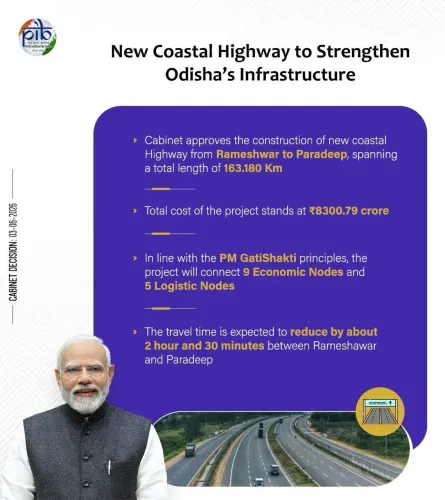
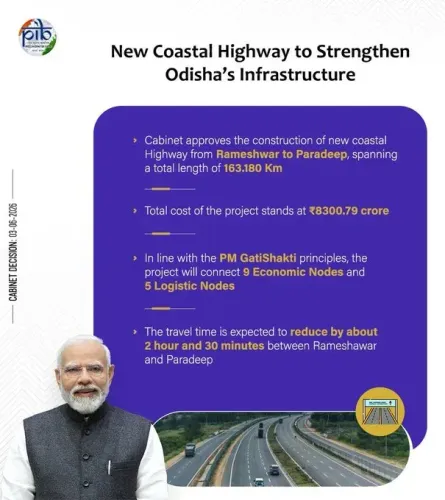
Union Cabinet approval cleared for a 160.18-km greenfield coastal highway in Odisha at over Rs 8,300 crore.
Corridor runs from Rameshwar through Konark to Paradip, anchoring Odisha's eastern coastline.
Package-1: 79-km four-lane stretch from Rameshwar to Kakatpur.
Package-2: 80-km two-lane stretch from Kakatpur to Paradip.
Project flagged under PM Modi's Purvodaya Mission for eastern India development.
Pradhan said the highway will boost Blue Economy, coastal tourism, industrialisation and local youth employment.
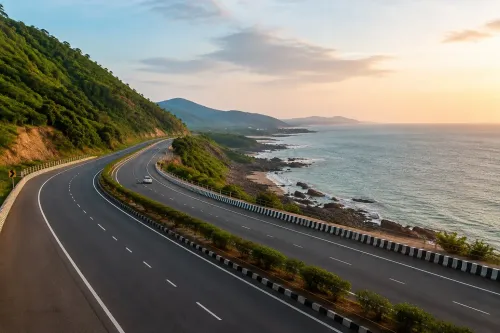
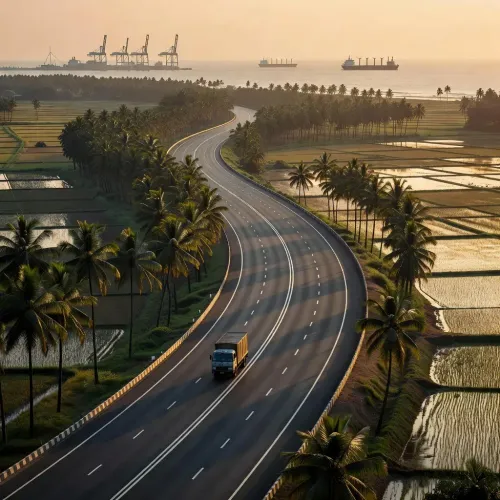
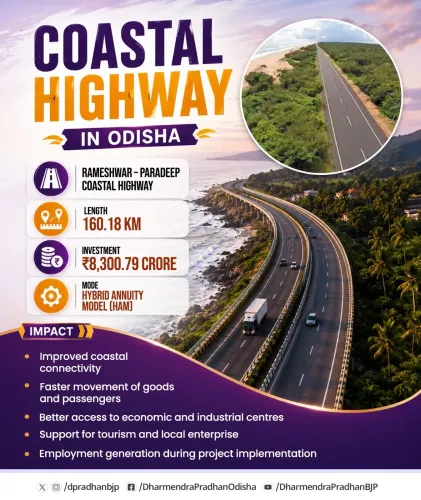
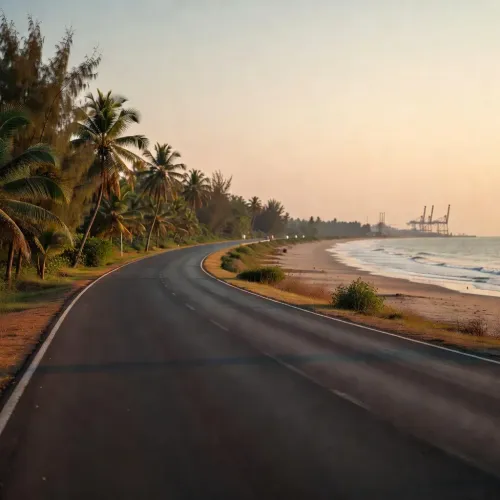
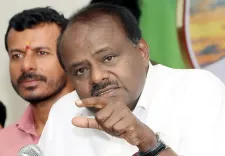
Union Education Minister Dharmendra Pradhan on Wednesday welcomed the Union Cabinet's approval for a 160.18-kilometre greenfield coastal highway in Odisha stretching from Rameshwar through Konark to Paradip, calling the project a 'game-changer' for the state's development. The senior BJP leader from Odisha said the project, cleared with an outlay of over Rs 8,300 crore, will reshape connectivity across the state's coastal belt.
Context
In his post, Pradhan thanked Prime Minister Narendra Modi and Union Road Transport and Highways Minister Nitin Gadkari for steering the approval. He wrote in Odia that the 'Coastal Highway' (greenfield expressway) would be a 'game-changer' for Odisha's growth.
According to the minister, the mega project will be executed in two packages in its first phase. Package-1 covers roughly 79 kilometres from Rameshwar to Kakatpur as a four-lane highway, while Package-2 covers about 80 kilometres from Kakatpur to Paradip as a two-lane road.
Pradhan said the long-awaited corridor falls under the Prime Minister's Purvodaya Mission, the Centre's umbrella initiative to accelerate development in eastern India. He added that the highway would 'strengthen connectivity infrastructure in the coastal regions of Odisha' and give fresh momentum to the state's Blue Economy, coastal tourism and industrialisation.
Policy backdrop
The coastal corridor sits within a wider arc of central government infrastructure programmes targeting India's eastern seaboard. Bharatmala Pariyojana, launched in 2015, identified coastal and port-connectivity roads as a priority category alongside economic corridors and border highways.
It complements the Sagarmala programme, also approved in 2015, which is built around port-led industrialisation, and the PM Gati Shakti National Master Plan launched in 2021 to align road, rail, port and logistics planning. Odisha, with one of the country's longest coastlines and major ports including Paradip, has been a recurring focus area in these schemes.
The Purvodaya Mission, invoked by Pradhan, frames the eastern states as the next growth engine, with infrastructure upgrades positioned as the lever to attract industry beyond traditional western and southern manufacturing hubs.
Stakeholders and impact
Pradhan said the highway would create 'extensive employment and new opportunities' for local youth along the coastal belt. The route threads past Konark, home to the UNESCO-listed Sun Temple, opening a faster road link for one of Odisha's marquee tourism nodes.
The corridor's terminus at Paradip is significant for industry: the port handles crude, coal, iron ore and finished steel, and anchors a cluster of refining and petrochemical units. Smoother last-mile road access is expected to benefit freight movement, fisheries logistics and small businesses dependent on the coastal economy.
Coastal communities, tourism operators and the state's expanding manufacturing base are the primary stakeholders. The phased four-lane and two-lane configuration suggests a calibrated approach to traffic projections along different stretches of the alignment.
What's next
Attention will now turn to the tendering of the two packages and the pace of land acquisition and environmental clearances along the coastal stretch, which passes through ecologically sensitive zones. Construction timelines, contractor selection and progress on linkages to Paradip port expansion will be watched closely.
For Pradhan, a senior BJP figure from Odisha and a former Union Petroleum Minister, the announcement reinforces the party's messaging that central schemes are translating into visible state-level projects. If executed on schedule, the Rameshwar-Konark-Paradip corridor could become a template for how greenfield coastal highways anchor the Centre's broader Purvodaya push along India's eastern coast.
Point of View
Where Bharatmala, Sagarmala and Gati Shakti converge. For a senior Odisha BJP leader like Pradhan, the Rameshwar-Konark-Paradip alignment is also politically resonant, linking a temple-tourism corridor with a strategic port. The real test, as with most mega road projects, will lie in land acquisition, coastal-zone clearances and on-ground execution rather than the headline outlay. If delivered, it could meaningfully recalibrate logistics economics along Odisha's coast.
NationPress
21 Oct 2026
Frequently Asked Questions
What is the Odisha coastal highway project announced by Dharmendra Pradhan?
It is a 160.18-km greenfield coastal highway from Rameshwar through Konark to Paradip in Odisha, approved by the Union Cabinet at an outlay of over Rs 8,300 crore. Union Education Minister Dharmendra Pradhan welcomed the approval in a post on X.
How will the Rameshwar-Konark-Paradip highway be built?
The first phase will be executed in two packages. Package-1 covers about 79 km from Rameshwar to Kakatpur as a four-lane highway, while Package-2 covers about 80 km from Kakatpur to Paradip as a two-lane road.
What is the Purvodaya Mission mentioned by Dharmendra Pradhan?
Purvodaya Mission is the central government's initiative for accelerated development of eastern Indian states, focusing on connectivity, industrial growth and infrastructure. Pradhan said the new coastal highway falls under this mission.
How will the coastal highway benefit Odisha's economy?
Pradhan said the project will strengthen connectivity along Odisha's coast and give fresh momentum to the state's Blue Economy, coastal tourism and industrialisation. He added it will create wide-ranging employment and new opportunities for local youth.
Why is Paradip important in the new highway project?
Paradip is a major port city in Odisha central to the state's blue economy, handling crude, coal, iron ore and steel cargo. Better road connectivity through the new corridor is expected to support port-led industrialisation and freight movement.