Odisha coastal highway: ₹8,300 crore Rameshwar–Paradeep project to cut travel time by 2.5 hours
Synopsis
A ₹8,300 crore coastal highway stretching 160 km from Rameshwar to Paradeep is set to reshape Odisha's eastern seaboard — cutting travel time by 2.5 hours, linking Paradeep Port to Puri and Konark, and threading together pilgrimage, eco-tourism, and freight logistics in a single corridor.
Key Takeaways
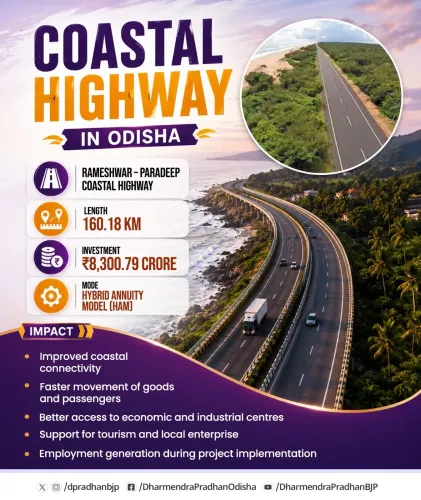
MoRTH will develop the 160.18 km Rameshwar–Paradeep Coastal Highway in Odisha at a cost of ₹8,300.79 crore .
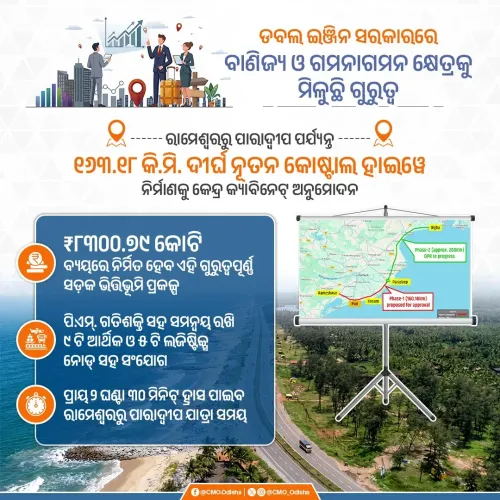
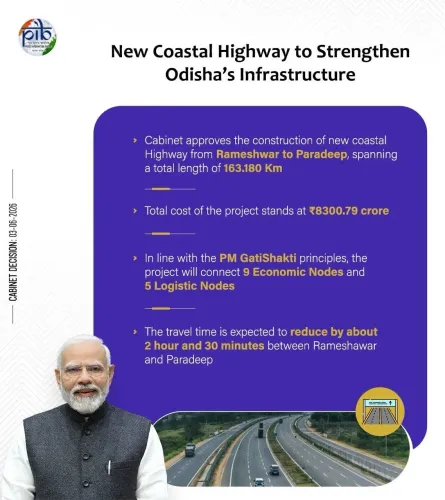
The corridor will cut travel time between Rameshwar and Paradeep by nearly 2 hours 30 minutes .
The highway connects 9 economic nodes and 5 logistics nodes under the PM GatiShakti framework.
Key destinations linked include Jagannath Temple (Puri) , Konark Sun Temple , Paradeep Port , and Gahirmatha turtle nesting sites .
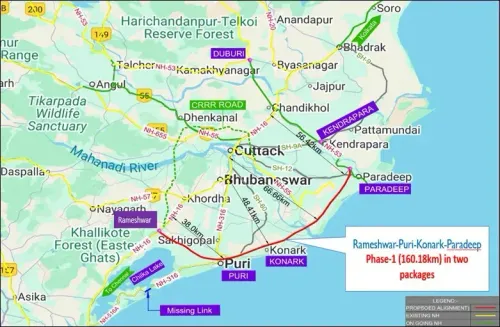
The route passes through Khurda , Puri , Kendrapada , and Jagatsinghpur districts.
The project is expected to boost local livelihoods through growth in hospitality, handicrafts, and tourism enterprises along the corridor.
The Ministry of Road Transport and Highways (MoRTH) is set to develop a 160.18 km Rameshwar–Paradeep Coastal Highway in Odisha at a total capital cost of ₹8,300.79 crore, according to an official factsheet released on Sunday, 19 July. The corridor is projected to slash travel time between Rameshwar and Paradeep by nearly 2 hours and 30 minutes, significantly improving passenger movement and freight connectivity along Odisha's eastern coastline.
Project Design and Alignment
The highway is configured as a 4-lane access-controlled corridor from Rameshwar to Konark and a 2-lane highway with paved shoulders from Konark to Paradeep, both engineered for a design speed of 100 km/hour. The route passes through the districts of Khurda, Puri, Kendrapada, and Jagatsinghpur, creating a continuous link across cultural, religious, and commercial destinations.
Aligned with the PM GatiShakti national master plan, the project will connect 9 economic nodes and 5 logistics nodes, reinforcing Odisha's broader infrastructure network. Key access points include Paradeep Port, Puri Railway Station, and Puri Airport.
Pilgrimage and Tourism Impact
The corridor directly links three of Odisha's most significant religious sites — the Jagannath Temple in Puri, the Konark Sun Temple, and the Ramchandi Temple — consolidating them into a more accessible pilgrimage circuit for millions of devotees who visit the state annually. Improved road access, combined with upcoming airport infrastructure in the region, is expected to strengthen Odisha's standing as a major spiritual tourism destination for both domestic and international visitors.
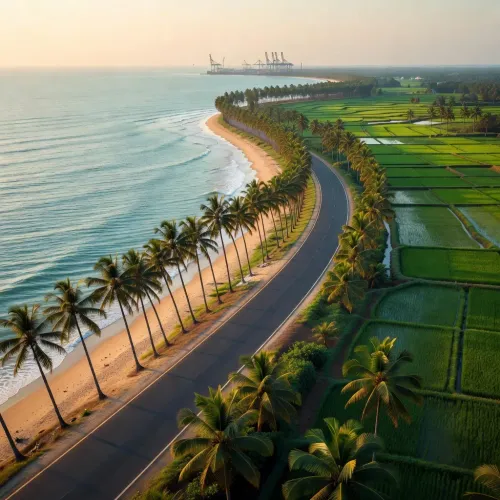
Beyond pilgrimage, the highway is positioned as a coastal tourism gateway, linking beaches, heritage sites, biodiversity hotspots, and local communities along the shoreline. The integrated circuit spanning Puri, Konark, and Paradeep is designed to offer travellers a unified coastal experience — from ancient architecture and spiritual heritage to natural ecosystems and beach tourism.
Ecological and Economic Opportunities
The project is expected to open avenues for beach tourism, eco-tourism, and nature-based travel, with improved access to ecological destinations including the Gahirmatha turtle nesting sites — among the world's largest mass nesting grounds for Olive Ridley sea turtles. Officials indicate that better connectivity could also promote awareness of Odisha's coastal biodiversity and support responsible tourism models that protect fragile ecosystems.
Locally, the corridor is anticipated to stimulate economic activity along its length, encouraging growth in hotels, homestays, restaurants, handicraft markets, and tourism-based enterprises — generating livelihood opportunities for communities in the four districts it traverses.
Broader Significance
This comes amid a sustained push by the Centre to upgrade coastal and highway infrastructure across India's eastern seaboard. Notably, Paradeep Port — one of India's largest cargo ports — stands to benefit directly from improved road access, potentially reducing logistics costs and turnaround times for freight movement. The project represents one of the largest single road investments in Odisha's recent infrastructure history, and its execution timeline and disbursement schedule are expected to be detailed in subsequent MoRTH notifications.
Point of View
Port logistics, and eco-tourism into a single ₹8,300 crore headline at a time when Odisha is strategically important to the Centre. The real test will be whether execution matches ambition: Paradeep Port's freight potential is well-established, but coastal highway projects in India have a mixed record on timelines and displacement of fishing communities, neither of which the official factsheet addresses. The Gahirmatha turtle nesting sites, cited as a tourism draw, also sit in an ecologically sensitive zone — a tension the project's sustainability framing does not fully resolve.
NationPress
18 Oct 2026
Frequently Asked Questions
What is the Rameshwar–Paradeep Coastal Highway project?
It is a 160.18 km coastal highway in Odisha being developed by the Ministry of Road Transport and Highways (MoRTH) at a total capital cost of ₹8,300.79 crore . The corridor runs from Rameshwar to Paradeep , passing through Puri and Konark , and is designed to cut travel time by nearly 2 hours 30 minutes .
Which districts does the Odisha coastal highway pass through?
The highway passes through Khurda , Puri , Kendrapada , and Jagatsinghpur districts in Odisha. It connects key destinations including Paradeep Port , Puri Railway Station , Puri Airport , and the Konark Sun Temple .
How does the highway benefit pilgrims visiting Odisha?
The corridor directly links the Jagannath Temple in Puri , the Konark Sun Temple , and the Ramchandi Temple , making it easier for millions of devotees to complete the pilgrimage circuit. Reduced travel time and improved road quality are expected to enhance the overall pilgrimage experience.
What is PM GatiShakti and how does this project relate to it?
PM GatiShakti is a national master plan for multimodal connectivity that aims to integrate infrastructure planning across ministries. The Rameshwar–Paradeep highway is aligned with its principles, connecting 9 economic nodes and 5 logistics nodes to strengthen Odisha's freight and passenger network.
What environmental and tourism opportunities does the highway open up?
The highway provides improved access to the Gahirmatha turtle nesting sites and other coastal biodiversity hotspots, creating potential for eco-tourism and nature-based travel. Officials say better connectivity could support responsible tourism models that raise conservation awareness while generating local economic activity.