Pradhan Hails Anand Dham, Sewa Madhya's 12 Years of Elder Care
Synopsis
Union Education Minister Dharmendra Pradhan praised Anand Dham's senior-citizen care model and commended Sewa Madhya on 12 years of service in education, health and social welfare, linking the organisation's work to the national Viksit Bharat vision.
Key Takeaways
Dharmendra Pradhan publicly praised Anand Dham as a model of dignified, family-like care for senior citizens.
Sewa Madhya , a Madhya Pradesh -based organisation, marked 12 years of continuous community service across education, health and self-reliance.
Pradhan framed the organisation's work as an expression of seva, sanskar and samrasta — service, values and social harmony.
The minister explicitly connected grassroots welfare efforts to the Viksit Bharat goal of achieving developed-nation status by 2047 .
Elder care in India is underpinned by the Maintenance and Welfare of Parents and Senior Citizens Act, 2007 , with state programmes building on that statutory base.
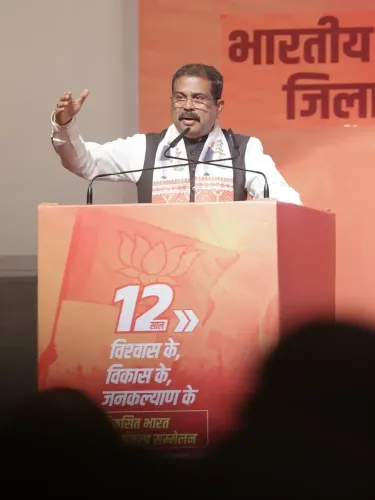
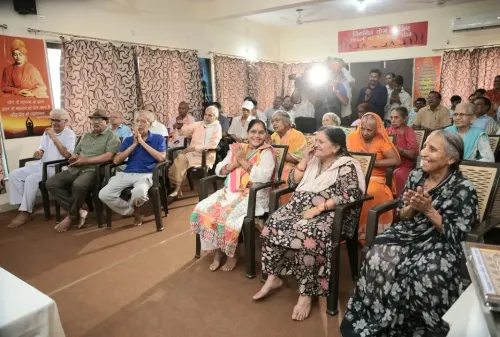
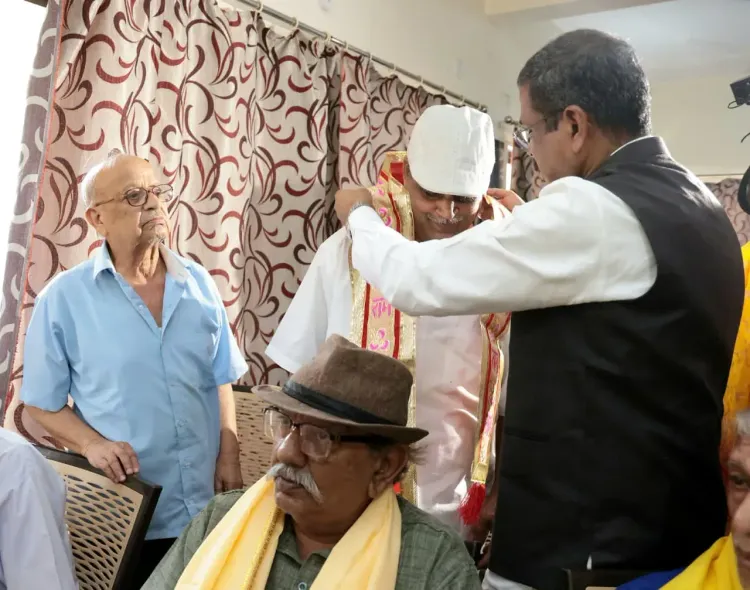
Union Education Minister Dharmendra Pradhan on Saturday, 13 June 2026, praised Anand Dham, a senior-citizen care facility, and commended Sewa Madhya on completing 12 years of community service, saying the initiative embodies the values of respect, belonging and familial warmth that true service demands.
Context
Responding to a post on X, Pradhan wrote in Hindi that 'Anand Dham yeh sandesh deta hai ki seva keval suvidhayen uplabdh karane ka karya nahin' — 'Anand Dham conveys that service is not merely the act of providing facilities, but a feeling of respect, belonging and affection.' He described the effort to give senior citizens time, conversation and family-like warmth as 'deeply inspiring.'
The minister specifically called out Sewa Madhya, a Madhya Pradesh-based voluntary organisation, for its continuous work across education, health, self-reliance and social cooperation — areas the government has identified as pillars of inclusive development.
Policy Backdrop
Elder care in India is governed primarily by the Maintenance and Welfare of Parents and Senior Citizens Act, 2007, which obligates children and heirs to provide for ageing relatives and mandates state governments to establish old-age homes. Subsequent state-level programmes have built on this statutory foundation to expand residential and community-based support for senior citizens.
Pradhan linked the organisation's work to the Viksit Bharat vision — the government's framework, articulated by Prime Minister Narendra Modi in 2022–23, targeting developed-nation status for India by 2047. He stated that 'the spirit of seva, sanskar and samrasta' — service, values and social harmony — 'further strengthens the resolve of #ViksitBharat.'
Stakeholders and Impact
Sewa Madhya's twelve-year track record spans grassroots interventions in health camps, educational support and livelihood programmes, positioning it as a civil-society partner in areas where flagship schemes such as Samagra Shiksha and Ayushman Bharat operate. Organisations of this kind often serve as last-mile connectors between government policy and marginalised communities, including senior citizens who may lack family support.
For the senior-citizen residents of Anand Dham and similar facilities, ministerial recognition can translate into greater public visibility, donor interest and potential formal integration into state welfare frameworks. The #12YearsOfSeva milestone marks a moment the organisation is likely to leverage for expanded partnerships.
What's Next
Pradhan's remarks signal continued political attention to voluntary elder-care models as complements to statutory welfare programmes. State-level reviews of senior-citizen facilities in Madhya Pradesh and other states are expected to assess the feasibility of integrating established seva organisations into government implementation frameworks.
As India's demographic profile ages — with the senior-citizen population projected to grow significantly through 2047 — the convergence of civil-society initiative and government policy in elder care is likely to gain greater institutional weight in the years ahead.
Point of View
Not just through government schemes. By invoking the triad of seva, sanskar and samrasta, the minister aligns Sewa Madhya's voluntary work with the administration's broader cultural and developmental messaging. The timing — marking a 12-year milestone — gives the endorsement a commemorative weight that extends beyond routine praise, potentially opening doors for the organisation's formal integration into state welfare frameworks. It also underscores the government's interest in positioning elder care as a shared responsibility between the state and organised civil society.
NationPress
27 Oct 2026
Frequently Asked Questions
What is Anand Dham and what did Dharmendra Pradhan say about it?
Anand Dham is a facility providing residential care and support services for senior citizens. Dharmendra Pradhan praised it as a model of service built on respect, belonging and family-like affection, rather than merely providing facilities.
What is Sewa Madhya and where does it operate?
Sewa Madhya is a Madhya Pradesh-based voluntary organisation that has worked for 12 years in education, health, self-reliance and social cooperation, serving as a grassroots community-welfare body.
What is the Viksit Bharat vision that Pradhan linked to this initiative?
Viksit Bharat is the Government of India's national framework, articulated by Prime Minister Narendra Modi in 2022–23, which aims to achieve developed-nation status for India by 2047 through inclusive social and economic progress.
What law governs elder care and senior citizen welfare in India?
The Maintenance and Welfare of Parents and Senior Citizens Act, 2007, is the primary legislation, obligating children to support ageing parents and directing state governments to establish old-age homes and welfare programmes.
Why do ministers highlight voluntary seva organisations in their social media posts?
Ministers frequently spotlight voluntary organisations to illustrate how civil-society action complements government flagship schemes in education, health and elder care, reinforcing the narrative that development is a shared national endeavour.