Pradhan marks 12 years of NDA welfare schemes
Synopsis
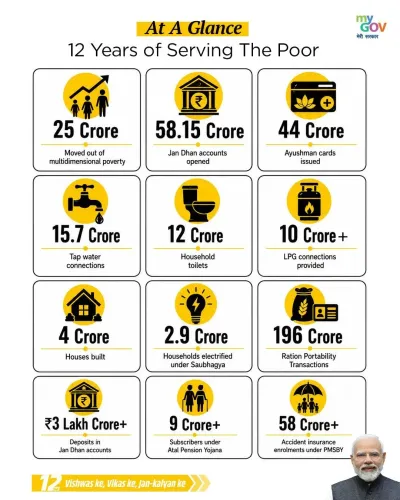
Union Education Minister Dharmendra Pradhan marked twelve years of NDA poverty-alleviation programmes on 9 June 2026, highlighting Jan Dhan, Ujjwala, Swachh Bharat, Jal Jeevan, Awas, and Ayushman Bharat as instruments that delivered dignity and security to India's marginalised households.
Key Takeaways
Union Education Minister Dharmendra Pradhan posted on 9 June 2026 marking 12 years of NDA welfare delivery under the #12YearsOfGaribKalyan campaign.
Six flagship schemes were cited: Jan Dhan, Ujjwala, Swachh Bharat, Jal Jeevan, Awas, and Ayushman Bharat.
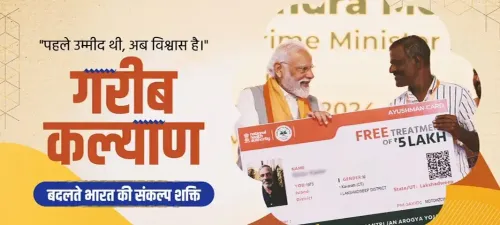
Ayushman Bharat provides health insurance of up to Rs 5 lakh per family per year for secondary and tertiary care.
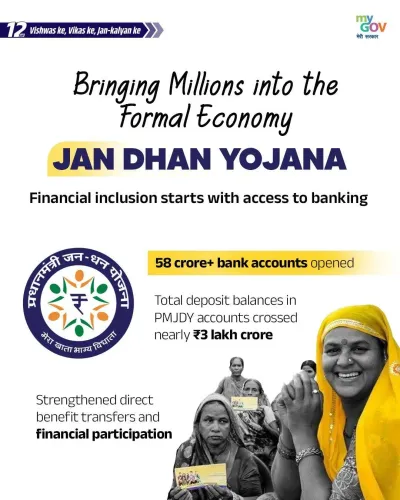
Pradhan Mantri Jan Dhan Yojana was launched in August 2014 to bring unbanked households into the formal financial system.
The schemes collectively target deprivations in finance, energy, sanitation, water, housing, and health for BPL and rural poor households .
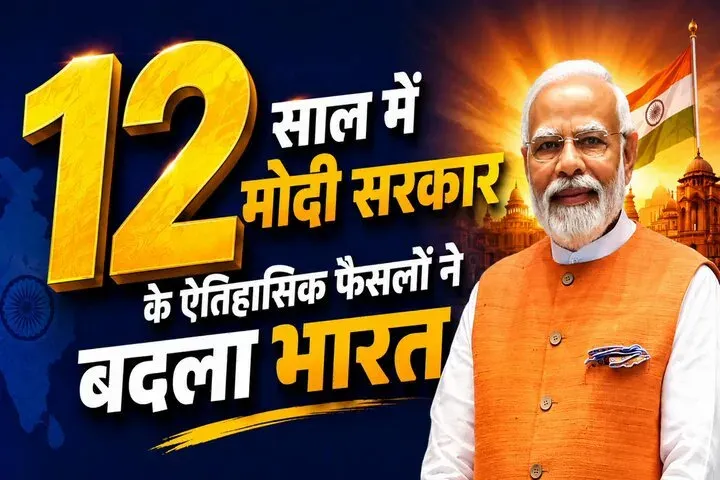
The post is part of a coordinated BJP commemoration marking twelve years since the party's return to power in May 2014 .
Union Education Minister Dharmendra Pradhan on Tuesday, 9 June 2026 hailed twelve years of the NDA government's poverty-alleviation drive, citing flagship programmes spanning banking access, clean cooking fuel, sanitation, drinking water, housing, and health insurance as pillars of dignity for India's marginalised communities.
Context
Posting in Hindi under the hashtags #12YearsOfSeva and #12YearsOfGaribKalyan, Pradhan wrote that a 'twelve-year journey of poor welfare has established a strong foundation of respect, security, and confidence in the lives of the deprived through schemes such as Jan Dhan, Ujjwala, Swachh Bharat, Jal Jeevan, Awas, and Ayushman Bharat.' He added that this 'transformative effort has delivered facilities to every household and strengthened trust and dignity in every citizen's life.'
The post is part of a coordinated BJP commemoration marking the party's return to power in May 2014 and the welfare architecture built over the subsequent twelve years. Senior ministers and party leaders have used the occasion to highlight what the NDA frames as a shift from entitlement-based to rights-based, technology-enabled delivery.
Policy Backdrop
Pradhan Mantri Jan Dhan Yojana, launched in August 2014, was designed to bring unbanked households into the formal financial system through zero-balance accounts and RuPay debit cards. It became the backbone for direct benefit transfers that bypassed intermediaries.
Swachh Bharat Mission, started in October 2014, targeted open defecation elimination and solid-waste management across rural and urban India. Pradhan Mantri Ujjwala Yojana followed, providing subsidised LPG connections to women from below-poverty-line families to reduce dependence on biomass fuels.
Jal Jeevan Mission, announced in 2019, set out to deliver functional household tap connections to every rural home. Pradhan Mantri Awas Yojana extended pucca housing to eligible rural and urban poor, while Ayushman Bharat, launched in September 2018, offered health insurance cover of up to Rs 5 lakh per family annually for secondary and tertiary hospitalisation.
Stakeholders and Impact
The six schemes cited collectively address deprivations across finance, energy, sanitation, water, housing, and health — the principal dimensions of multidimensional poverty. Their primary beneficiaries are BPL households and rural poor communities, with women identified as direct recipients under Ujjwala and Awas components.
Technology-enabled targeting and direct benefit transfers have been central to the delivery model, reducing leakages that plagued earlier universal subsidy regimes. State governments remain implementing partners, and ground-level outcomes vary across regions depending on administrative capacity and local infrastructure.
What's Next
Observers will watch for fresh budgetary allocations or phase expansions for these programmes in the next Union Budget cycle, particularly for Jal Jeevan Mission and Ayushman Bharat, which have seen periodic coverage revisions. State-level implementation reports and independent impact evaluations will determine whether the political messaging translates into measurable welfare gains on the ground. Pradhan's post signals that welfare delivery will remain a central theme in the BJP's political communication ahead of any upcoming electoral cycles.
Point of View
Which bundles six structurally distinct programmes into a single moral narrative of dignity and inclusion. By invoking the twelve-year milestone, the party repositions its tenure not as an ideological project but as a service-delivery record — a framing designed to appeal to first-time beneficiaries of these schemes. The emphasis on 'trust and dignity' rather than raw statistics is deliberate: it sidesteps contested coverage numbers while anchoring the message in lived experience. This pattern of anniversary-driven welfare commemoration is likely to intensify as the BJP builds its platform for future electoral contests.
NationPress
21 Sept 2026
Frequently Asked Questions
What is the 12 Years of Garib Kalyan campaign?
The '12 Years of Garib Kalyan' campaign is a BJP-led commemoration marking twelve years since the NDA government came to power in May 2014, highlighting welfare schemes launched for poor and marginalised households during this period.
What schemes did Dharmendra Pradhan mention in his post?
Pradhan cited six schemes: Pradhan Mantri Jan Dhan Yojana, Pradhan Mantri Ujjwala Yojana, Swachh Bharat Mission, Jal Jeevan Mission, Pradhan Mantri Awas Yojana, and Ayushman Bharat.
What is Ayushman Bharat and who benefits from it?
Ayushman Bharat is a government health insurance scheme launched in September 2018 that provides coverage of up to Rs 5 lakh per family per year for secondary and tertiary hospitalisation, primarily targeting below-poverty-line and low-income households.
When was Pradhan Mantri Jan Dhan Yojana launched?
Pradhan Mantri Jan Dhan Yojana was launched in August 2014 to expand banking access to unbanked households through zero-balance accounts and direct benefit transfer infrastructure.
What is the Jal Jeevan Mission?
Jal Jeevan Mission is a programme announced in 2019 aimed at delivering functional household tap connections with safe drinking water to every rural home in India.