Pradhan Marks Samvidhan Hatya Diwas, Slams Emergency Legacy
Synopsis
Union Education Minister Dharmendra Pradhan marked Samvidhan Hatya Diwas on 25 June 2026, condemning the 1975 Emergency as a constitutional betrayal, targeting Congress and Rahul Gandhi for perpetuating an authoritarian mindset, and calling for democratic awareness as India pursues the Viksit Bharat 2047 goal.
Key Takeaways
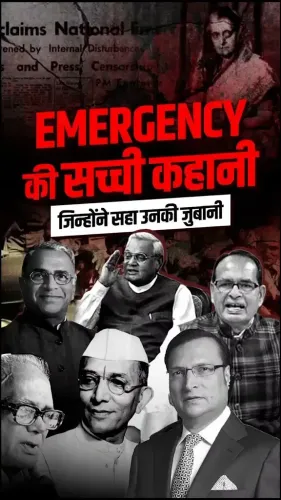
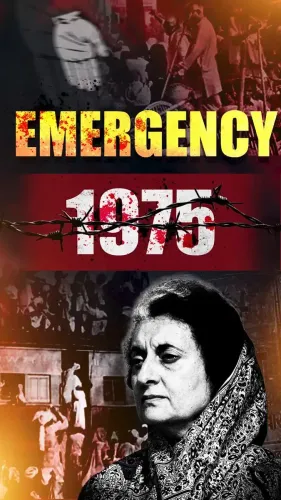
25 June 2026 marks the 51st anniversary of the 1975 Emergency proclaimed by Indira Gandhi , now officially observed as Samvidhan Hatya Diwas .
Dharmendra Pradhan cited the banning of artists like Kishore Kumar and Lata Mangeshkar as emblematic of Emergency-era rights violations.
Pradhan directly named Rahul Gandhi and the Congress party as carrying forward what he called an authoritarian, dynastic mindset.
The post connects Emergency remembrance to PM Narendra Modi 's Viksit Bharat 2047 development vision, framing democratic values as a prerequisite for national progress.
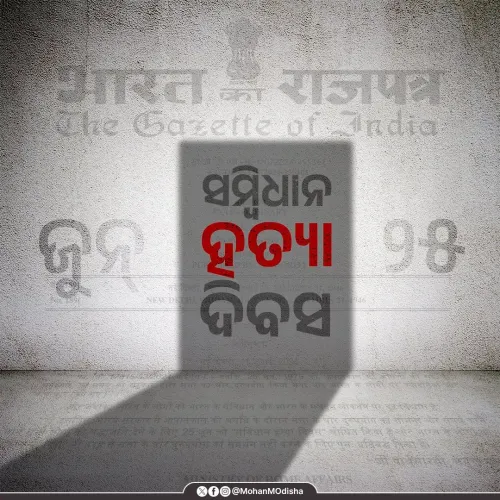
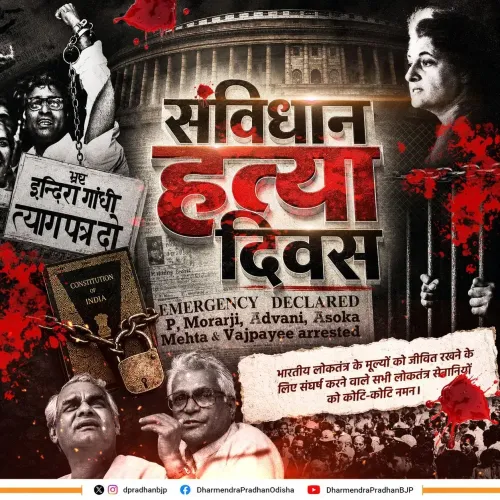
The Government of India formally designated 25 June as Samvidhan Hatya Diwas in 2024 , institutionalising annual commemoration.
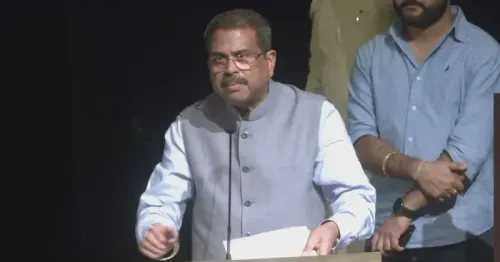
Union Education Minister Dharmendra Pradhan on 25 June 2026 invoked the 51st anniversary of the 1975 Emergency to condemn what he called the Congress party's enduring authoritarian mindset, linking the historical episode to present-day opposition politics and calling for sustained democratic awareness as India pursues the Viksit Bharat 2047 vision.
Context
Posting on 25 June — the date the national Emergency was proclaimed by Indira Gandhi in 1975 — Pradhan wrote that Emergency meant 'crushing the Constitution, holding citizens' rights hostage, and banning the voices of artists like Kishore Kumar and Lata Mangeshkar.' The post was shared under the hashtag #SamvidhanHatyaDiwas, the official designation given to this date to memorialise the excesses of that period.
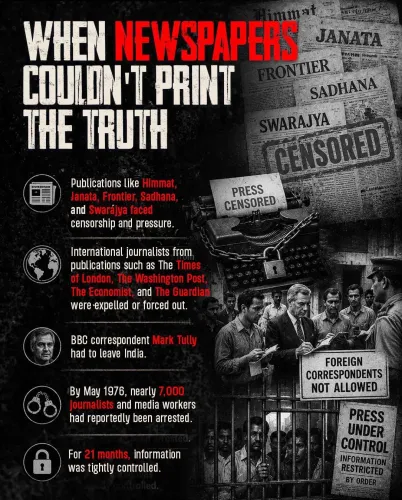
The Emergency, which lasted from 25 June 1975 to 21 March 1977, suspended fundamental rights, censored the press, and resulted in the detention of thousands of political opponents. The silencing of prominent cultural figures such as singer Kishore Kumar — who refused to perform at Congress events — became a symbol of the period's overreach.
Policy Backdrop
The Government of India formally designated 25 June as Samvidhan Hatya Diwas ('Constitution Murder Day') in 2024, institutionalising annual remembrance of the Emergency as a constitutional landmark. The decision reflected the ruling BJP's long-standing effort to embed the Emergency's memory into the national civic calendar.
Pradhan drew a direct line from the Emergency-era slogan 'India is Indira and Indira is India' — attributed to then Congress president D. K. Barooah in 1975 — to what he described as the current Congress leadership's continuation of the same dynastic thinking. He named Rahul Gandhi specifically, arguing the party 'is carrying forward this very mindset today.'
Stakeholders and Impact
Pradhan framed the commemoration not merely as historical recollection but as a civic duty, stating that 'people who are anti-Constitution have never had faith in any institutional arrangement — from the electoral process to the judiciary.' The remarks position the BJP as the defender of democratic institutions against what it characterises as a recurring authoritarian impulse within the Congress.
The post also anchors the remembrance within the government's forward-looking agenda, referencing Prime Minister Narendra Modi's Viksit Bharat 2047 development roadmap. Pradhan argued that advancing toward a developed India requires actively rejecting 'the hatred-filled thinking of the Emergency era' and strengthening public awareness of democratic values.
What's Next
With Samvidhan Hatya Diwas now an institutionalised annual observance, government programmes, parliamentary references, and ruling-party messaging on 25 June are expected to intensify in coming years, particularly as 2027 will mark the 50th anniversary of the Emergency's end. The Congress and opposition parties are likely to contest the framing in legislative debates and election campaigns, making this date a recurring flashpoint in India's political calendar.
Point of View
Which has served as a durable counterpoint to Congress's own constitutional messaging since 2014. By naming Rahul Gandhi alongside the 1975 slogan, the minister personalises a 51-year-old grievance for a contemporary audience, keeping dynastic-politics framing alive between election cycles. The institutionalisation of Samvidhan Hatya Diwas in 2024 has given this annual narrative a state-backed platform, elevating it from party rhetoric to official civic memory. The explicit linkage to Viksit Bharat 2047 signals that the BJP intends to use historical contrast — democratic resilience versus authoritarian relapse — as a long-arc electoral and governance theme through the next decade.
NationPress
25 Jun 2026
Frequently Asked Questions
What is Samvidhan Hatya Diwas and why is it observed on 25 June?
Samvidhan Hatya Diwas, meaning 'Constitution Murder Day', is observed on 25 June to mark the anniversary of the Emergency declared by Prime Minister Indira Gandhi on 25 June 1975. The Government of India formally designated this date for annual observance in 2024 to commemorate the suspension of civil liberties and fundamental rights during the Emergency period.
What did Dharmendra Pradhan say about the 1975 Emergency?
Pradhan described the Emergency as a period of 'crushing the Constitution, holding citizens' rights hostage, and banning the voices of artists like Kishore Kumar and Lata Mangeshkar.' He argued that the Congress party's anti-constitutional mindset, symbolised by the slogan 'India is Indira and Indira is India', continues today through Rahul Gandhi and the current Congress leadership.
Why did Kishore Kumar get banned during the Emergency?
Singer Kishore Kumar was blacklisted by All India Radio and Doordarshan during the 1975-77 Emergency reportedly because he refused to perform at Congress party events. His case became one of the most cited examples of the cultural censorship and coercion that characterised the Emergency period.
What is Viksit Bharat 2047 that Pradhan mentioned?
Viksit Bharat 2047 is Prime Minister Narendra Modi's vision to make India a developed nation by 2047, the centenary of independence. Pradhan invoked this goal to argue that achieving it requires rejecting the authoritarian thinking associated with the Emergency era and strengthening democratic values among citizens.
How does BJP use the Emergency anniversary in current politics?
The BJP consistently uses the Emergency anniversary to contrast its own democratic credentials with what it frames as the Congress party's authoritarian and dynastic legacy. Since 2014, this narrative has been deployed in election campaigns, parliamentary debates, and official commemorations, and was reinforced by the 2024 decision to institutionalise 25 June as Samvidhan Hatya Diwas.