Pradhan Slams Rahul Gandhi's Mock Parliament as Political Stunt
Synopsis
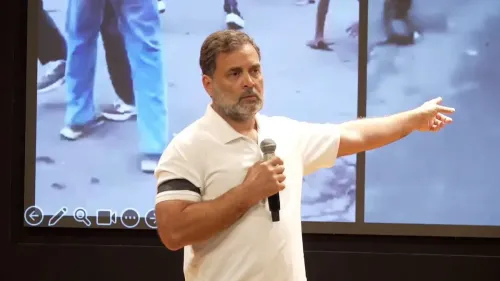
Union Education Minister Dharmendra Pradhan on November 1, 2026, accused Leader of the Opposition Rahul Gandhi and Congress of mocking democracy through a 'Mock Parliament' event, calling it the latest in a series of political stunts born of electoral frustration.
Key Takeaways
Dharmendra Pradhan posted a sharp attack on Rahul Gandhi and Indian National Congress on November 1, 2026 , targeting their 'Mock Parliament' event.
Pradhan accused Congress of advancing false narratives, attacking constitutional institutions, and obstructing national development.
He listed a sequence of what he called political stunts: 'vote theft' claims, questions over the SIR process , and now the mock parliament.
The minister drew a firm distinction between legitimate opposition — asking questions — and obstruction, which he said Congress has embraced.
Pradhan stated Parliament is 'a symbol of democratic dignity', not a stage for political spectacle, and declared the public has seen through Congress's 'nautanki'.
As of publication, Congress had not formally responded to Pradhan's charges.
When the opposition stages its own parliament outside the real one, it either signals democratic creativity — or, as Union Education Minister Dharmendra Pradhan argued on Sunday, November 1, 2026, confirms a party's slide into political theatre. Pradhan fired a sharp broadside at Leader of the Opposition Rahul Gandhi and the Indian National Congress, calling their 'Mock Parliament' event the latest episode in a pattern of constitutional disrespect and deliberate obstruction.
Posting in Hindi on X, Pradhan pulled no punches: 'LoP Rahul Gandhi aur INC ki rajneeti ab jhoote narrative, samvaidhanik sansthaon par prahar aur vikas karyon mein avrodh tak simat kar reh gayi hai' — ('The politics of LoP Rahul Gandhi and the INC has now shrunk to false narratives, attacks on constitutional institutions, and obstructing development'). He accused Gandhi of mocking democracy at the mock parliament, just as he claimed Congress had done on the floor of Parliament itself through 'misleading claims.'
From 'Vote Chori' to Mock Parliament: The BJP's Obstruction Charge-Sheet
Pradhan framed Sunday's event not as a standalone incident but as the latest chapter in a catalogue of what he called political stunts. He listed them in sequence: allegations of 'vote theft', questions raised over the Special Intensive Revision (SIR) process, and now the mock parliament. In his telling, each was a variation on the same theme — a party unable to accept the public's verdict, dressing its frustration up as democratic activism.
The charge is a familiar one in post-2014 Indian politics. BJP leaders have consistently argued that Congress, stripped of its earlier dominance, shifted its strategy toward parliamentary disruption and institutional questioning rather than policy-based opposition. Repeated walkouts and adjournments during multiple parliamentary sessions — over Manipur, over alleged erosion of democratic norms — form the backdrop to Pradhan's critique.
Parliament's Dignity vs. Political Street Theatre
The sharpest line in Pradhan's post was also the most direct: 'Sansad desh ki loktantrik garima ka prateek hai, Rahul Gandhi aur Congress ke rajneetik tamashe ka manch nahin' — ('Parliament is a symbol of the nation's democratic dignity, not a stage for the political spectacle of Rahul Gandhi and Congress'). The dig is pointed: by holding a 'Mock Parliament', Congress effectively concedes it cannot shape the real one — which is precisely what Pradhan wants the public to see.
Pradhan also drew a line between legitimate opposition and what he called 'avrodh' — obstruction. 'The responsibility of the opposition is to ask questions of the government, not to erect barriers to the nation's development,' he wrote. It is a distinction BJP has worked hard to embed in the public discourse: protest as legitimate, disruption as anti-national.
Congress Has Not Responded Publicly Yet
As of the time of publication, neither Rahul Gandhi nor the Indian National Congress had issued a formal response to Pradhan's post. The details of the mock parliament event itself — its agenda, participants, and stated purpose — could not be independently verified at the time of writing. What the episode crystallises, however, is the growing gap between how the ruling party and the principal opposition each define democratic participation — a gap that will widen every time Parliament convenes.
Pradhan's closing salvo set the political tone plainly: the country, he wrote, has now recognised Congress's 'nautanki' — its farce — conducted in democracy's name. Whether voters agree is a question only the next election will answer.
Point of View
Having lost a decisive electoral mandate, has substituted institutional disruption for constructive politics. By framing the mock parliament not as civic engagement but as a 'nautanki', the BJP attempts to delegitimise Congress's oppositional identity itself. The reference to 'SIR' and 'vote chori' signals the BJP is keeping a running ledger of what it considers Congress provocations — useful ammunition ahead of any state election cycle. Notably, the attack comes from the Education Minister, not a party spokesperson, suggesting the BJP sees value in having cabinet heavyweights, not just party functionaries, lead political messaging.
NationPress
1 Nov 2026
Frequently Asked Questions
What is the Mock Parliament Rahul Gandhi organised that Pradhan criticised?
Rahul Gandhi and the Indian National Congress held an event referred to as a 'Mock Parliament'. The specific agenda and participants of the November 2026 event could not be independently verified; Pradhan characterised it as a mockery of democratic institutions.
Why did Dharmendra Pradhan attack Congress on November 1, 2026?
Pradhan accused Congress of using the mock parliament event to disrespect democratic norms, continuing a pattern he described as false narratives, attacks on constitutional institutions, and obstruction of development.
What did Pradhan say is the role of the opposition in Parliament?
Pradhan stated that the opposition's duty is to ask questions of the government — not to obstruct national development or turn Parliament into a stage for political spectacle.
What is the BJP's broader criticism of Congress's parliamentary conduct?
BJP leaders, including Pradhan, have consistently argued since 2014 that Congress has relied on walkouts, disruptions, and institutional questioning rather than policy-based opposition, especially after losing successive electoral mandates.
Has Congress responded to Pradhan's post about the mock parliament?
As of November 1, 2026, neither Rahul Gandhi nor the Indian National Congress had issued a formal public response to Pradhan's criticism.