Dharmendra Pradhan Pays Tribute to Swami Dayanand Saraswati
Synopsis
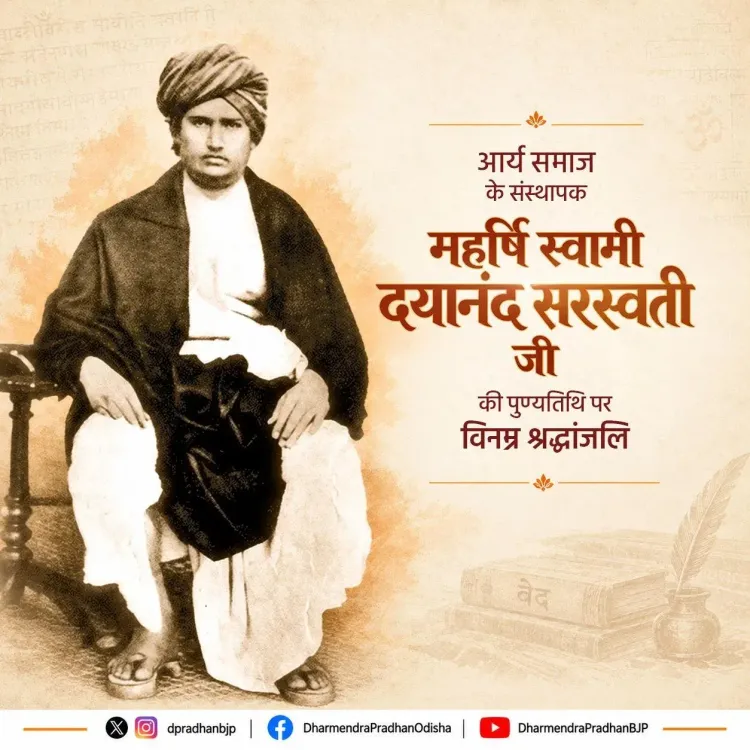
Union Education Minister Dharmendra Pradhan marked the death anniversary of Arya Samaj founder Swami Dayanand Saraswati on 30 October 2026, honouring his legacy of truth, knowledge and social reform — a tribute that resonates with the ministry's ongoing emphasis on Indian knowledge systems in education.
Key Takeaways
Dharmendra Pradhan offered a tribute to Swami Dayanand Saraswati on his death anniversary, 30 October 2026 .
Dayanand Saraswati founded the Arya Samaj in 1875 , championing Vedic authority, monotheism, and education for women and lower castes.
Pradhan highlighted Dayanand's commitment to truth, knowledge and social reform as an enduring national inspiration.
The Arya Samaj's educational legacy includes the large DAV school and college network across India.
The tribute aligns with the National Education Policy 2020 's emphasis on integrating traditional Indian knowledge systems.
BJP leaders regularly mark 19th-century reform anniversaries to connect contemporary governance with indigenous social traditions.
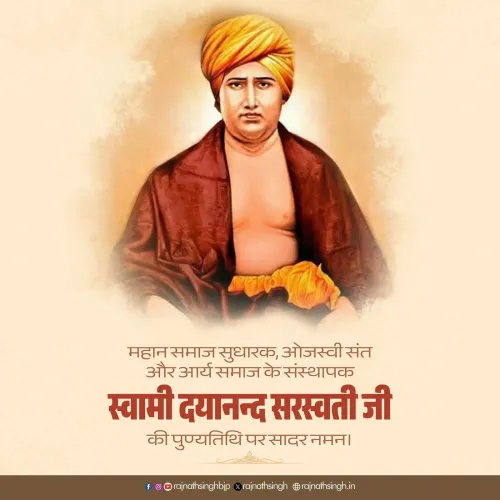
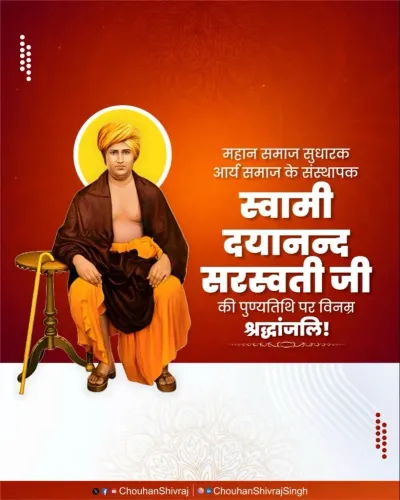
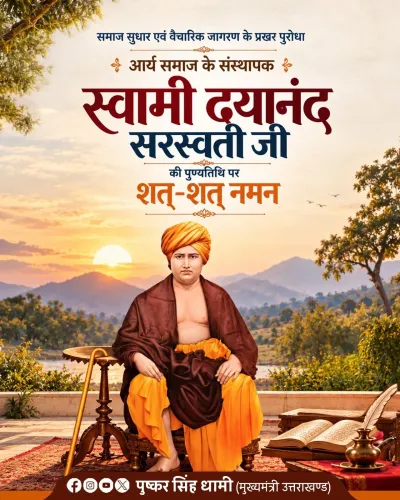
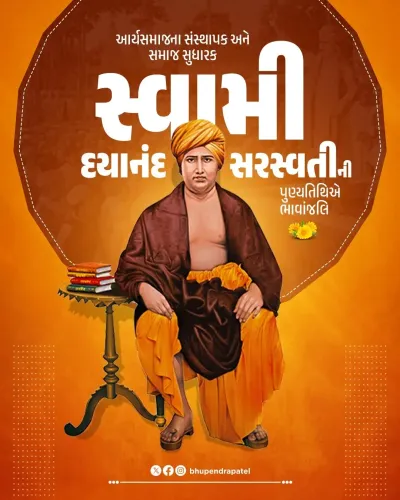
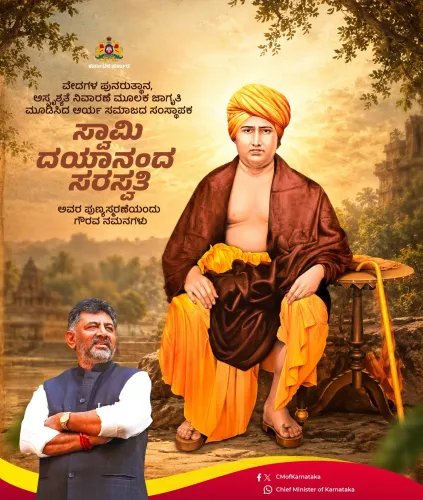
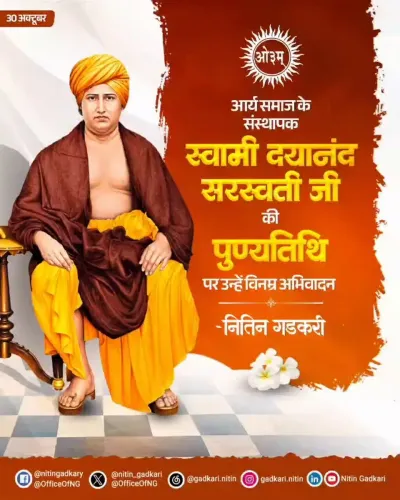
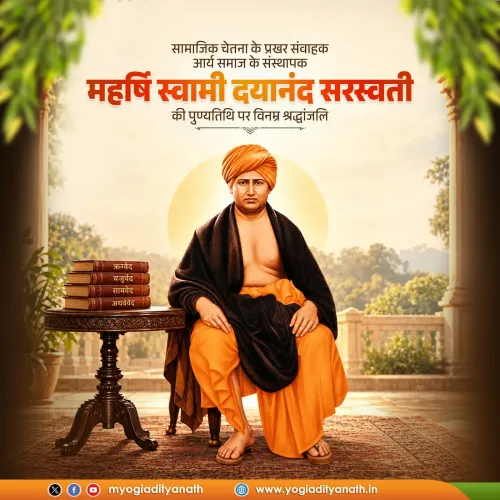
On the death anniversary of Maharishi Swami Dayanand Saraswati, Union Education Minister Dharmendra Pradhan offered a humble tribute to the 19th-century reformer who reshaped India's social conscience, posting his remembrance on X on Friday, 30 October 2026.
In his post, Pradhan wrote: 'Satya, gyaan aur samajik sudhar ke prati samarpit unke vichaaron ne samaj ko nayi disha di' — 'His thoughts, dedicated to truth, knowledge and social reform, gave society a new direction. His teachings will continue to inspire the nation and society forever.' The tribute came on the death anniversary of the founder of the Arya Samaj, one of the most consequential reform movements in modern Indian history.
The Reformer Who Rewrote the Social Contract
Swami Dayanand Saraswati founded the Arya Samaj in 1875, building a movement anchored in Vedic authority, strict monotheism, and a radical-for-its-time insistence on education for women and lower castes. He challenged idolatry, untouchability, and the rigid hierarchies that defined colonial-era Indian society. His most enduring literary contribution, Satyarth Prakash ('The Light of Truth'), laid out a vision of rational, egalitarian Hinduism that still drives the organisation's work.
The Arya Samaj's legacy in education is especially resonant for a sitting Education Minister to invoke — the movement directly seeded the Dayanand Anglo-Vedic (DAV) school and college network, one of the largest private educational chains in India today, running hundreds of institutions across the country.
Why the Education Minister's Tribute Carries Specific Weight
Pradhan's ministry has been the steward of the National Education Policy 2020, which explicitly references the integration of traditional Indian knowledge systems and values inherited from historical reformers. A tribute to Dayanand Saraswati from that office is therefore not merely ceremonial — it sits within a consistent ideological thread connecting 19th-century reform to present-day curriculum debates.
BJP leaders have made a practice of marking the anniversaries of 19th-century Hindu reformers publicly, framing contemporary governance as a continuation of indigenous social reform traditions rather than a departure from them. Pradhan's post fits squarely within that pattern.
The anniversary is a reminder that the argument Dayanand Saraswati made — that reform must come from within the tradition, not in spite of it — remains alive and fiercely contested in Indian public life more than a century after his passing.
Point of View
Invoking Dayanand Saraswati — whose Arya Samaj directly built one of India's largest school networks — reinforces the ideological scaffolding of the National Education Policy 2020's push toward Indian knowledge systems. The gesture simultaneously signals continuity with a broad Hindu reform tradition and stakes a claim that social progress is best understood through that tradition's own vocabulary. It is soft-power statecraft dressed as historical remembrance.
NationPress
30 Oct 2026
Frequently Asked Questions
Who was Swami Dayanand Saraswati?
Swami Dayanand Saraswati was a 19th-century Indian social reformer and the founder of the Arya Samaj in 1875 . He advocated Vedic authority, monotheism, education for women and lower castes, and actively opposed idolatry and untouchability.
When is Swami Dayanand Saraswati's death anniversary?
Swami Dayanand Saraswati's death anniversary falls on 30 October , the day he passed away in 1883 .
What is the Arya Samaj?
The Arya Samaj is a Hindu reform movement founded by Swami Dayanand Saraswati in 1875 . It promotes social equality, modern education and a return to Vedic principles, and has built an extensive network of DAV schools and colleges across India.
Why did Dharmendra Pradhan pay tribute to Swami Dayanand Saraswati?
Dharmendra Pradhan , as Union Education Minister, marked the reformer's death anniversary on 30 October 2026 , honouring his legacy of truth, knowledge and social reform — themes that also underpin the ministry's work on integrating Indian knowledge systems in education.
What is the connection between Arya Samaj and Indian education?
The Arya Samaj founded the Dayanand Anglo-Vedic (DAV) chain of schools and colleges, one of the largest private educational networks in India, making it directly relevant to any discussion of India's educational heritage.