Pralhad Joshi: BRE Summit 2026 Closes With 135-Nation Mandate
Synopsis
The 4-day BRE Summit 2026 at Bharat Mandapam concluded with participation from 135 countries and landmark outcomes on energy storage and green hydrogen. Union Minister Pralhad Joshi and Vice President C. P. Radhakrishnan anchored the closing session, reinforcing India's global clean-energy diplomacy.
Key Takeaways
BRE Summit 2026 ran for 4 days at Bharat Mandapam, New Delhi , concluding on 5 November 2026 .
135 countries participated, making it the country's largest renewable energy platform by international attendance.
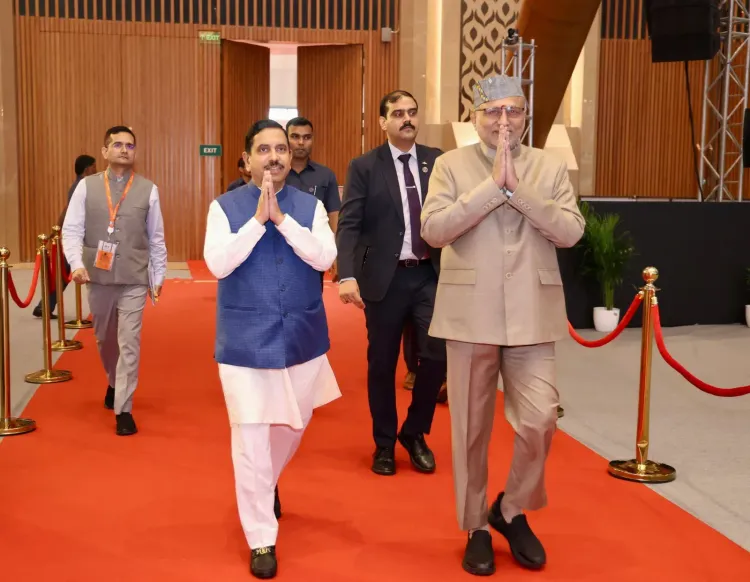
Radhakrishnan delivered the valedictory address at Minister Pralhad Joshi's invitation.
Summit produced 'landmark outcomes' specifically in energy storage and green hydrogen cooperation.
The 9th ISA Assembly of the International Solar Alliance was held alongside the summit.
India's NDC target of 50 percent non-fossil installed power capacity by 2030 forms the policy backbone driving these platforms.
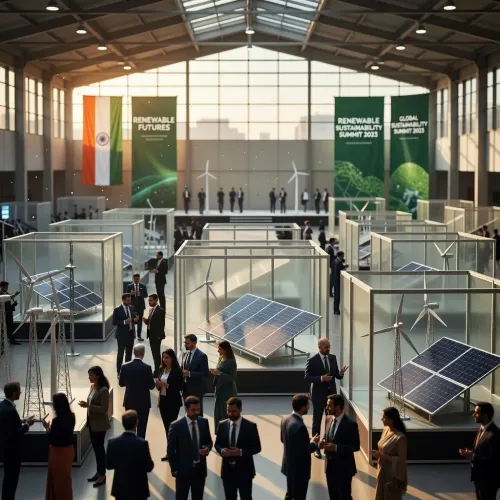
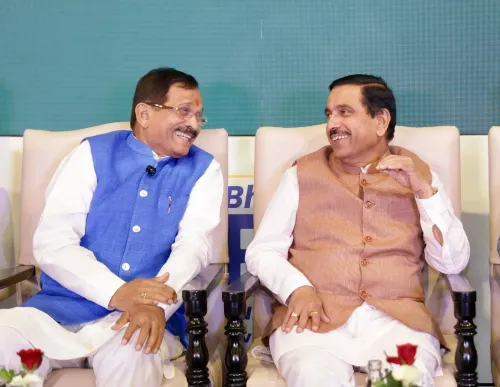
Four days of intensive deliberation at Bharat Mandapam, New Delhi ended on Thursday, 5 November 2026 with a clear political signal: India's renewable energy ambition is no longer a domestic story — it is a 135-country conversation. Union Minister for New and Renewable Energy Pralhad Joshi declared the #BRESummit2026 closed, calling the outcomes a 'strong foundation for the next phase of growth.'
Vice President Radhakrishnan delivers the valedictory — and what it means
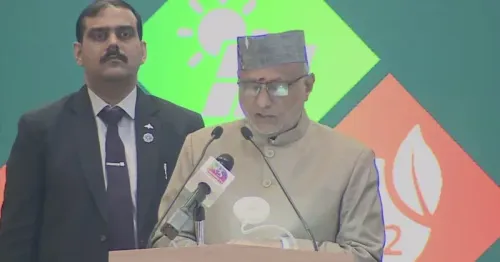
Vice President C. P. Radhakrishnan delivered the valedictory address at Joshi's personal invitation — a constitutional signal that the summit commanded the highest levels of government attention. For a ministerial-level renewable energy conference, drawing the Vice President to the closing session elevates it beyond a sectoral event into a statement of national priority.
Joshi, addressing the closing plenary, reflected on India's renewable energy progress and the summit's key outcomes, underscoring that 'innovation, investment and global partnerships' are the three accelerants for the journey ahead — a formulation that maps directly onto India's updated Nationally Determined Contributions, which commit to 50 percent cumulative electric power installed capacity from non-fossil sources by 2030.
Energy storage, green hydrogen, and the ISA thread running through it all
The minister flagged two specific technical outcomes as landmark: breakthroughs in energy storage policy and in green hydrogen cooperation. These are precisely the two sectors where India's solar and wind ambitions have so far outpaced supporting infrastructure — large-scale storage remains expensive, and green hydrogen is still at early commercial scale. That the summit produced 'landmark outcomes' in both areas suggests concrete multilateral frameworks are now in motion.
The event also carried the banner of the 9th ISA Assembly (#9ISAssembly) — a session of the International Solar Alliance, the treaty-based intergovernmental body co-launched by Prime Minister Narendra Modi and France at COP21 in Paris in 2015. That origin story matters: the ISA now has over 120 member countries, and embedding its Assembly inside the BRE Summit amplifies India's diplomatic leverage on clean energy with both the Global South and developed economies simultaneously.
135 countries: the geopolitical weight behind the number
Participation from 135 countries is a headline figure that positions this summit alongside major multilateral energy forums. India has consistently used high-profile renewable platforms at Bharat Mandapam to showcase domestic capacity additions and attract capital into emerging clean technologies — but pulling in more than two-thirds of the world's nations signals that the country's soft-power pitch on energy transition is gaining genuine traction.
The Kannada portion of Joshi's post — 'ಇಂಧನ ಸಂಗ್ರಹಣೆ ಕ್ಷೇತ್ರದ ಪ್ರಮುಖ ನಿರ್ಧಾರಗಳೊಂದಿಗೆ ಈ ಶೃಂಗಸಭೆಯು ಭವಿಷ್ಯದ ಅಭಿವೃದ್ಧಿಗೆ ಬಲವಾದ ತಡಿಪಾಯ ಹಾಕಿದೆ' ('This summit has laid a strong foundation for future development with landmark decisions in energy storage') — mirrors the English text almost exactly, suggesting the minister was speaking directly to a Kannada-speaking constituency while keeping the global message identical. Consistency across languages at a multilateral summit is deliberate.
What follows the declaration
The real test of BRE Summit 2026 will be in the follow-through: whether the energy storage and green hydrogen outcomes translate into policy notifications, investment frameworks, or bilateral MoUs in the months ahead. The scheduling of the next ISA Assembly session will also be a marker of momentum. Joshi has set the expectation publicly — and the 135 nations in the room heard it.
Point of View
Build diplomatic capital, and lock in domestic policy ambition through public international commitments. By anchoring the 9th ISA Assembly within the summit, India keeps the International Solar Alliance — a vehicle it co-owns — at the centre of global clean-energy discourse. The elevation of Vice President Radhakrishnan to the valedictory podium signals that renewable energy has moved from a ministerial portfolio to a cross-institutional national priority. The harder question is whether the 'landmark outcomes' on storage and green hydrogen produce enforceable frameworks or remain conference-room language.
NationPress
5 Nov 2026
Frequently Asked Questions
What is the BRE Summit 2026?
BRE Summit 2026 is India's biggest renewable energy conference, held over four days at Bharat Mandapam in New Delhi, bringing together governments, investors and industry players from 135 countries to advance clean energy cooperation.
What were the key outcomes of BRE Summit 2026?
The summit produced landmark outcomes in energy storage and green hydrogen policy, alongside broader international cooperation agreements, according to Union Minister Pralhad Joshi's closing statement.
What is the International Solar Alliance and how does it connect to BRE Summit 2026?
The International Solar Alliance is a treaty-based intergovernmental organisation co-founded by India and France at COP21 in Paris in 2015 to accelerate solar deployment. Its 9th Assembly was held as part of BRE Summit 2026.
Who delivered the valedictory address at BRE Summit 2026?
Vice President of India C. P. Radhakrishnan delivered the valedictory address at the summit, accepting an invitation from Union Minister for New and Renewable Energy Pralhad Joshi.
What is India's renewable energy target for 2030?
India committed in its updated Nationally Determined Contributions in 2022 to achieving 50 percent of cumulative electric power installed capacity from non-fossil fuel sources by 2030.