Pralhad Joshi fires back at Rahul Gandhi over ECI conspiracy claims
Synopsis
Minister Pralhad Joshi rebuked Rahul Gandhi on 26 September 2026, saying ECI's official records show the Special Intensive Revision decision was taken collectively by the full multi-member Commission, dismissing conspiracy allegations as a distortion of institutional process.
Key Takeaways
Pralhad Joshi accused Rahul Gandhi of making 'reckless allegations' against the Election Commission of India on 26 September 2026 .
Joshi cited ECI's 'documented proceedings' to argue that the Special Intensive Revision (SIR) decision was taken by the full multi-member Commission, not unilaterally.
The ECI became a multi-member body in 1993 to ensure collective decision-making on electoral matters.
Joshi rejected the framing that internal institutional discussions constitute evidence of a conspiracy.
The BJP amplified the rebuttal under the hashtag #RahulExposedByEC , signalling a sustained political offensive.
Any formal ECI clarification or parliamentary discussion on the proceedings remains a key event to watch.
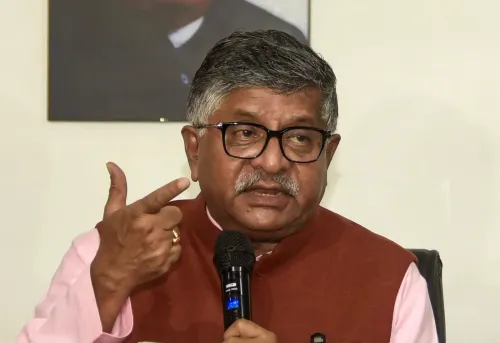
A BJP minister's sharp rebuttal landed on Saturday evening — and it went straight for the record. Union Consumer Affairs Minister Pralhad Joshi hit back at Congress leader Rahul Gandhi on 26 September 2026, accusing him of making 'reckless allegations against democratic institutions' and insisting that documented proceedings of the Election Commission of India (ECI) flatly contradict the narrative Gandhi has been advancing.
Joshi's post is direct: decisions on the Special Intensive Revision (SIR) of electoral rolls were taken by the 'full multi-member Commission', not by any single official or faction acting unilaterally. 'Healthy internal discussions are a normal part of institutional decision-making,' he wrote, rejecting the framing that any such deliberations amount to evidence of a conspiracy. His closing demand — that 'the evidence must be read in full' — was accompanied by the hashtag #RahulExposedByEC, a signal that the BJP intends to keep this exchange firmly in the public eye.
The multi-member Commission at the centre of the dispute
The architecture of the ECI matters here. The Commission was restructured into a multi-member body in 1993, specifically to ensure that consequential electoral decisions — including revisions of voter lists — rest on collective judgment rather than a single commissioner's call. Joshi is leaning on that institutional design to counter the allegation that any one decision could be the product of individual misconduct or political pressure.
Gandhi has been a persistent critic of the ECI's procedural transparency, particularly around electoral roll exercises. The SIR process — which involves systematic verification and revision of voter registrations — has been a flashpoint, with the opposition questioning its timing, scope, and the internal deliberations that shaped it. The government's consistent counter has been that these are routine institutional actions, governed by established process.
A familiar battle sharpening ahead of the next cycle
This is not the first round, and it almost certainly will not be the last. Indian politics has seen recurring disputes between the BJP-led government and opposition parties over the ECI's independence, with tensions typically spiking around election cycles and voter-list revisions. What gives Saturday's exchange its particular edge is the BJP's decision to name the Commission's own documented record as the rebuttal — effectively arguing that the institution Gandhi claims to defend is itself the source that disproves his allegations.
Whether the ECI issues any formal clarification on the proceedings in question — or whether the matter surfaces in the next Parliament session — will determine how far this confrontation travels beyond social media.
For now, the BJP has drawn its line: read the record in full, or stop making the allegation.
Point of View
The BJP attempts to turn Gandhi's credibility as a defender of institutions against him. The invocation of the multi-member Commission structure is deliberate — it frames any allegation of unilateral manipulation as a misreading of constitutional design, not merely a political disagreement. This exchange fits a longer BJP playbook of using process arguments to neutralise opposition attacks on electoral bodies, a strategy that tends to resonate with middle-ground voters who distrust both partisan camps. The real test is whether the ECI's formal record, when examined closely, fully bears out Joshi's characterisation — that is the factual question neither the post nor available research definitively resolves.
NationPress
26 Sept 2026
Frequently Asked Questions
What did Pralhad Joshi say about Rahul Gandhi and the Election Commission?
Joshi accused Rahul Gandhi of making reckless allegations against the ECI, stating that the Commission's official records show the Special Intensive Revision decision was taken collectively by the full multi-member Commission, not through any conspiracy.
What is the Special Intensive Revision (SIR) of electoral rolls?
The SIR is a systematic process by which the Election Commission verifies and revises voter registrations. It has been a point of political controversy, with opposition parties questioning its timing, scope, and internal deliberations.
Why is the Election Commission a multi-member body?
The ECI was restructured into a multi-member body in 1993 to ensure that significant electoral decisions — such as revisions of voter rolls — are made through collective judgment rather than a single official's discretion.
What is #RahulExposedByEC?
It is the hashtag used by BJP leaders, including Pralhad Joshi, to amplify their argument that the Election Commission's own documented proceedings contradict Rahul Gandhi's allegations against the institution.
Has the Election Commission issued any formal clarification on the SIR proceedings?
No formal ECI clarification on the specific proceedings referenced in Joshi's post has been confirmed as of 26 September 2026. A parliamentary discussion or official ECI statement remains a key event to watch.