Pralhad Joshi flags off Bengaluru–Mumbai Vande Bharat Sleeper
Synopsis
South India's first Vande Bharat Sleeper Express was flagged off from Bengaluru's Sir M Visvesvaraya Terminal on 1 November 2026, covering 1,118 km to Mumbai in 16 hours and cutting travel time by 8 hours. Union Minister Pralhad Joshi attended alongside senior BJP MPs, citing a tenfold rise in Karnataka's railway allocation since 2014.
Key Takeaways
South India's first Vande Bharat Sleeper Express launched on 1 November 2026 from Sir M Visvesvaraya Terminal, Bengaluru .
The train covers approximately 1,118 km between Bengaluru and Mumbai in 16 hours , saving around 8 hours over existing services.
The route passes through Tumakuru, Davanagere, Haveri, Ranebennur , and Hubballi-Dharwad .
Karnataka's central railway allocation has grown from roughly Rs 700 crore (pre-2014) to Rs 7,000–8,000 crore annually; the 2026-27 budget earmarks Rs 7,748 crore for the state.
The Kavach safety system and plans for 180 km/h operations were highlighted alongside a national solar capacity milestone of 172 GW .
Union Ministers H D Kumaraswamy , Shobha Karandlaje , and several Bengaluru MPs attended the ceremony.
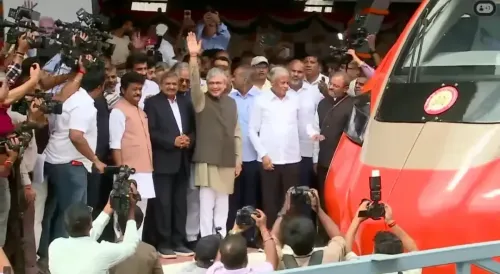
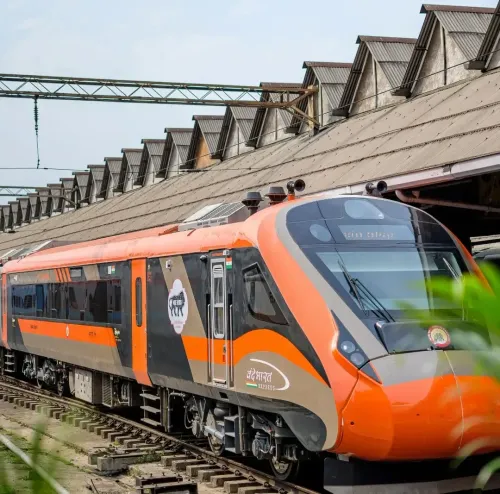
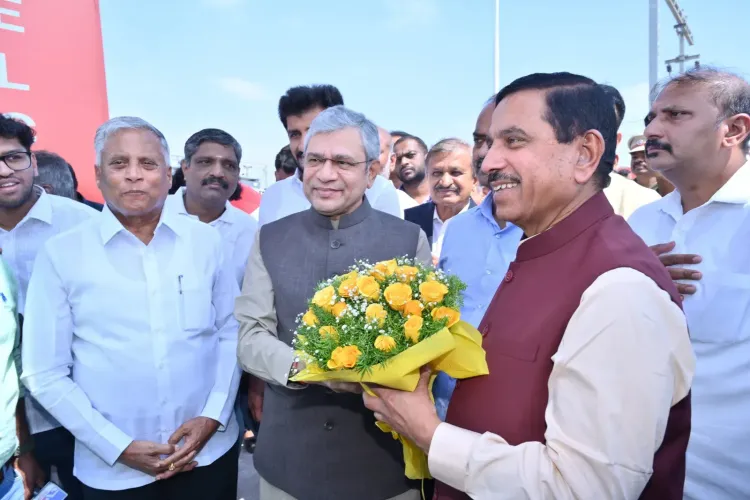
South India's first Vande Bharat Sleeper Express rolled out of Bengaluru on Sunday, 1 November 2026, as Union Consumer Affairs Minister Pralhad Joshi attended the flagging-off ceremony at the Sir M Visvesvaraya Terminal (SMVT) — marking a generational upgrade in overnight connectivity between two of India's largest economic engines.
Posting in Kannada, Joshi described the moment as 'the Vande Bharat Sleeper train becoming a landmark addition to the rail network linking Bengaluru and Mumbai.' The new service will cover approximately 1,118 km in 16 hours, cutting the current journey time by roughly 8 hours.
South India's overnight rail landscape, redrawn
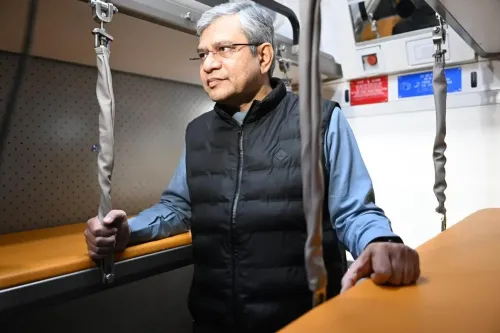
The Bengaluru–Mumbai Vande Bharat Sleeper is the first such sleeper service in southern India, bringing the modern semi-high-speed platform — previously associated with day-time chair-car travel — into the overnight berth segment. The route passes through Tumakuru, Davanagere, Haveri, Ranebennur, and Hubballi-Dharwad, threading together Karnataka's industrial and agricultural heartland before reaching Maharashtra. Joshi credited the rollout to 'the capable leadership of Prime Minister Narendra Modi and Union Railway Minister Ashwini Vaishnaw,' pointing to sustained growth in Karnataka's central railway allocation. He noted that the state received roughly Rs 700 crore annually in railway grants before 2014, a figure that has since climbed to Rs 7,000–8,000 crore per year. For 2026-27, the central government has allocated Rs 7,748 crore to Karnataka's railway development in the Union Budget.Kavach, solar power, and the 180 km/h ambition
Joshi also highlighted the broader technology push accompanying the sleeper service launch. He cited the deployment of the indigenous Kavach automatic train-protection system as having 'significantly reduced accidents,' and pointed to plans for trains capable of running at 180 km/h with spill-proof technology onboard. India's solar power generation capacity, he said, has reached 172 gigawatts, with renewable energy now feeding into railway operations — framing it as evidence of 'the central government's commitment to all-round progress.' The Vande Bharat platform itself dates to 2019, when the first service launched between New Delhi and Varanasi. Kavach trials began on select routes in 2022. The sleeper variant represents the next evolutionary step: designed for journeys long enough to require berths, it targets business and leisure travellers who currently rely on older Rajdhani and Shatabdi-era rolling stock.BJP Karnataka's political moment at SMVT
The ceremony drew a constellation of central government ministers and Bengaluru parliamentarians. Union Heavy Industries and Steel Minister H D Kumaraswamy, Minister of State for MSME Shobha Karandlaje, and Bengaluru South MP Tejasvi Surya were present, alongside MPs P C Mohan, Dr C N Manjunath, Lehar Singh Siroya, and Jaggesh, as well as former MP Umesh Jadhav and senior railway officials. Joshi closed his post by thanking Modi, Vaishnaw, and Railway Minister of State V Somanna on behalf of 'the people of all Karnataka,' casting the launch as Indian Railways 'striding towards realising the vision of a Viksit Bharat' — a developed India. For millions of passengers shuttling between India's tech capital and its financial capital, the new sleeper express is more than a timetable entry — it is a test of whether India's indigenous rail ambition can deliver on its boldest promises at scale.Point of View
Reducing dependence on legacy Rajdhani-era trains. The tenfold jump in Karnataka's railway allocation since 2014 — now codified in a Rs 7,748 crore budget line — signals that southern states are moving from the periphery to the centre of railway capital planning. For the BJP, showcasing this in Karnataka ahead of future electoral cycles is as deliberate as the infrastructure itself. The convergence of Kavach safety upgrades, renewable energy integration, and semi-high-speed ambitions suggests the modernisation drive is being pursued on multiple fronts simultaneously, though operational achievement of 180 km/h speeds will be the real benchmark watch.
NationPress
1 Nov 2026
Frequently Asked Questions
What is the Vande Bharat Sleeper Express Bengaluru Mumbai route?
The Vande Bharat Sleeper Express runs between Bengaluru's Sir M Visvesvaraya Terminal and Mumbai, covering approximately 1,118 km via Tumakuru, Davanagere, Haveri, Ranebennur, and Hubballi-Dharwad in around 16 hours.
How much time does the Vande Bharat Sleeper save on the Bengaluru-Mumbai journey?
According to Union Minister Pralhad Joshi, the new train is expected to save roughly 8 hours compared to current travel times on the Bengaluru-Mumbai route.
What is Kavach and how does it improve rail safety in India?
Kavach is an indigenous automatic train-protection system developed for Indian Railways that intervenes to prevent collisions; trials began on select routes in 2022 and deployment has been cited as having significantly reduced accidents.
How much has Karnataka's railway budget allocation increased since 2014?
Pralhad Joshi stated that Karnataka received around Rs 700 crore annually in central railway grants before 2014; this has risen to Rs 7,000–8,000 crore per year, with Rs 7,748 crore allocated in the 2026-27 Union Budget.
Is this the first Vande Bharat Sleeper train in South India?
Yes, the Bengaluru–Mumbai service flagged off on 1 November 2026 is described as the first Vande Bharat Sleeper Express service in South India.