CM Pema Khandu meets Army's 5 Mountain Division GOC on border development
Synopsis
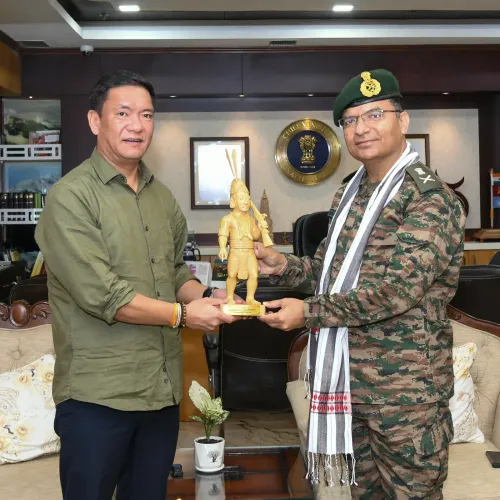
Chief Minister Pema Khandu met Major General Amit Nautiyal, GOC of the Indian Army's 5 Mountain Division, on November 1, 2026, to discuss infrastructure, livelihoods, and essential services for Arunachal Pradesh's border communities — reinforcing an ongoing civil-military development push along the India-China frontier.
Key Takeaways
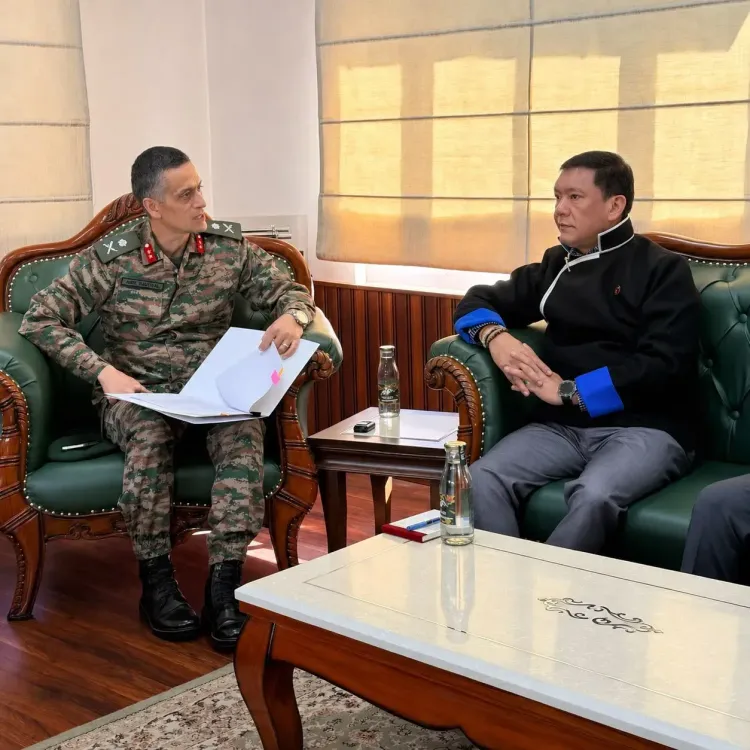
CM Pema Khandu held a discussion with Major General Amit Nautiyal , GOC of the 5 Mountain Division , on November 1, 2026 on border-area development in Arunachal Pradesh.
The meeting focused on three priorities: infrastructure , livelihood opportunities , and improved access to essential services for frontier communities.
The 5 Mountain Division is the Indian Army formation responsible for security and civic support in Arunachal Pradesh's sectors bordering China.
The Border Area Development Programme (BADP) , in operation since 1986–87 , and the Vibrant Villages Programme (launched 2022–23 ) form the central policy backbone for this development push.
Civil-military coordination on non-combat developmental tasks is a long-established practice in Arunachal Pradesh's frontier districts, given the challenging geography.
Where India's last villages touch the China border, Arunachal Pradesh Chief Minister Pema Khandu is pushing hard to ensure those villages don't feel like they're at the end of the road. On Sunday, November 1, 2026, Khandu held a focused discussion with Major General Amit Nautiyal, General Officer Commanding of the Indian Army's 5 Mountain Division, on developmental priorities across the state's border areas — roads, livelihoods, and essential services for the communities that live closest to the frontier.
What the 5 Mountain Division brings to the table
The 5 Mountain Division is no ordinary counterpart for a state government meeting. Responsible for security and civic support across Arunachal Pradesh's sectors bordering China, the Division has long operated as a partner in non-combat development — from road-clearing in harsh winters to medical camps in villages that a district collector can reach only by foot. When an Army GOC sits down with a Chief Minister to discuss 'developmental priorities', the conversation covers terrain that civilian agencies alone cannot easily manage.
Khandu underlined the three-pronged agenda on X: 'better infrastructure, livelihood opportunities and improved access to essential services.' That framing maps almost exactly onto what the frontier districts have historically lacked — and what successive governments have promised to fix.
BADP, Vibrant Villages, and the long arc of frontier policy
The policy scaffolding for this push is not new. The Border Area Development Programme (BADP), launched in 1986–87, channels central funds into infrastructure and welfare in border blocks across the country, with Arunachal Pradesh among its key beneficiaries. More recently, the Vibrant Villages Programme, announced in 2022–23, targeted holistic development of select border villages in the state — better housing, connectivity, and economic activity — with an explicit dual purpose: improving living standards and reinforcing the security calculus along one of India's most sensitive frontiers.
The civil-military coordination model that Sunday's meeting exemplifies has been a recurring feature of this effort. Mountain divisions in the Northeast routinely partner with state administrations on road construction support, health outreach, and livelihood facilitation — capabilities the Army brings because geography demands it.
The villages at the heart of it
The stakes are immediate and human. Arunachal Pradesh shares a long and contested boundary with China; the border districts — from Tawang in the west to Anjaw in the east — contain communities that have historically faced limited road access, sparse healthcare, and thin economic opportunity. That demographic and developmental gap is also a strategic one: villages that are well-connected and economically viable are less likely to be abandoned, and a populated, functional frontier matters in ways that go well beyond development metrics.
Specific projects or allocations emerging from Sunday's discussion have not yet been announced, but the meeting signals that the CM is keeping the civil-military pipeline active at the highest local level.
For Arunachal Pradesh's border communities, every such meeting is a down-payment on the infrastructure and dignity they've long been owed — and the real measure will be what breaks ground next.
Point of View
Rather than leaving it to district or corps-level coordination, suggests the state government wants faster or more visible traction on projects that straddle administrative and operational jurisdictions. With the Vibrant Villages Programme still in its delivery phase, this meeting could be a pressure point for accelerating on-ground implementation before the next budget cycle.
NationPress
1 Nov 2026
Frequently Asked Questions
What did CM Pema Khandu discuss with Major General Amit Nautiyal?
Chief Minister Pema Khandu met Major General Amit Nautiyal, the General Officer Commanding of the Indian Army's 5 Mountain Division, to discuss developmental priorities for Arunachal Pradesh's border areas, focusing on infrastructure, livelihood opportunities, and access to essential services for frontier communities.
What is the 5 Mountain Division of the Indian Army?
The 5 Mountain Division is an Indian Army formation responsible for security and civic support in parts of Arunachal Pradesh that border China. It also conducts non-combat developmental activities in partnership with state administrations in remote frontier sectors.
What is the Vibrant Villages Programme and how does it relate to Arunachal Pradesh?
The Vibrant Villages Programme, announced in 2022–23, targets holistic development — housing, connectivity, and economic activity — in select border villages of Arunachal Pradesh, with the dual aim of improving living standards and reinforcing the security posture along the India-China frontier.
What is the Border Area Development Programme (BADP)?
The Border Area Development Programme, launched in 1986–87, is a central government scheme that provides funds for infrastructure and welfare projects in border blocks across India, with Arunachal Pradesh among its key recipient states.
Why is border community development important in Arunachal Pradesh?
Arunachal Pradesh shares a long, contested boundary with China, and its frontier districts have historically faced limited road access, sparse healthcare, and weak economic opportunity. Developing these communities is both a welfare priority and a strategic imperative — a well-populated, connected border is a more secure one.