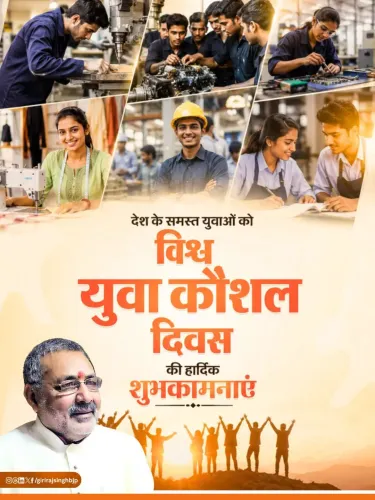
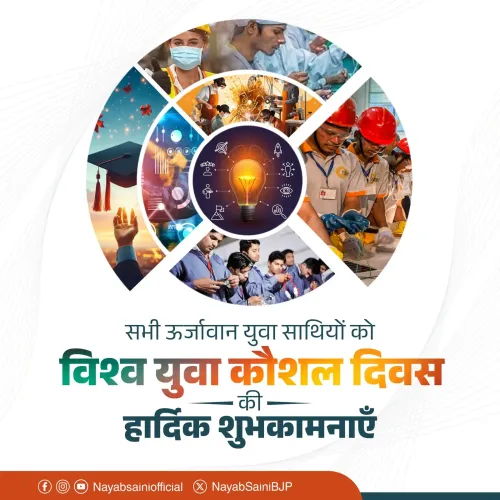
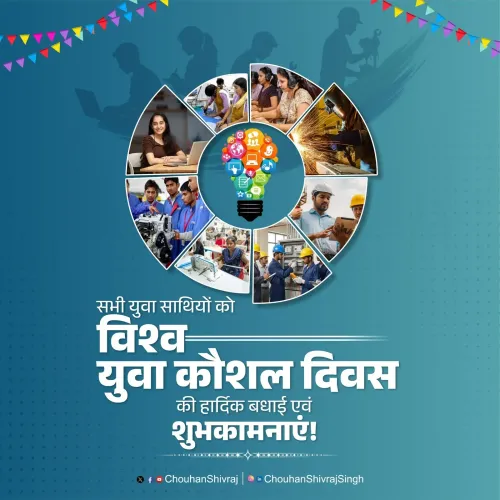
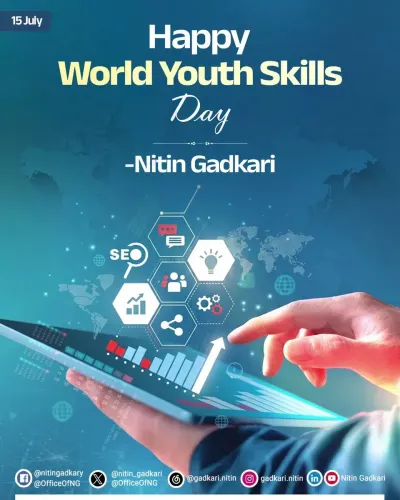
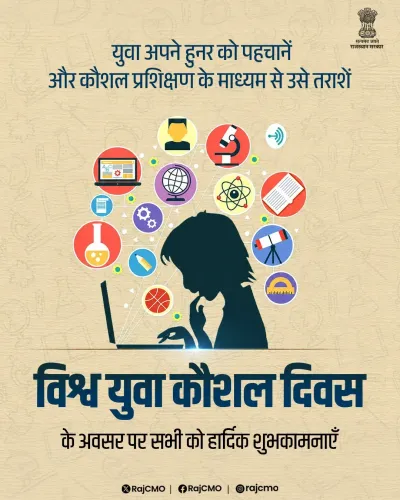
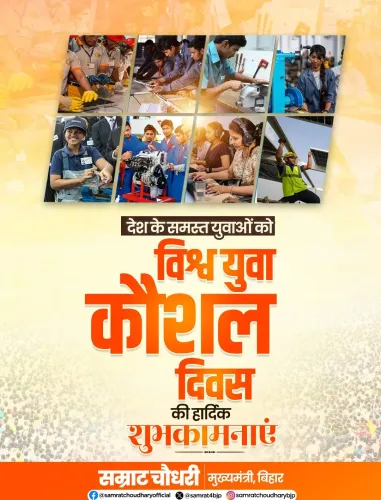
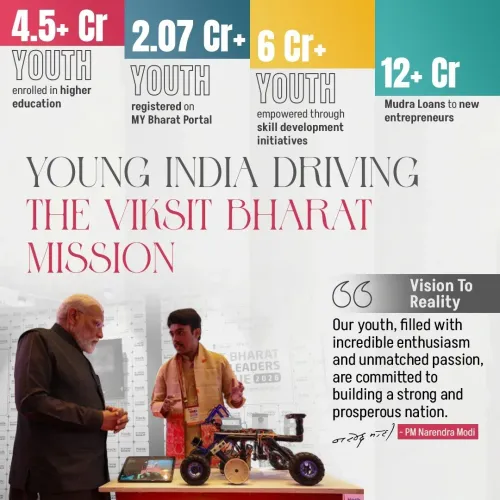
Pralhad Joshi Hails Skill India on World Youth Skills Day
Synopsis
On World Youth Skills Day, Union Minister Pralhad Joshi celebrated India's youth and highlighted the Skill India mission as key to building an Aatmanirbhar Bharat under PM Modi's leadership, also conveying wishes in Kannada to young people across the country.
Key Takeaways
World Youth Skills Day is observed on 15 July annually; India has marked it since 2015 , the year Skill India was launched.
Union Minister Pralhad Joshi credited Skill India with providing industry-relevant skills and creating opportunities for Indian youth.
The Skill India Mission was launched on 15 July 2015 with a target to train 400 million people in vocational skills.
The Aatmanirbhar Bharat Abhiyan , announced in May 2020 , integrates skilling with domestic supply-chain and manufacturing goals.
Joshi posted in both English and Kannada, reflecting his Karnataka constituency and the mission's pan-India reach.
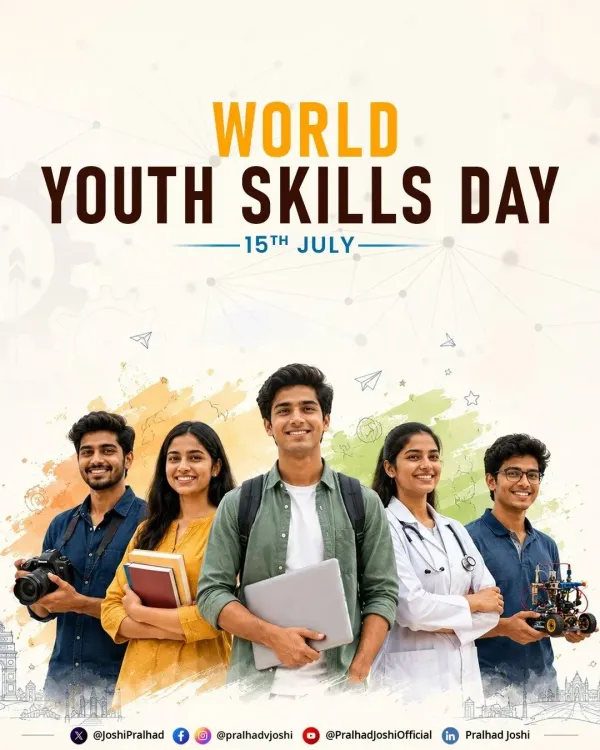
Union Consumer Affairs Minister Pralhad Joshi on Wednesday, 15 July 2026 marked World Youth Skills Day by underscoring the role of India's youth in driving innovation and self-reliance, pointing to the Skill India mission as a cornerstone of the country's workforce transformation under Prime Minister Narendra Modi.
Context
World Youth Skills Day is observed every year on 15 July under a United Nations mandate, with a focus on youth employability, entrepreneurship, and the transition to decent work. India has marked the day since 2015 — the same year the Skill India Mission was launched — making the date symbolically significant for the government's skilling agenda.
In his post, Joshi wrote: 'The strength of a nation lies in the skills of its youth. Their skills are driving innovation, strengthening our workforce, and accelerating the journey towards an Aatmanirbhar Bharat.' He also addressed youth in Kannada, writing 'ಯುವಶಕ್ತಿಯೇ ರಾಷ್ಟ್ರದ ಅಭಿವೃದ್ಧಿಯ ಪ್ರಮುಖ ಚಾಲಕ ಶಕ್ತಿ' — meaning 'Youth power is the primary driving force of national development' — and expressing hope that young people would realise their dreams while contributing to the country's progress.
Policy Backdrop
The Skill India Mission was launched on 15 July 2015 with an ambition to train 400 million people in industry-relevant vocational skills through a network of training partners and institutes. Its flagship financial vehicle, the Pradhan Mantri Kaushal Vikas Yojana (PMKVY), has since expanded through multiple phases to cover short-term skilling and recognition of prior learning.
The Aatmanirbhar Bharat Abhiyan, announced in May 2020, explicitly incorporated skilling as a pillar of domestic supply-chain resilience, linking workforce capability to reduced import dependence. Joshi's post directly connects these two threads — youth skills and self-reliance — reflecting the government's integrated framing of skilling as both an economic and a strategic priority.
India's approach has evolved from supply-driven training volumes to demand-driven alignment with industry needs, including bilateral skill partnerships and mutual recognition of qualifications frameworks that position Indian workers in global value chains.
Stakeholders and Impact
The primary beneficiaries of Skill India are Indian youth seeking vocational certification and employment in manufacturing, services, and emerging technology sectors. The mission's reach extends to rural and semi-urban trainees who access short-term courses through Pradhan Mantri Kaushal Kendras and affiliated training centres across the country.
For industry, a credibly skilled workforce reduces on-the-job training costs and supports India's competitiveness as a manufacturing and services hub. Joshi's acknowledgement of an 'ever-evolving global landscape' signals awareness that skilling targets must keep pace with automation, green-energy transitions, and digital transformation — sectors directly relevant to his own ministerial portfolios in renewable energy and consumer affairs.
What's Next
Annual performance reports from the Ministry of Skill Development and Entrepreneurship will be the key measure of how effectively training volumes translate into employment outcomes. Any fresh agreements on mutual recognition of qualifications at upcoming international summits, along with parliamentary scrutiny of budget outlays for skill schemes, will signal whether the mission's ambitions are being recalibrated or reinforced.
As India's demographic dividend window remains open, the pressure on policymakers to convert large training numbers into verifiable, quality employment will intensify — making World Youth Skills Day an annual checkpoint for both political messaging and policy accountability.
Point of View
But its framing is deliberate: by yoking Skill India directly to Aatmanirbhar Bharat, the BJP continues to position skilling not merely as social welfare but as industrial and strategic policy. The bilingual English-Kannada message also serves a regional political purpose, reinforcing Joshi's identity as a senior Karnataka leader ahead of any state-level electoral cycle. More broadly, the post reflects the government's consistent effort to brand demographic dividend conversion as a Modi-era achievement, even as independent assessments of training quality and employment outcomes remain a subject of ongoing policy debate. The forward-looking language about an 'ever-evolving global landscape' subtly acknowledges that current skilling frameworks must adapt to automation and green-economy demands — a challenge that will test the mission's next phase.
NationPress
15 Jul 2026
Frequently Asked Questions
What is World Youth Skills Day and why does India observe it?
World Youth Skills Day is a United Nations-mandated annual observance on 15 July focused on youth employability and entrepreneurship. India has marked it since 2015, coinciding with the launch of the Skill India Mission on the same date that year.
What is the Skill India Mission?
Skill India is a national mission launched on 15 July 2015 to train 400 million Indians in industry-relevant vocational skills. Its primary financial scheme, the Pradhan Mantri Kaushal Vikas Yojana, funds short-term certification courses through a network of training partners.
What did Pralhad Joshi say on World Youth Skills Day 2026?
Minister Pralhad Joshi said 'the strength of a nation lies in the skills of its youth' and credited Skill India with driving innovation, strengthening the workforce, and accelerating the journey towards an Aatmanirbhar Bharat. He also conveyed wishes in Kannada.
What is Aatmanirbhar Bharat and how does it relate to skilling?
Aatmanirbhar Bharat, or Self-Reliant India, is a campaign announced in May 2020 that links domestic manufacturing and supply-chain resilience to a skilled workforce. Skilling is treated as a core pillar of reducing import dependence and boosting India's industrial capacity.
Who is Pralhad Joshi?
Pralhad Joshi is a senior BJP leader from Karnataka and currently serves as Union Minister for Consumer Affairs, Food and Public Distribution, and Minister of New and Renewable Energy in the Government of India.