Pralhad Joshi meets French Minister at ISA Assembly, pitches RE sector
Synopsis
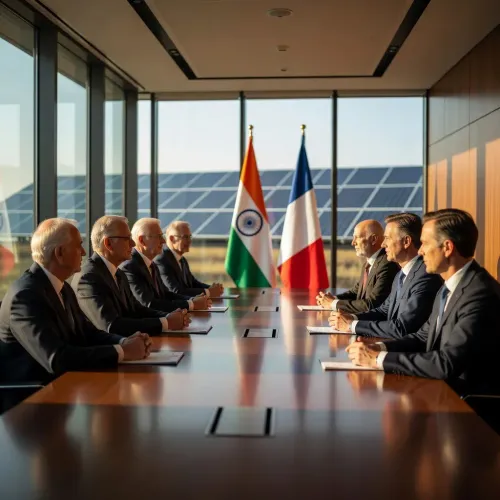
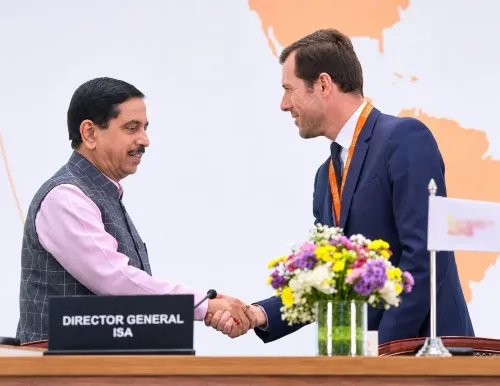
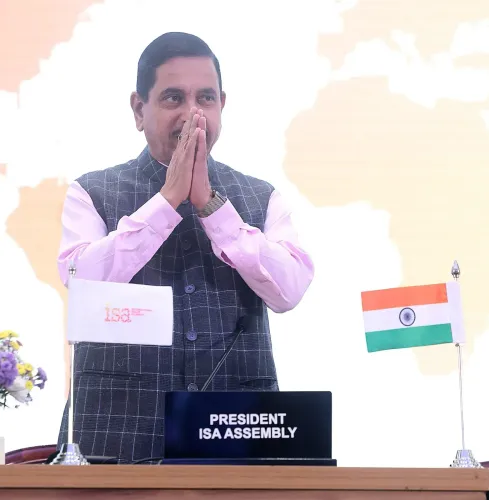
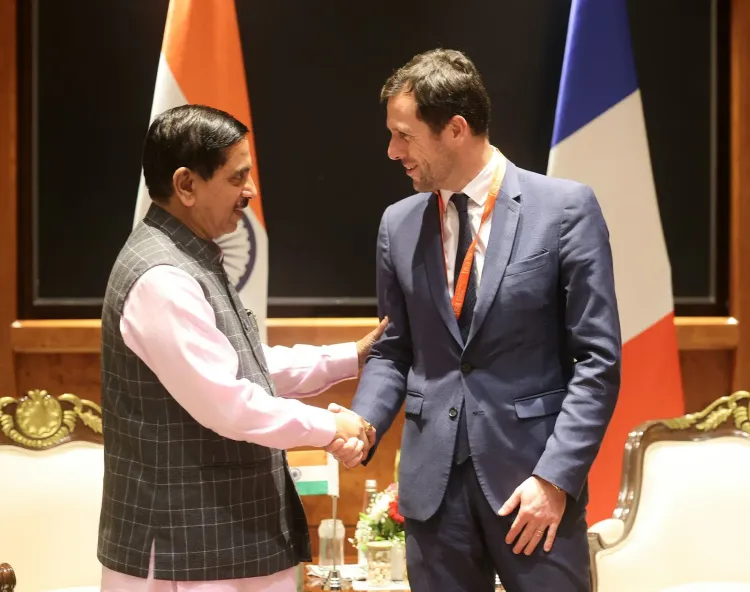
Union Minister Pralhad Joshi held a bilateral with France's Ecological Transition Minister at the ISA Assembly on the sidelines of the Bharat Renewable Energy Summit 2026, pitching India's policy stability and inviting French firms to invest in renewables and green hydrogen offtake.
Key Takeaways
Pralhad Joshi met H.E.
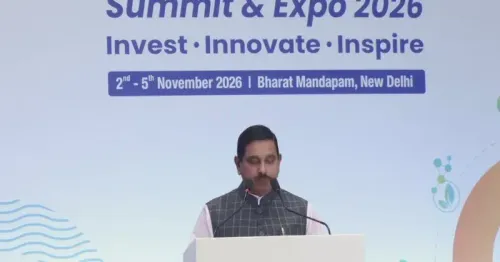
Mathieu Mlefevre , France's Minister Delegate for Ecological Transition, at the Bharat Renewable Energy Summit 2026 on 3 November 2026 .
The bilateral was held on the sidelines of the International Solar Alliance (ISA) Assembly , of which India and France are founding partners since 2015 .
Joshi highlighted India's 'stable government and policy environment' and pitched 'attractive returns' for renewable energy investors.
French companies were formally invited to deepen investments in India's renewable energy sector and explore green hydrogen offtake opportunities.
India's National Green Hydrogen Mission (2023) anchors the country's ambition to produce, use and export green hydrogen as part of its net-zero 2070 target.
Both countries reaffirmed commitment to accelerating global solar deployment through the ISA framework.
At the Bharat Renewable Energy Summit 2026, Union Minister for New and Renewable Energy Pralhad Joshi sat down with H.E. Mathieu Mlefevre, France's Minister Delegate for Ecological Transition, on the sidelines of the International Solar Alliance (ISA) Assembly — and the pitch was direct: India is open, stable, and ready for deeper French capital.
The ISA bond: a decade of solar diplomacy
India and France are not newcomers to this conversation. The two countries co-launched the International Solar Alliance at the 2015 UN Climate Change Conference in Paris, creating the first treaty-based intergovernmental body solely dedicated to accelerating solar energy adoption across member nations. That founding partnership now forms the diplomatic scaffolding for meetings like Tuesday's — where the agenda moves from symbolism to investment specifics.
Joshi underscored India's 'stable government and policy environment' — a standard refrain in bilateral investor pitches, but one with particular resonance as India pursues aggressive renewable capacity targets and courts foreign capital to fund them. He highlighted 'attractive returns for investors' and extended a formal invitation to French companies to explore green hydrogen offtake opportunities.
Why green hydrogen is the new frontier in India-France clean energy talks
The pivot to green hydrogen is deliberate. India's National Green Hydrogen Mission, announced in 2023, set out an ambitious programme to scale domestic production, use, and eventually export of green hydrogen as a cornerstone of India's path to net-zero by 2070. France, with its large industrial and energy conglomerates, represents exactly the kind of offtake partner India needs — companies capable of committing to long-term purchase agreements that justify the scale of upstream investment.
Joshi's explicit invitation for French firms to 'deepen investments' in India's renewable energy sector and engage on green hydrogen offtake signals that this bilateral is no longer just about solar panels — it is about building an integrated clean-energy supply chain with European industrial partners at one end and Indian capacity at the other.
What the meeting signals for French investors
For French companies weighing emerging-market clean energy exposure, Tuesday's bilateral sends a clear government-to-government signal: India's renewable energy ministry is actively facilitating market entry. The combination of the ISA multilateral framework and a direct ministerial meeting lowers the political-risk perception that often delays large infrastructure commitments.
Both nations reaffirmed their commitment to 'accelerating global solar deployment and advancing a sustainable energy future' — a formulation that keeps the ISA mandate at the centre while making room for the bilateral commercial tracks that actually move capital. The next visible test will be whether French firms translate the ministerial conversation into announced investments in India's renewable and green hydrogen project pipeline.
Point of View
Then use the bilateral channel to drive commercial asks. The explicit mention of green hydrogen offtake — not just solar — shows that India's renewable energy ministry is now using ministerial meetings to advance the National Green Hydrogen Mission's commercial architecture, not just headline capacity numbers. For France, deepening ISA engagement alongside industrial commitments in India's green hydrogen supply chain aligns with its own decarbonisation industrial strategy. The real scorecard will be whether this produces binding offtake agreements or remains goodwill optics.
NationPress
4 Nov 2026
Frequently Asked Questions
What is the International Solar Alliance and when did India and France join?
The International Solar Alliance (ISA) is a treaty-based intergovernmental organisation co-founded by India and France at the 2015 UN Climate Change Conference in Paris to promote solar energy adoption among member countries.
What did Pralhad Joshi discuss with the French minister at the Bharat Renewable Energy Summit 2026?
Joshi highlighted India's stable policy environment and attractive investor returns in the renewable energy sector, and formally invited French companies to deepen investments in India's RE sector and explore green hydrogen offtake opportunities.
What is India's National Green Hydrogen Mission?
India's National Green Hydrogen Mission , announced in 2023 , is a government programme to scale domestic production, use, and export of green hydrogen as part of India's net-zero by 2070 commitment.
Why is France important for India's green hydrogen plans?
France has large industrial and energy companies that could serve as long-term offtake partners for Indian-produced green hydrogen, providing the demand-side commitment needed to justify large-scale upstream investment in India.
What is the Bharat Renewable Energy Summit 2026?
The Bharat Renewable Energy Summit 2026 is an energy summit where the ISA Assembly meeting was hosted, serving as the venue for Joshi's bilateral with the French minister, though specific summit details are still emerging.