Pralhad Joshi: PM Modi Inaugurates Bharat Renewable Energy Summit
Synopsis
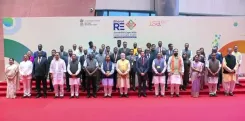
Prime Minister Narendra Modi inaugurated the Bharat Renewable Energy Summit & Expo in New Delhi on November 2, 2026. Union Minister Pralhad Joshi, who holds the renewable energy portfolio, shared the live event. The summit arrives as India presses toward its 500 GW non-fossil capacity target by 2030.
Key Takeaways
PM Narendra Modi inaugurated the Bharat Renewable Energy Summit & Expo in New Delhi on November 2, 2026 .
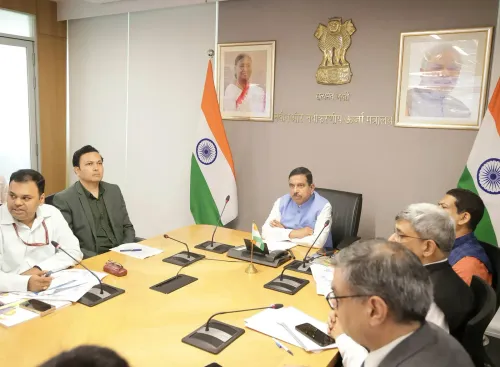
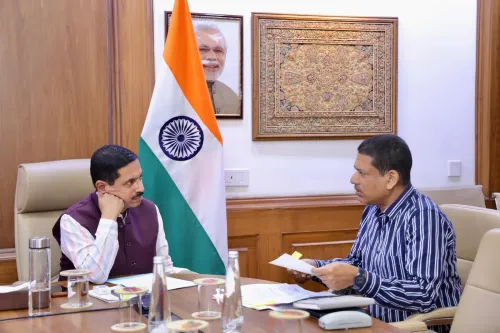
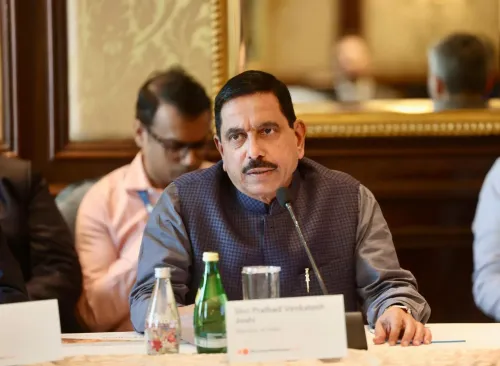
Union Minister Pralhad Joshi holds the New and Renewable Energy portfolio and shared the inauguration live on X.
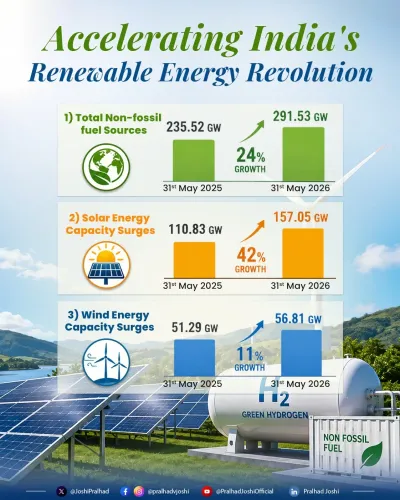
India has committed to 500 GW of non-fossil fuel energy capacity by 2030 , announced at COP26 in Glasgow, 2021 .
India's renewable journey traces back to a 175 GW pledge at the 2015 Paris Climate Conference and the co-launch of the International Solar Alliance with France.
The summit is expected to focus on capacity additions, grid integration, domestic manufacturing incentives, and green investment signals.
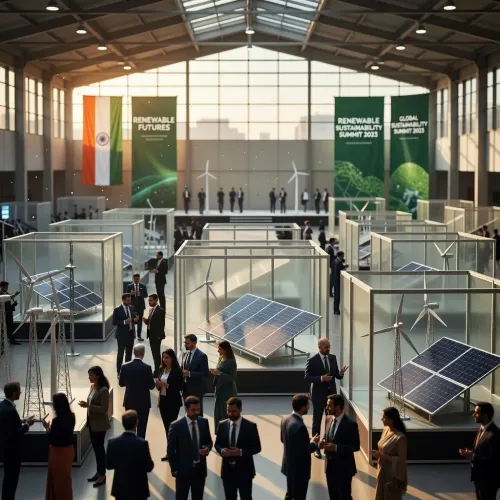
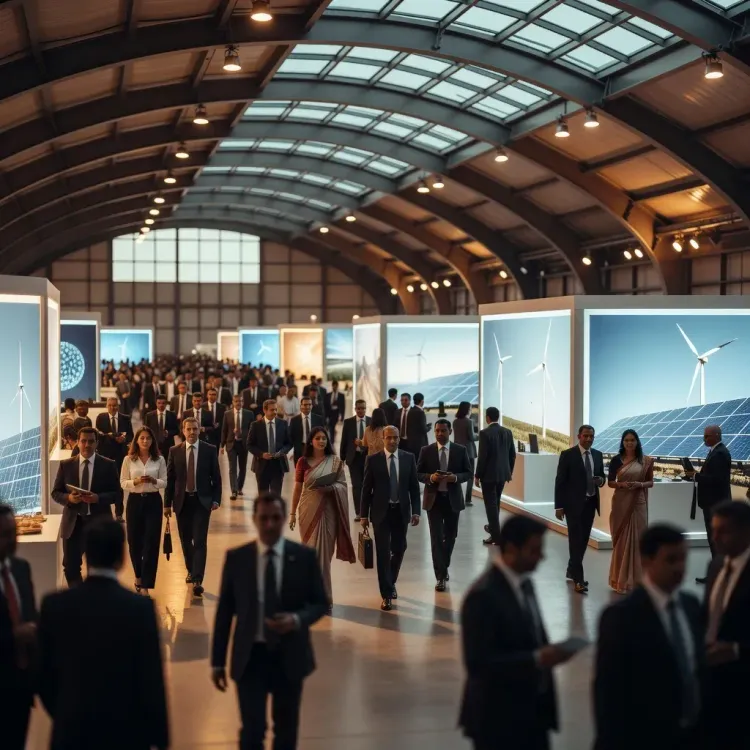
India's clean-energy ambitions took centre stage in the capital on Monday, November 2, 2026, as Prime Minister Narendra Modi inaugurated the Bharat Renewable Energy Summit & Expo in New Delhi — a marquee industry gathering that brings together policymakers, green investors, and renewable energy firms at a pivotal moment for India's 2030 capacity targets. Union Minister Pralhad Joshi, who holds the New and Renewable Energy portfolio alongside Consumer Affairs, shared the live-stream of the inauguration on X.
A summit anchored to India's 500 GW deadline
The timing is deliberate. India committed at COP26 in 2021 to achieving 500 GW of non-fossil fuel energy capacity by 2030 — a target that demands relentless year-on-year additions across solar, wind, and emerging green technologies. With roughly four years left on that clock, a Prime Minister-level inauguration of a national renewable summit signals that the push is entering its most intensive phase.
The ambition has deep roots. India first pledged 175 GW of renewable capacity by 2022 at the 2015 Paris Climate Conference — and then co-launched the International Solar Alliance the same year with France, setting itself up as a global advocate for solar deployment. The 500 GW goal, announced at Glasgow, essentially doubled down on that identity.
Joshi's dual portfolio and the industry calculus
Minister Joshi occupies an unusually strategic position: his New and Renewable Energy portfolio drives the capacity build-out, while his Consumer Affairs brief keeps him attuned to energy-price pressures on ordinary households. That overlap matters — large-scale renewable expansion only delivers its full dividend when grid integration and consumer tariffs move in step with new capacity.
For the renewable energy sector — manufacturers, project developers, and green-finance investors — a high-profile summit inaugurated by the Prime Minister is also a market signal. It suggests continued policy support, potential announcements on manufacturing incentives under production-linked schemes, and possible state-level project allocations that firms can price into forward pipelines.
What the industry floor will be watching
Beyond the inauguration ceremony, the summit's expo floor is where concrete outcomes take shape. Industry participants will be tracking any fresh capacity-addition announcements, updates to grid-integration timelines, and incentives designed to deepen domestic manufacturing of solar panels, wind turbines, and battery storage — reducing India's import dependence while scaling output.
India has consistently framed renewable growth not just as a climate obligation but as an energy-security and job-creation imperative. A summit of this scale, backed by Prime Ministerial presence, is a statement that all three frames are simultaneously in play.
Four years and counting to 2030 — and the clock, clearly, has everyone's attention.
Point of View
Four years before India's self-imposed 500 GW deadline, is less ceremony and more deadline management — a public reminder to industry, states, and investors that the clock is running. For Minister Joshi, the event is a platform to consolidate his ministry's identity as the engine of India's energy transition, not merely its regulator. The summit also arrives at a moment when India's clean-energy credibility on the global stage — built on the International Solar Alliance and successive COP pledges — demands domestic follow-through at scale. Watch for post-summit policy circulars on manufacturing incentives and grid-integration timelines as the real measure of intent.
NationPress
2 Nov 2026
Frequently Asked Questions
What is the Bharat Renewable Energy Summit and Expo?
The Bharat Renewable Energy Summit & Expo is a major national industry summit and exhibition on renewable energy, inaugurated by Prime Minister Narendra Modi in New Delhi on November 2, 2026, bringing together policymakers, firms, and investors in the clean-energy sector.
What is India's renewable energy target for 2030?
India has committed to achieving 500 GW of non-fossil fuel energy capacity by 2030, a pledge announced at the COP26 climate summit in Glasgow in 2021, building on an earlier 175 GW target set at the 2015 Paris Climate Conference.
Who is Pralhad Joshi and what is his role in renewable energy?
Pralhad Joshi is a senior BJP leader from Karnataka and Union Minister holding the portfolios of New and Renewable Energy as well as Consumer Affairs, Food and Public Distribution. He is the cabinet minister responsible for driving India's renewable energy capacity build-out.
What is the International Solar Alliance?
The International Solar Alliance is a treaty-based international organisation co-founded by India and France in 2015 to promote solar energy deployment globally, positioning India as a leading advocate for renewable energy in the developing world.
What outcomes are expected from the Bharat Renewable Energy Summit 2026?
Industry participants are watching for announcements on fresh capacity additions, domestic manufacturing incentives, grid-integration timelines, and potential state-level project allocations that could accelerate India's progress toward its 500 GW clean-energy goal.