President Murmu tells IFS probationers: Expand forests, secure Viksit Bharat
Synopsis
President Droupadi Murmu told incoming Indian Forest Service officers that forests are the foundation of life — and that their work is inseparable from India's Viksit Bharat 2047 ambition. With 242 officer trainees across two batches, including trainees from Bhutan, the address signals how seriously the highest office views ecological governance as a pillar of national progress.
Key Takeaways
President Droupadi Murmu met Indian Forest Service probationers on 17 July in New Delhi .
She described IFS officers as custodians of India's natural heritage, linking their work to the Viksit Bharat 2047 vision.
The 2024 batch has 111 officer trainees ; the 2025 batch has 131 officer trainees , each including 2 trainees from Bhutan .
Both batches are undergoing training at the Indira Gandhi National Forest Academy, Dehradun .
President Murmu urged officers to harmonise ecological protection with the aspirations of tribal communities, forest dwellers, women, and farmers .
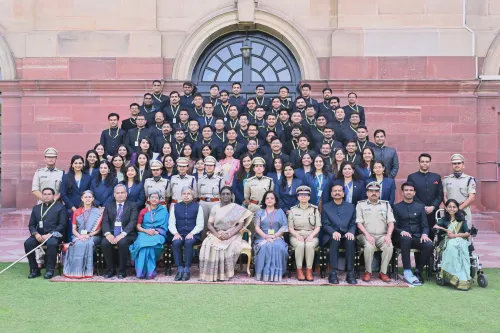
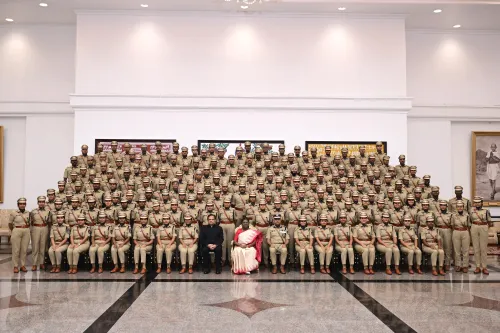
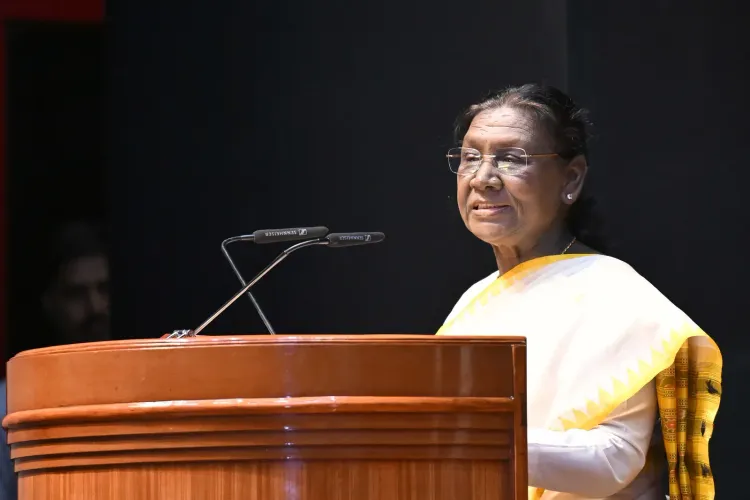
President Droupadi Murmu on Friday, 17 July called on probationers of the Indian Forest Service (IFS) to treat the expansion of green cover as a national priority, describing them as custodians of India's natural heritage and linking ecological security directly to the country's Viksit Bharat 2047 vision. The interaction took place at Rashtrapati Bhavan, New Delhi, when probationers from two training batches called on the President.
Key Remarks by the President
Addressing the young officers, President Murmu said their responsibilities extend far beyond forest administration. 'Forests are central to addressing these challenges. Work of Indian Forest Service officers will therefore contribute not only to India's environmental security but also to global efforts towards sustainable development,' she said, referring to the twin crises of climate change and biodiversity loss confronting the world today.
She urged the probationers to reject the notion that development and conservation are opposing goals, stressing instead that 'both nature and communities can thrive together' when policy is designed with that intent.
Communities at the Centre of Conservation
A recurring theme in the President's address was the need to anchor forest governance in community participation. She specifically highlighted the importance of understanding the perspectives of tribal communities, forest dwellers, women, farmers, and local institutions. According to her, when communities become genuine stakeholders in protecting forests, conservation efforts become more effective and longer-lasting. She urged the officers to actively encourage people's participation in conservation, restoration, and sustainable livelihood initiatives.
The Two Batches in Training
The probationers who met the President belong to two batches currently undergoing professional training at the Indira Gandhi National Forest Academy (IGNFA), Dehradun. The 2024 batch comprises 111 officer trainees, while the 2025 batch has 131 officer trainees. Notably, each batch includes two officer trainees from Bhutan, reflecting the regional dimension of India's forest governance cooperation.
Ecological Security and the Viksit Bharat Goal
President Murmu framed ecological protection not as a standalone objective but as integral to India's broader development ambitions. She expressed confidence that IFS officers would play a 'defining role' in ensuring India's progress remains green, inclusive, and sustainable. This comes amid growing international scrutiny of India's forest cover trends and the Centre's commitments under the Paris Agreement and Convention on Biological Diversity.
As the country moves closer to its 2047 centenary milestone, the President's message to the incoming cohort of forest officers signals that environmental stewardship will remain a core pillar of national governance — not a peripheral concern.
Point of View
Even as afforestation targets climb. Telling IFS probationers that development and conservation are not opposing goals is the right framing, but the institutional reality on the ground often tells a different story. The inclusion of Bhutanese trainees is a quiet but meaningful marker of India's soft-power role in regional environmental governance. Whether this cohort of 242 officers can translate presidential vision into measurable green cover gains will depend on how much discretion — and resources — the system actually gives them.
NationPress
17 Jul 2026
Frequently Asked Questions
What did President Murmu say to Indian Forest Service probationers?
President Droupadi Murmu described IFS probationers as custodians of India's natural heritage and urged them to prioritise expanding forests, calling ecological security integral to the Viksit Bharat 2047 goal. She also stressed that development and conservation must be treated as complementary, not competing, objectives.
How many IFS probationers met President Murmu on 17 July?
A combined group from two batches met the President. The 2024 batch comprises 111 officer trainees and the 2025 batch has 131 officer trainees, including two trainees from Bhutan in each batch.
Where are the IFS probationers currently being trained?
Both the 2024 and 2025 batches of IFS probationers are undergoing professional training at the Indira Gandhi National Forest Academy (IGNFA) in Dehradun, Uttarakhand.
Why did President Murmu emphasise the role of tribal communities in forest conservation?
President Murmu said that understanding the concerns of tribal communities, forest dwellers, women, farmers, and local institutions gives officers valuable insight. She argued that when communities are genuine stakeholders in forest protection, conservation becomes more effective and durable.
How does forest conservation connect to India's Viksit Bharat 2047 goal?
President Murmu said ecological security is integral to the national goal of Viksit Bharat by 2047, arguing that India's progress must be green, inclusive, and sustainable. She positioned IFS officers as playing a defining role in ensuring that environmental health underpins, rather than contradicts, economic development.