Punjab Cabinet clears Ranjitgarh Development Authority Bill 2026
Synopsis
The Punjab Cabinet under Chief Minister Bhagwant Mann has cleared the Ranjitgarh Development Authority Bill 2026, creating a new statutory body to drive eco-tourism and planned development around the Ranjit Sagar and Shahpur Kandi Dam areas — with Mann himself set to chair the authority.
Key Takeaways
The Punjab Cabinet approved the Ranjitgarh Development Authority (RDA) Bill, 2026 on 5 October 2026 .
The RDA will oversee planned, sustainable, and eco-tourism development of the Ranjit Sagar Dam and Shahpur Kandi Dam areas.
Chief Minister Bhagwant Mann will chair the authority; the Minister of Tourism and Cultural Affairs will serve as Vice-Chairman.
New driver posts created in the Chief Electoral Officer's office by surrendering 19 peon posts and one Moharrir post .
Tutor posts at nursing colleges in Patiala and Amritsar to be filled through promotion under amended service rules.
Contractual non-teaching staff under PICTES cleared for regularisation in prescribed pay scales.
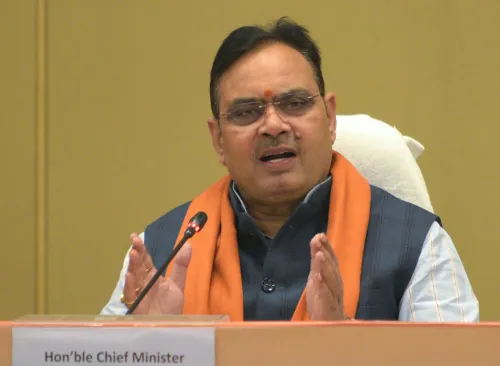
The Punjab Cabinet, chaired by Chief Minister Bhagwant Mann, on Monday, 5 October 2026, approved the Ranjitgarh Development Authority (RDA) Bill, 2026, paving the way for a statutory body to oversee planned, sustainable, and eco-tourism-driven development of the Ranjit Sagar Dam and Shahpur Kandi Dam areas in the state.
What the RDA Bill Proposes
According to the Chief Minister's Office, the Ranjitgarh Development Authority will be constituted as a statutory body under the administrative control of the Department of Tourism and Cultural Affairs. The authority will be vested with administrative, financial, and regulatory powers for integrated development, land management, project implementation, and destination governance.
Chief Minister Bhagwant Mann will chair the authority, with the Minister of Tourism and Cultural Affairs serving as Vice-Chairman. An Executive Committee headed by the Chief Secretary will manage day-to-day functioning and inter-departmental coordination.
Other Key Decisions by the Cabinet
In a related administrative move, the Cabinet approved the creation of new driver posts in the office of the Chief Electoral Officer. These posts have been created by surrendering peon posts from among 19 permanent positions and one permanent post of Moharrir, with the aim of streamlining electoral office operations.
The Cabinet also approved an amendment to Appendix-B of the Punjab Nursing Education Service Rules (Group B), 2016, enabling the filling of tutor posts at Government College of Nursing, Patiala, and Government College of Nursing, Amritsar through promotion. Eligible candidates are staff nurses and nursing sisters working under the Director, Research and Medical Education, Punjab, who hold an M.Sc. (Nursing) in the relevant speciality. Preference will be given to those with at least one year of teaching experience in nursing education.
Regularisation of PICTES Contractual Staff
The Cabinet additionally gave its concurrence for the regularisation of non-teaching staff employed on a contractual basis under the Punjab Information and Communication Technology Education Society (PICTES). The regularised employees will receive benefits under PICTES in the prescribed pay scales, providing long-overdue employment security to a section of the state's education-support workforce.
Why the RDA Bill Matters
The Ranjit Sagar Dam and Shahpur Kandi Dam zones hold significant eco-tourism and water-body tourism potential in Punjab. The creation of a dedicated statutory authority signals the state government's intent to shift from ad hoc development to structured, destination-focused governance in these areas. This comes amid a broader push by several state governments across India to leverage reservoir and dam-adjacent zones as tourism circuits, particularly following post-pandemic recovery in domestic travel. Whether the new authority can translate its mandate into tangible on-ground development will depend heavily on inter-departmental coordination and budget allocation in the coming months.
Point of View
And putting the Chief Minister at the helm, while symbolically strong, risks making the authority susceptible to political cycles. The real indicator will be the authority's budget envelope and whether land management powers translate into actual acquisition and development on the ground. The broader Cabinet decisions — nursing college promotions, PICTES regularisations — reflect routine administrative upkeep, but the PICTES move in particular addresses a long-pending contractual workforce grievance that had simmered for years.
NationPress
5 Oct 2026
Frequently Asked Questions
What is the Ranjitgarh Development Authority Bill 2026?
The Ranjitgarh Development Authority (RDA) Bill, 2026 is a Punjab government legislation approved by the state Cabinet on 5 October 2026. It establishes a statutory body to oversee planned, sustainable, and eco-tourism-oriented development of the Ranjit Sagar Dam and Shahpur Kandi Dam areas, with administrative, financial, and regulatory powers for land management and destination governance.
Who will chair the Ranjitgarh Development Authority?
Chief Minister Bhagwant Mann will chair the Ranjitgarh Development Authority, with the Minister of Tourism and Cultural Affairs serving as Vice-Chairman. An Executive Committee headed by the Chief Secretary will handle day-to-day functioning.
What other decisions did the Punjab Cabinet take on 5 October 2026?
The Cabinet approved new driver posts in the Chief Electoral Officer's office, amended nursing education service rules to enable promotions at government nursing colleges in Patiala and Amritsar, and cleared the regularisation of contractual non-teaching staff under PICTES.
Who benefits from the PICTES regularisation decision?
Non-teaching staff working on a contractual basis under the Punjab Information and Communication Technology Education Society (PICTES) will benefit. They will be regularised and extended pay scale benefits, providing greater employment security.
Why is the Ranjitgarh Development Authority significant for Punjab?
The Ranjit Sagar Dam and Shahpur Kandi Dam zones have considerable eco-tourism potential that has remained underdeveloped. A dedicated statutory authority is expected to bring coordinated planning, investment, and governance to these areas, potentially boosting tourism and local economies in the region.