CM Mann-Led Punjab Cabinet Regularises 65,000 Contract Workers
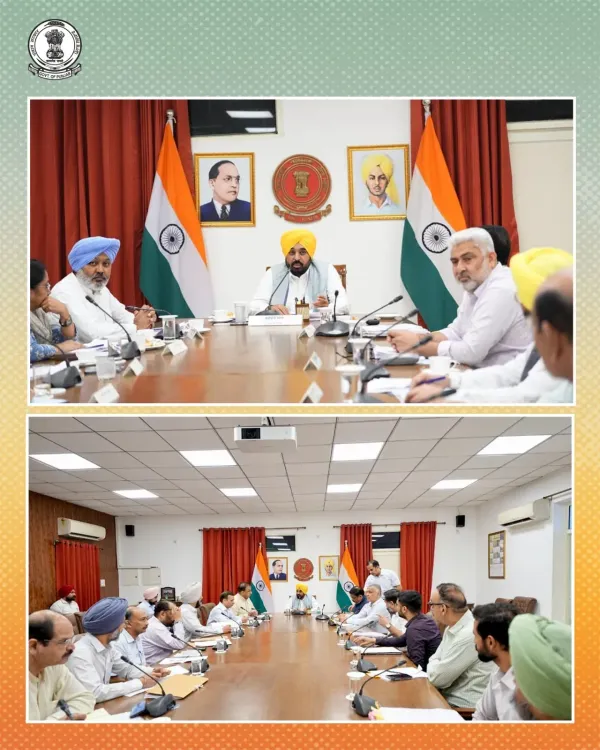
Synopsis
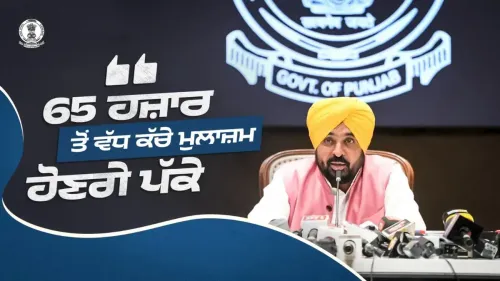
The Punjab Cabinet, led by Chief Minister Bhagwant Mann, has approved a framework to abolish the decades-old contractual employment system and regularise over 65,000 government workers — described as one of the most significant pro-worker decisions in the state's history.
Key Takeaways
The Punjab Cabinet approved a framework on 30 May 2026 to end the decades-old contractual employment system in government departments.
Over 65,000 contractual employees across Punjab government departments are in line for regularisation under the approved framework.
The decision fulfils a key Aam Aadmi Party manifesto promise made ahead of the 2022 Punjab assembly elections .
The cabinet approval is a framework-level decision; detailed implementation guidelines, budgetary allocations, and possible legislative amendments are still to follow.
The move is part of a broader AAP emphasis on labour welfare, mirroring similar initiatives in Delhi and addressing national debates on public employment security.
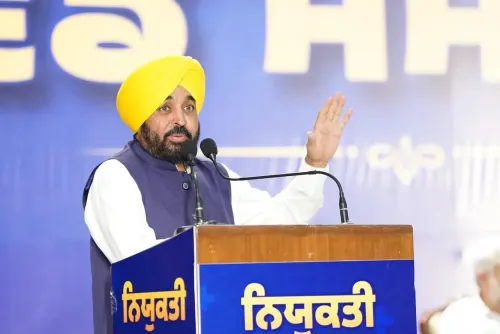
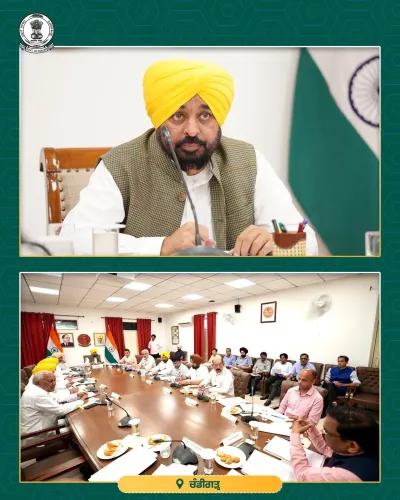
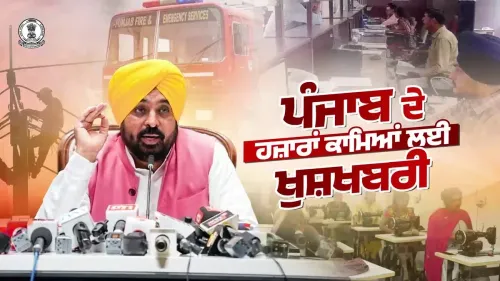
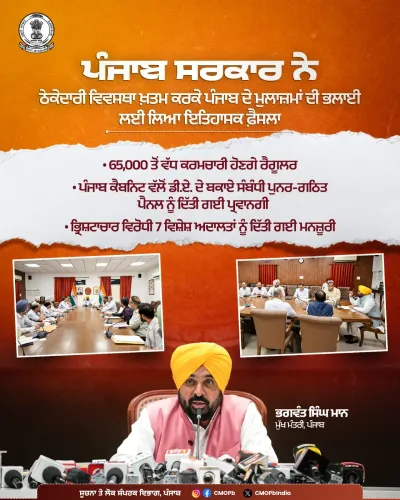
The Chief Minister's Office of Punjab announced on Saturday, 30 May 2026 that the Punjab Cabinet, under the leadership of Chief Minister Bhagwant Singh Mann, has approved a framework to abolish the decades-old contractual employment system and regularise over 65,000 employees across government departments — a move the government has described as one of the most significant decisions in the state's history in favour of workers.
The official post, shared bilingual in Punjabi and English, states: 'The Punjab Cabinet has approved a framework paving the way to abolish the decades old contractual employment system and to regularise over 65,000 employees in government departments. This stands as one of the most significant decisions in Punjab's history in favour of workers.'
Context
Contractual hiring in Punjab's government departments has grown steadily over several decades, mirroring a national trend that accelerated after India's economic liberalisation in 1991. Workers hired on contract typically earn lower wages, receive fewer benefits, and lack job security compared to regular government employees. Public sector unions across the state have long demanded an end to this two-tier system. The Aam Aadmi Party (AAP) government, which came to power in Punjab in March 2022, had included the regularisation of contractual government workers as a specific commitment in its election manifesto. Saturday's cabinet decision marks a formal step toward fulfilling that pledge.Policy Backdrop
State-level efforts to regularise ad-hoc and contract staff have been a recurring feature of Indian labour politics since the early 2000s, often accompanied by prolonged litigation and debates over fiscal sustainability. India's new labour codes, consolidated in recent years, have further sharpened the tension between flexible hiring practices favoured by fiscal managers and employment security demanded by worker organisations. The AAP government in Delhi had also pursued pro-labour welfare measures, and the Punjab decision extends that ideological thread to the state's largest employer — the government itself. Approving a 'framework' signals that the cabinet has endorsed the policy direction; detailed implementation guidelines, budgetary provisions, and any required legislative amendments are expected to follow.Stakeholders and Impact
The most immediate beneficiaries are the more than 65,000 contractual workers employed across various government departments in Punjab. Regularisation would typically entitle them to fixed pay scales, provident fund contributions, gratuity, medical benefits, and greater job security. Public sector unions are likely to view the cabinet approval as a significant, if preliminary, victory. For the state exchequer, absorbing tens of thousands of workers into the regular payroll carries a long-term fiscal cost. The government will need to present a credible financing plan — including revised budget allocations — before the framework can translate into individual regularisation orders. Departments that have relied heavily on contract staff for operational flexibility may also need structural adjustments.What's Next
The approved framework is the first formal step in what is expected to be a multi-stage process. Officials are expected to issue detailed eligibility criteria, service-length thresholds, and department-wise implementation timelines. Legislative amendments may be required in some cases. Affected employees and their unions will be watching closely for the notification of specific rules, while fiscal watchdogs will scrutinise the budgetary impact on Punjab's finances. The government's ability to move swiftly from framework to actual regularisation orders will be the real test of this landmark announcement.Point of View
Converting a 2022 manifesto promise into formal policy at a time when AAP is seeking to consolidate its labour-welfare credentials ahead of future electoral cycles. The scale — over 65,000 workers — is large enough to generate visible goodwill among organised public-sector labour, a constituency that has historically swung between Congress and AAP in Punjab. However, approving a 'framework' rather than issuing direct regularisation orders suggests the government is carefully managing the fiscal and administrative complexity involved. The real measure of this announcement will be how quickly it translates into enforceable orders, and whether the state budget can absorb the recurring payroll burden without crowding out capital expenditure.
NationPress
14 Oct 2026
Frequently Asked Questions
What did the Punjab Cabinet decide on 30 May 2026?
The Punjab Cabinet approved a framework to abolish the decades-old contractual employment system and regularise over 65,000 employees working in various state government departments.
How many employees will be regularised in Punjab?
The approved framework covers over 65,000 contractual employees across Punjab government departments, though individual regularisation orders will follow after detailed guidelines are issued.
Is this an AAP manifesto promise?
Yes. The Aam Aadmi Party's 2022 Punjab election manifesto included a specific commitment to end contractual employment and regularise government workers, making Saturday's decision a fulfilment of that pledge.
What happens next after the Punjab Cabinet approved the framework?
The government is expected to notify detailed eligibility criteria, service-length thresholds, and department-wise timelines. Budgetary allocations and possible legislative amendments will also need to be worked out before actual regularisation orders are issued.
What are the benefits of regularisation for contractual workers in Punjab?
Regularised employees typically become entitled to fixed government pay scales, provident fund contributions, gratuity, medical benefits, and job security protections that contractual workers currently do not receive.