Punjab CMO: Mann govt to end outsourcing, regularise 65,048 workers
Synopsis
The Chief Minister's Office of Punjab has announced that the Bhagwant Mann-led government has cleared a decision to end outsourcing and the contractor system, extending government employment benefits to 65,048 workers engaged across 51 state departments.
Key Takeaways
Punjab CMO announces end to outsourcing and contractor system in state departments.
Decision covers 65,048 workers across 51 government departments .
Affected workers to gain access to government employment benefits.
Move led by Chief Minister Bhagwant Mann , in office since March 2022.
Implementation hinges on follow-up notifications, timelines and budgetary support.
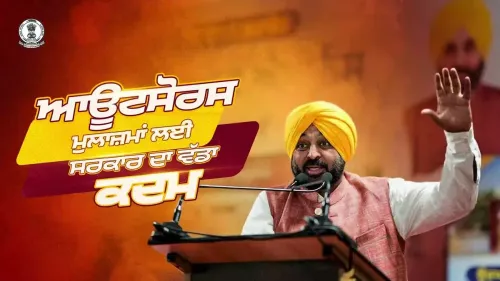
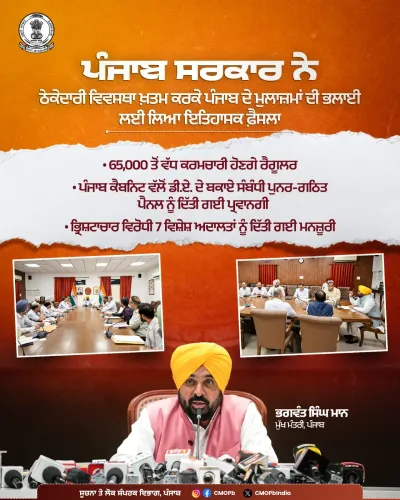
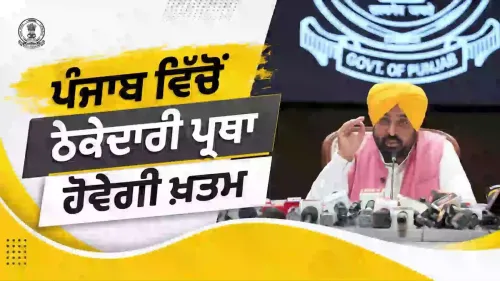
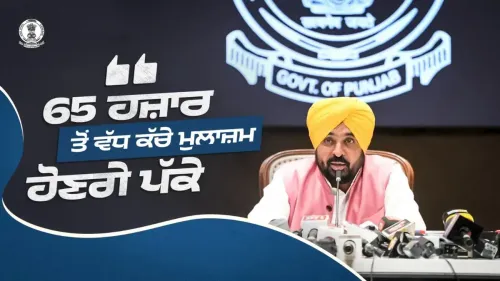
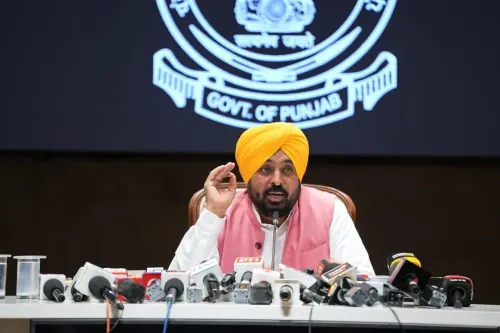
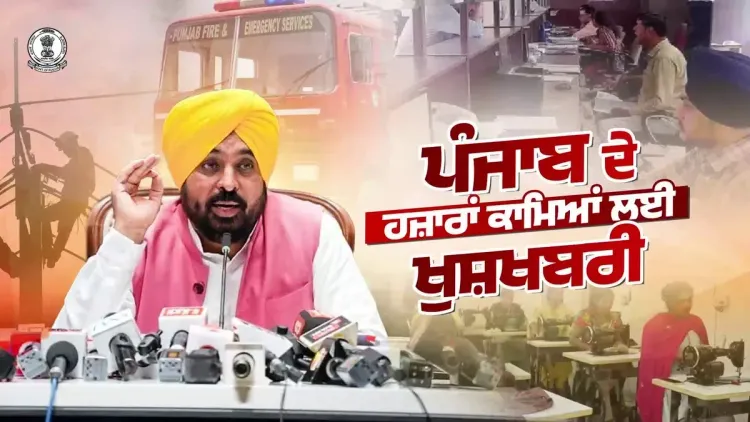
The Chief Minister's Office of Punjab on Wednesday, 3 June 2026, announced that the state government, led by Chief Minister Bhagwant Mann, has cleared what it described as a 'historic step' to end outsourcing and the contractor system in government departments. The decision is set to bring relief to 65,048 workers currently engaged across 51 government departments, who will become eligible for a range of state employment benefits.
In its Punjabi-language post, the CMO stated that 'under the leadership of Chief Minister Bhagwant Mann, the Punjab government has taken a historic step towards ending the outsourcing and contractor system,' adding that the affected workers 'will receive several types of government benefits.' The announcement was accompanied by a video and carried the hashtags #CMOPunjab and #ਮੁੱਖ_ਮੰਤਰੀ_ਦਫ਼ਤਰ_ਪੰਜਾਬ ('Chief Minister's Office Punjab').
Context
Contractual and outsourced employment has been a long-running flashpoint in Punjab's public sector, with sanitation workers, clerical staff, technical hands and field employees in departments such as health, power, water supply and rural development frequently hired through third-party agencies. Worker unions have for years sought regularisation, citing wage gaps, absence of social security and abrupt terminations.
The latest decision, as framed by the CMO, seeks to bring this workforce directly under the state government's employment umbrella, opening access to entitlements typically tied to formal government service.
Policy backdrop
Bhagwant Mann has served as Chief Minister of Punjab since March 2022, leading the Aam Aadmi Party (AAP) government that came to power on a platform of governance reform, public services expansion and welfare delivery. Labour formalisation has been a recurring theme in the AAP's pitch in Punjab, alongside its push in education, health and power subsidies.
Indian state governments have periodically moved to regularise long-serving contractual and outsourced staff in public departments, responding to sustained worker demands and litigation over precarious employment conditions. Punjab's announcement aligns with this broader pattern of state-level efforts to formalise portions of the public workforce.
Stakeholders and impact
The immediate beneficiaries, as cited by the CMO, are the 65,048 workers across 51 departments. Regularisation typically carries implications for fixed pay scales, leave entitlements, medical benefits, provident fund coverage and, in many cases, pension or gratuity access — though the exact contours for Punjab's rollout will depend on the government's detailed notification.
For the state exchequer, absorbing such a large cohort directly onto the government's rolls will have a recurring fiscal footprint, which is likely to be reflected in future budget allocations for the affected departments. Worker unions, which have campaigned on this issue for years, are expected to scrutinise the fine print, particularly cut-off dates, eligibility criteria and the treatment of those hired most recently.
Politically, the move strengthens the Mann government's welfare narrative in a state where labour and agrarian constituencies remain central to electoral arithmetic, and where opposition parties have repeatedly questioned the AAP's delivery on its 2022 promises.
What's next
The key documents to watch are the formal government notifications detailing the transition process, timelines and funding mechanism for the 51 departments, along with any legislative or budgetary follow-up required for implementation. Department-wise lists, service conditions for absorbed workers and the status of any pending litigation around contractual hiring will determine how smoothly the announcement translates into on-ground change.
If executed in line with the CMO's framing, the decision could mark one of the larger single-stroke regularisation exercises by an Indian state government in recent years, and set a reference point for similar demands from contractual workforces in other states.
Point of View
Where labour formalisation has steady political resonance across sanitation, health and power department workforces. By framing the step as 'historic', the Mann government is staking a claim on an issue that has resisted resolution across successive regimes. The real test, however, lies in fiscal sustainability and the granularity of the notification — particularly cut-off dates, pay protection and pension treatment. If delivered cleanly, it could reset expectations for contractual workforces in other states.
NationPress
15 Sept 2026
Frequently Asked Questions
How many workers will benefit from Punjab's decision to end outsourcing?
According to the Chief Minister's Office of Punjab, 65,048 workers across 51 state government departments will benefit from the decision to end the outsourcing and contractor system.
Who announced the end of the contractor system in Punjab?
The decision was announced by the Chief Minister's Office of Punjab, attributing it to the state government led by Chief Minister Bhagwant Mann.
What benefits will the regularised workers in Punjab get?
The CMO has said the affected workers will receive several types of government benefits. Specific entitlements such as pay scales, leave, medical cover and pension will depend on the formal notification issued by the state government.
When was the Punjab outsourcing decision announced?
The announcement was made by the Chief Minister's Office of Punjab on 3 June 2026 through its official X handle.
Which government is behind the Punjab regularisation move?
The Aam Aadmi Party government, in office in Punjab since March 2022 under Chief Minister Bhagwant Mann, has taken the decision to end the outsourcing and contractor system in 51 departments.