Punjab Cabinet regularises 65,000 employees, ends contractor system
Synopsis
Punjab has moved to abolish the private contractor middleman system for over 65,000 government workers — a structural labour reform that multiple previous governments left untouched. With two new bills and a phased absorption pathway, the Mann government is betting that job security for contract workers will translate into political capital ahead of the next electoral cycle.
Key Takeaways
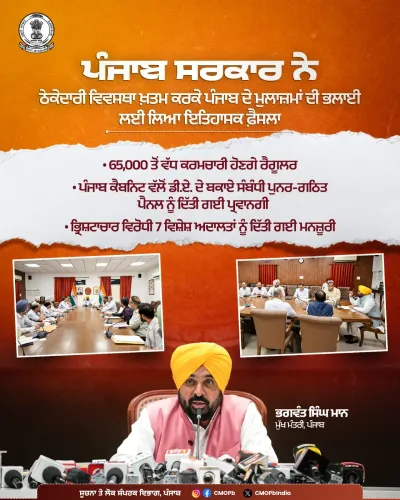
The Punjab Cabinet on 30 May 2026 approved regularisation for more than 65,000 outsourced employees across 51 departments .
Two new bills — the Punjab State Outsourced Personnel (Transition to Contractual Engagement) Bill, 2026 and the Punjab Contractual Personnel (Absorption Against Sanctioned Vacancies) Bill, 2026 — create the legal framework.
Employees with five years of continuous outsourced service (three years in hazardous roles) will move to direct state contractual employment; after 10 years of contractual service, they become eligible for regular cadre absorption.
More than 26,000 workers will be among the first beneficiaries of the transition.
A reconstituted Cabinet Sub-Committee will examine pending DA and pension arrears from January 2016 to March 2024 .
Seven exclusive special courts were also cleared for the speedy trial of corruption cases.
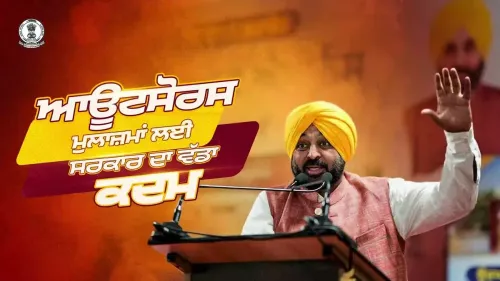
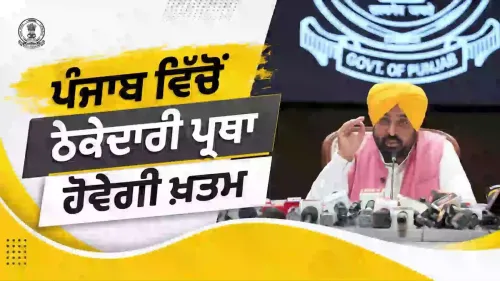
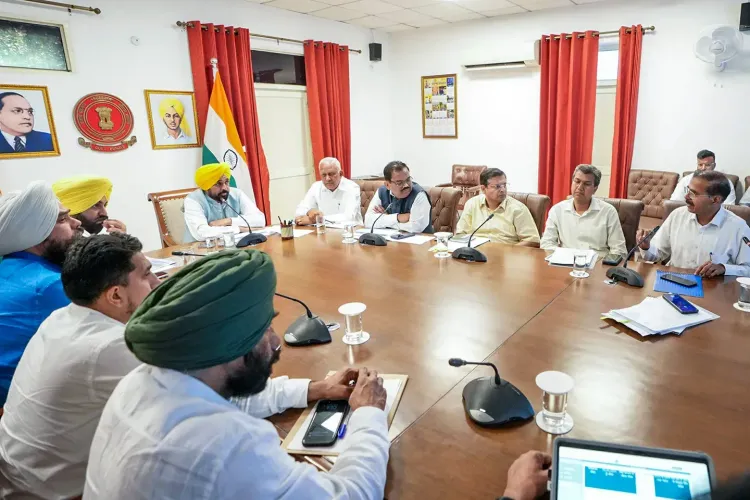
The Punjab Cabinet, chaired by Chief Minister Bhagwant Mann, on Saturday, 30 May 2026, approved a sweeping labour reform that will pave the way for the regularisation of more than 65,000 outsourced government employees across 51 departments, dismantling the decades-old private contractor middleman system. The move creates a direct employer-employee relationship between the state and workers who have served without permanent status for years.
What the Cabinet Approved
The Cabinet cleared two landmark legislative frameworks: the Punjab State Outsourced Personnel (Transition to Contractual Engagement) Bill, 2026, and the Punjab Contractual Personnel (Absorption Against Sanctioned Vacancies) Bill, 2026. Simultaneously, it repealed the Punjab Adhoc, Contractual, Daily Wage, Temporary, Work Charged and Outsourced Employees' Welfare Act, 2016, which had governed these workers until now. Two new ordinances were also approved to implement the transition.
The first bill governs the shift from outsourced employment to a direct state contract; the second creates the pathway from a state contract to absorption into the regular cadre against sanctioned vacancies.
How the Transition Works
Under the new framework, outsourced Group C and Group D employees who have completed five years of continuous service will be brought directly under government contractual employment. Workers in hazardous categories become eligible after three years. After completing 10 years of contractual service under the state, employees will be considered for absorption against regular sanctioned posts.
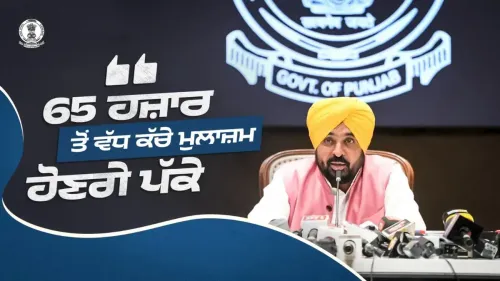
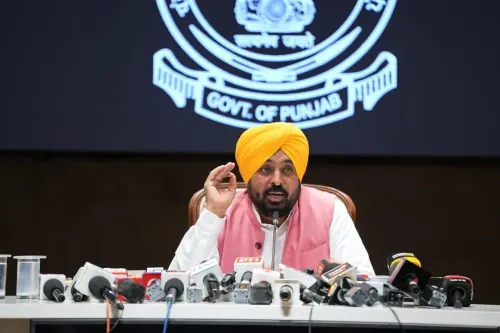
Chief Minister Mann stated that 65,048 outsourced employees fall within the ambit of this reform, with more than 26,000 workers set to be among the first beneficiaries. 'No contractor will now stand between these employees and the state,' he said.
DA and Pension Panel Reconstituted
In a related decision, the Cabinet granted ex post facto approval for the reconstitution of a Cabinet Sub-Committee comprising Finance Minister Harpal Singh Cheema and Cabinet Ministers Aman Arora and Baljit Kaur. The panel will examine pending arrears of revised pay, pensions, leave encashment, and dearness allowance. Specifically, it will consider payment of arrears arising from revised pay and pension benefits between 1 January 2016 and 30 June 2021, and will examine pending dearness allowance and dearness relief dues from 1 July 2021 to 31 March 2024.
Special Courts for Corruption Cases
The Cabinet also cleared the establishment of seven exclusive special courts dedicated to the speedy trial of corruption cases — a signal that the Mann government is pairing its pro-labour agenda with a parallel accountability push.
Significance and What Comes Next
This is among the most significant labour reforms in Punjab in recent memory, addressing a structural inequity that left tens of thousands of state workers without job security, benefits, or a clear route to permanence. Notably, the contractor system being dismantled had persisted across multiple governments. The two new bills will now be placed before the Punjab Legislature for passage, after which the transition process for eligible employees is expected to begin in phases. How quickly the absorption pipeline moves — particularly the shift to regular cadre after 10 years of contractual service — will determine the reform's real-world impact on workers.
Point of View
Not the announcement. Moving 65,000 workers from outsourced to contractual status is the easy part; converting contractual service into regular cadre posts requires sanctioned vacancies that Punjab's fiscally stressed departments may struggle to create. The 10-year contractual waiting period before regularisation also means that for many workers, permanence remains a distant promise. The Cabinet Sub-Committee on DA arrears, meanwhile, signals that the government is aware of a parallel financial overhang it cannot defer indefinitely.
NationPress
14 Oct 2026
Frequently Asked Questions
What did the Punjab Cabinet decide on 30 May 2026 regarding contract employees?
The Punjab Cabinet approved a reform to regularise over 65,000 outsourced government employees across 51 departments by abolishing the private contractor system and creating a direct state-employee relationship. Two new bills provide the legal framework for transitioning workers first to contractual and then to regular employment.
Who are the immediate beneficiaries of the Punjab employee regularisation?
More than 26,000 workers are expected to be among the first beneficiaries. Outsourced Group C and Group D employees with five or more years of continuous service — and those in hazardous roles with three or more years — will be eligible for the initial transition to direct state contractual employment.
How long does it take for an outsourced Punjab government employee to get a regular post?
Under the new framework, an employee must first complete five years of outsourced service to move to a direct state contract, and then complete a further 10 years of contractual service before being considered for absorption into a regular sanctioned post.
What is the Cabinet Sub-Committee reconstituted by the Punjab Cabinet?
The Sub-Committee, comprising Finance Minister Harpal Singh Cheema and Cabinet Ministers Aman Arora and Baljit Kaur, will examine pending arrears of revised pay, pensions, leave encashment, and dearness allowance. It will cover dues arising between 1 January 2016 and 31 March 2024.
What other decisions did the Punjab Cabinet take at the same meeting?
The Cabinet also cleared the establishment of seven exclusive special courts for the speedy trial of corruption cases and approved two new ordinances to implement the outsourced-to-contractual employment transition.