Punjab caps private school fee hikes at 5%, orders forensic audits
Synopsis
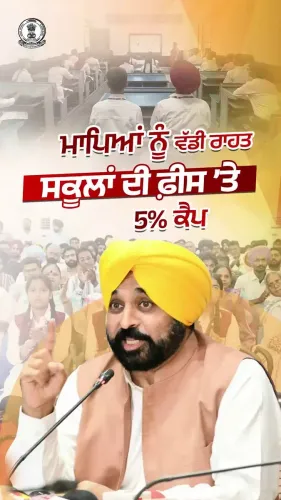
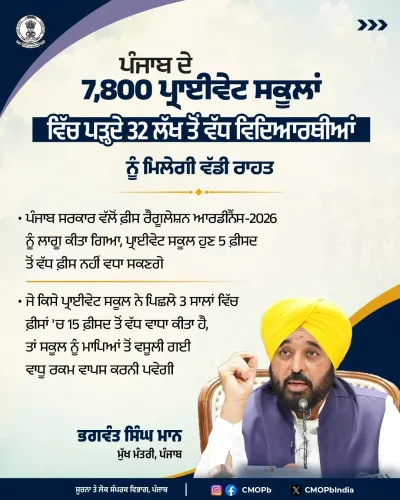
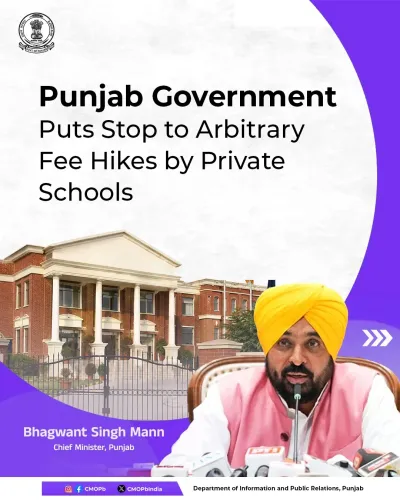
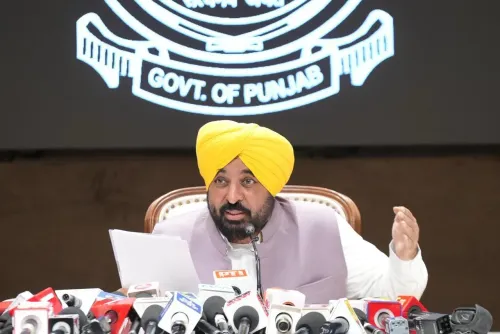
The Punjab government under Chief Minister Bhagwant Singh Mann has capped annual private school fee increases at 5% and ordered forensic audits of schools that raised fees by more than 15% over the past three years, with excess amounts to be recovered and returned to parents.
Key Takeaways
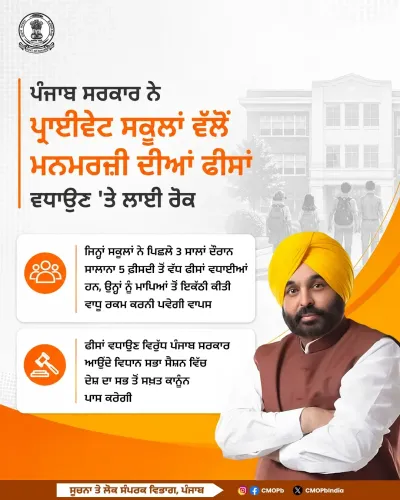
Punjab has imposed a 5% annual cap on fee increases at private schools.
Schools that raised fees by more than 15% over the last three years will face forensic audits.
Excess fees collected beyond permissible limits will be recovered and refunded to parents.
The policy simultaneously commits to protecting the rights and dignity of private school teachers.
The announcement was made by the Chief Minister's Office of Punjab on August 11, 2026 .
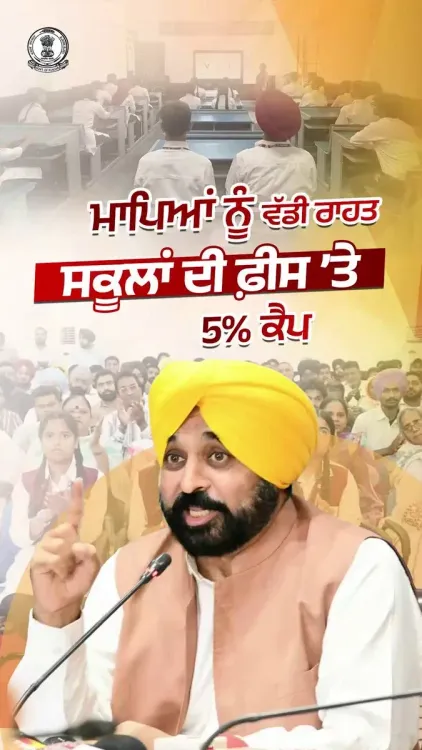
Every Punjab parent who has watched a private school fee notice arrive and felt their stomach drop just got a significant reprieve. The Chief Minister's Office of Punjab announced on Tuesday, August 11, 2026 that the state government, under Chief Minister Bhagwant Singh Mann, has imposed a hard 5% annual cap on fee increases at private schools — and crucially, schools that crossed that line over the past three years are now in the crosshairs of a forensic audit.
The post, shared in Punjabi, states that private schools which raised fees by more than 15% over the last three years will face forensic audits, with excess amounts recovered and returned to affected parents. The announcement also flags a parallel commitment: protecting the rights and dignity of teachers at these institutions.
What the 5% cap and forensic audit actually mean
The twin-track approach — a forward-looking fee cap paired with a retrospective audit — is the sharpest edge of this policy. A cap alone would have been incremental. Ordering forensic scrutiny of past fee hikes signals that the government intends to claw back money already collected, not simply prevent future overreach. For parents who absorbed steep hikes in the years following the pandemic, that distinction matters enormously.
The forensic audit mechanism, if executed rigorously, would require private schools to open their financial records for independent examination — a prospect that school managements are unlikely to welcome without pushback. Associations representing unaided private schools have historically challenged such regulatory moves in court, arguing that fee autonomy is essential to institutional independence. Whether Punjab's framework is structured tightly enough to survive legal scrutiny will be the first real test of its durability.
A pattern playing out across Indian states
Punjab is not the first state to attempt this. Several Indian states have periodically legislated or ordered fee caps at unaided private schools, driven by the same pressure: parental complaints that rising costs — pegged to inflation, infrastructure expansion, and salary revisions — have made private schooling unaffordable for middle-class families. What distinguishes Punjab's 2026 move is the combination of a specific percentage ceiling, a defined lookback window of three years, and the forensic audit instrument, which goes further than most comparable state actions.
The explicit mention of teacher rights alongside the fee cap is also notable. Private school teachers in India often operate without the job protections available to government school staff, and tying their welfare to the same regulatory announcement signals an attempt to frame this not as a crackdown on schools but as a broader accountability framework for the sector.
What comes next for Punjab's private schools
The immediate questions are operational: which body conducts the forensic audits, what is the timeline for recovery of excess fees, and how will the government handle schools that contest the findings? None of these implementation details have been confirmed, and the pace of rollout will determine whether this announcement translates into relief families can actually feel before the next academic year's fee notices arrive.
For Chief Minister Bhagwant Singh Mann and the Aam Aadmi Party government, which built its Punjab mandate in part on promises of affordable, quality education, this move is also a political signal — a reminder that the education agenda extends beyond government schools. The forensic audit orders will be the moment of truth: either the excess fees come back, or the policy becomes another headline without a receipt.
Point of View
And it tests whether AAP can translate its education-reform brand from government schools into the politically thornier private sector. The forensic audit mechanism is the policy's real bet: if it survives legal challenge and actually recovers excess fees, it becomes a replicable model; if school associations secure a court stay, the announcement risks becoming symbolic. Framing teacher welfare alongside parental relief is a deliberate attempt to broaden the coalition of support and blunt the narrative that the state is simply attacking private institutions. The three-year lookback window also carries electoral logic — it covers the period since Mann's government took office in 2022, allowing the administration to position itself as cleaning up a pre-existing problem.
NationPress
11 Aug 2026
Frequently Asked Questions
What is the new Punjab private school fee cap?
The Punjab government has capped annual fee increases at private schools at 5% , preventing schools from raising fees beyond this limit each year.
What happens to schools that raised fees more than 15% in Punjab?
Schools that increased fees by more than 15% over the past three years will be subjected to a forensic audit, and any excess amounts collected will be recovered and returned to parents.
Who announced the private school fee cap in Punjab?
The announcement was made by the Chief Minister's Office of Punjab , attributing the decision to Chief Minister Bhagwant Singh Mann and the state government.
Will Punjab private school teachers be affected by this policy?
The policy explicitly includes a commitment to protecting the rights and dignity of private school teachers , though specific measures for teachers have not yet been detailed.
Can private schools in Punjab challenge the fee cap in court?
Private school associations across India have historically challenged fee regulation through courts, arguing it infringes on institutional autonomy; whether Punjab's framework faces similar legal challenges remains to be seen as implementation begins.