Punjab CMO marks World Breastfeeding Week 2026
Synopsis
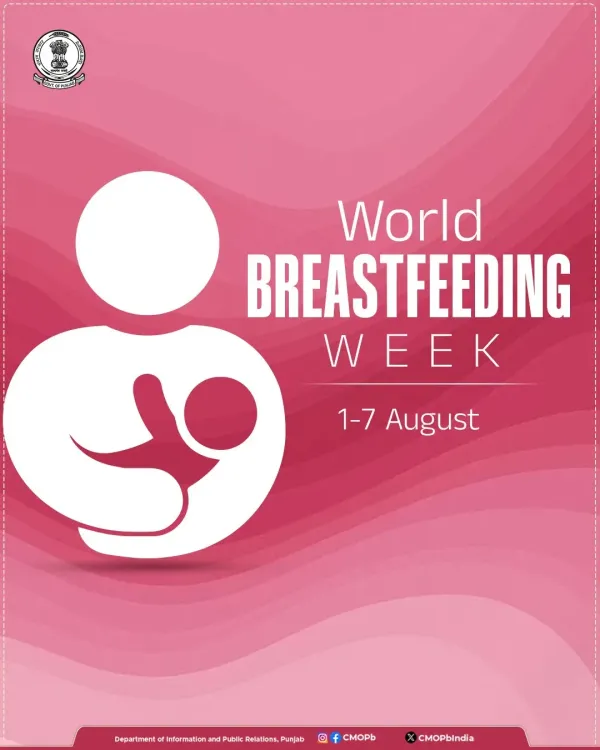
The Chief Minister's Office of Punjab marked the start of World Breastfeeding Week 2026 on August 1, promoting mother's milk as a public health priority. The annual campaign, observed August 1-7 since 1992, aligns with WHO and UNICEF guidelines on exclusive breastfeeding for the first six months of an infant's life.
Key Takeaways
World Breastfeeding Week is observed globally from August 1 to 7 every year.
The campaign has run annually since 1992 , initiated by the World Alliance for Breastfeeding Action .
It draws from the 1990 Innocenti Declaration , a global commitment to protect and promote breastfeeding.
WHO and UNICEF recommend exclusive breastfeeding for the first six months of an infant's life.
The Punjab CMO joined the observance on August 1, 2026 , framing mother's milk as a means to improve public health.
State-level messaging is typically delivered through Anganwadi centres and primary health centres under the National Health Mission .
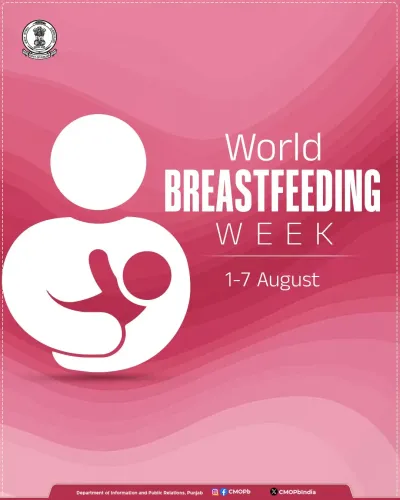
Every year, the first week of August carries a message that reaches from global health bodies down to the smallest primary health centres in India's villages: breastfeeding saves lives. The Chief Minister's Office of Punjab joined the worldwide observance on Saturday, August 1, 2026, marking the start of World Breastfeeding Week with a call to raise awareness about the importance of mother's milk and its role in improving public health.
A week born from a 1990 declaration
World Breastfeeding Week has been observed every year from August 1 to August 7 since 1992, when the World Alliance for Breastfeeding Action launched the campaign to give momentum to the Innocenti Declaration — a landmark 1990 commitment by governments and health agencies to protect, promote, and support breastfeeding globally. More than three decades later, the observance remains one of the most widely recognised maternal and child health campaigns in the world, backed by WHO and UNICEF guidelines that recommend exclusive breastfeeding for the first six months of an infant's life.
Punjab's alignment with national maternal health goals
For Indian state governments, the week is a routine but meaningful moment to amplify messaging that runs through the year via frontline health workers, Anganwadi centres, and primary health centres operating under the National Health Mission. Punjab's participation signals the state administration's alignment with that broader national framework for maternal and child nutrition. Public health workers and mothers and infants across the state remain the primary audience for such campaigns — the people for whom the science of early nutrition translates into daily choices.
The Punjab CMO's post carried the hashtags #WorldBreastfeedingWeek, #PunjabGovtInitiatives, and #CMBhagwantMann, situating the observance within the state government's broader public health communication effort. A week that began in Geneva in 1990 lands, every August, in the hands of a community health worker in a Punjab village — and that last mile is where it counts.
Point of View
High-visibility alignment with WHO and UNICEF frameworks. It connects the state's public health communication to the National Health Mission's ongoing push on early nutrition, without announcing new policy. The real test of such campaigns is whether they translate into measurable uptake of exclusive breastfeeding at the district level, where Anganwadi and primary health centre data would tell a more complete story. For now, the post plants a flag on a globally recognised moment — and signals that Punjab's health communication machinery is tracking the international calendar.
NationPress
1 Aug 2026
Frequently Asked Questions
When is World Breastfeeding Week celebrated?
World Breastfeeding Week is celebrated every year from August 1 to August 7 to promote awareness about the benefits of breastfeeding for mothers and infants.
Why is World Breastfeeding Week observed?
The week raises awareness about the importance of mother's milk as a public health tool and encourages exclusive breastfeeding for the first six months of a baby's life, in line with WHO and UNICEF guidelines.
Who started World Breastfeeding Week?
The World Alliance for Breastfeeding Action launched World Breastfeeding Week in 1992 to support the goals of the 1990 Innocenti Declaration on breastfeeding protection.
What is the Punjab government doing for breastfeeding awareness?
The Chief Minister's Office of Punjab marked the start of World Breastfeeding Week 2026 on August 1 , promoting mother's milk as a means to improve public health, in alignment with national maternal health programmes.
How long should a mother breastfeed her baby exclusively?
WHO and UNICEF recommend exclusive breastfeeding for the first six months of an infant's life, after which complementary foods can be introduced alongside continued breastfeeding.