Punjab Congress slams AAP over drugs crisis, Dalit persecution, and Finance Minister's dying declaration
Synopsis
Punjab Congress has accused the AAP government of failing spectacularly on its flagship anti-drug promise — with drugs reportedly reaching every village and even circulating inside jails. The most explosive charge: Punjab's Finance Minister is named in a farmer's dying declaration following a suicide the party links directly to administrative harassment over the drug trade, yet no action has been taken.
Key Takeaways
Punjab Congress on 13 September accused the AAP government of misleading the public on the state's drug crisis and shielding influential accused.
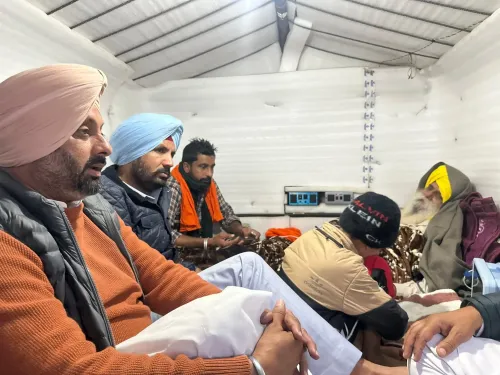
Gulzar Singh died by suicide, allegedly after being harassed by the administration for opposing the open drug trade in his village; his dying declaration reportedly names Punjab's Finance Minister , but no action has followed.
Mohanjeet Singh was allegedly subjected to police torture for displaying black flags at a democratic protest, cited by Congress as evidence of authoritarianism.
Congress president Amarinder Singh Raja Warring alleged poor Dalit families are victims of administrative apathy under both BJP at the Centre and AAP in Punjab.
Rajendra Pal Gautam noted AAP won Punjab in 2022 on anti-drug promises but the drug trade has reportedly spread to every village and inside jails under its full police control.
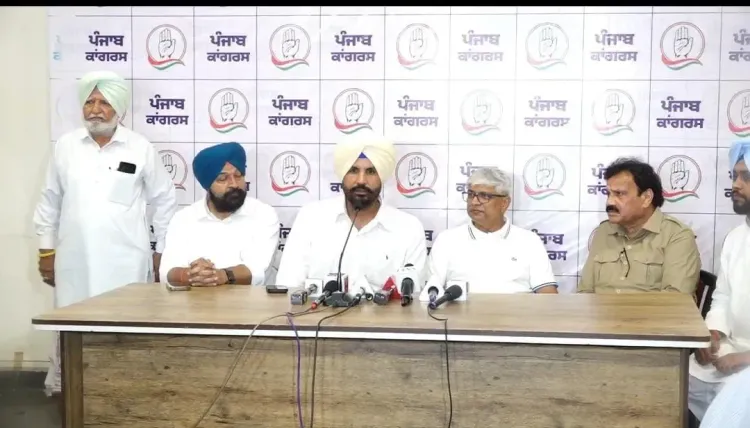
Punjab Congress on Sunday, 13 September launched a sharp offensive against the Aam Aadmi Party (AAP) government in Punjab, alleging that the ruling party is deliberately misleading the public on the drug menace, systematically targeting weaker sections, and shielding powerful individuals implicated in serious crimes.
Key Allegations Against AAP Government
State Congress president Amarinder Singh Raja Warring welcomed Rajendra Pal Gautam, Chairman of the Central Scheduled Castes Department, and thanked Rajkumar Verka and Gurpreet Singh Lucky Pakho for their efforts in fighting for the rights of marginalised communities. Warring alleged that under the Bharatiya Janata Party (BJP) at the Centre and the AAP government in Punjab, poor Dalit families are falling victim to administrative apathy and targeted exploitation.
Gulzar Singh Suicide: Finance Minister Named in Dying Declaration
Congress leaders raised the case of the tragic suicide of Gulzar Singh, expressing that Leader of Opposition Rahul Gandhi has conveyed concern over the incident. According to the Congress leaders, Gulzar Singh's only fault was speaking out against the open sale of narcotics in his village and trying to protect his son from drugs. Rather than acting against drug traffickers, the administration allegedly subjected him to relentless harassment, which the party claims ultimately drove him to take his own life.
Notably, Congress leaders pointed out that Punjab's Finance Minister has been explicitly named in Gulzar Singh's dying declaration, yet no legal action or accountability has followed. The victim's family, they said, continues to seek justice without resolution.
Police Torture Allegation: Mohanjeet Singh's Case
The party also raised the case of Mohanjeet Singh, who, according to Congress, was subjected to brutal police torture merely for displaying black flags during a peaceful democratic protest. Congress leaders cited this incident as evidence of what they described as an authoritarian pattern under AAP governance in Punjab.
AAP's Drug Promise vs Punjab Ground Reality
Rajendra Pal Gautam directly targeted AAP, noting that the party came to power in 2022 on an explicit promise to eradicate drugs and overhaul traditional politics within months. He argued that during its tenure governing Delhi, AAP had deflected accountability on law and order by citing the absence of full statehood. In Punjab, however, AAP holds full control over the police — yet the drug trade has reportedly spiralled out of control, with narcotics reportedly circulating even inside the state's jails.
Gautam questioned how drugs could penetrate every village and operate openly within jails without direct political and administrative patronage, a charge the AAP government has not yet publicly addressed. This comes amid a broader national debate on the Punjab drug crisis, which has remained one of the state's most persistent and politically charged challenges across successive governments.
Point of View
Where the drug crisis has outlasted multiple governments and their promises, the pattern is familiar: opposition parties raise cases, families wait, and accountability rarely arrives. What makes this moment different is the specificity of the charge and the identity of the accused. If the state apparatus can shelve a dying declaration naming one of its own senior ministers, it raises a fundamental question about whether Punjab's anti-drug machinery is a genuine enforcement tool or a selective political instrument.
NationPress
13 Sept 2026
Frequently Asked Questions
What are Punjab Congress's main allegations against the AAP government?
Punjab Congress has alleged that the AAP government is misleading people on the drug crisis, persecuting weaker sections including Dalits, and shielding influential figures accused in serious crimes. The party cited the suicide of Gulzar Singh and the alleged torture of Mohanjeet Singh as specific examples.
Who is Gulzar Singh and why is his case significant?
Gulzar Singh was a man who allegedly died by suicide after being harassed by the administration for speaking out against the open drug trade in his village and trying to protect his son from narcotics. His dying declaration reportedly names Punjab's Finance Minister, but no legal action has been taken, according to Congress leaders.
What happened to Mohanjeet Singh?
Mohanjeet Singh was allegedly subjected to brutal police torture for displaying black flags during a peaceful democratic protest, according to Congress leaders. They cited his case as evidence of an authoritarian approach under AAP rule in Punjab.
Did AAP promise to eliminate drugs in Punjab?
Yes. AAP came to power in Punjab in 2022 on a prominent promise to eradicate the drug menace and transform the state's political culture within months. Congress leader Rajendra Pal Gautam argued that despite having full control over the police in Punjab — unlike Delhi where AAP cited limited statehood — the drug trade has worsened.
Why does Congress say drugs spreading in Punjab jails matters politically?
Congress argues that drugs circulating openly inside Punjab's jails could not happen without direct political and administrative patronage, pointing to it as evidence that the AAP government is not seriously combating the drug trade. The allegation is aimed at undermining AAP's core governance credibility in the state.