Punjab CMO: 'Yudh Nashian Virudh' hits Day 469, 68,115 arrested
Synopsis
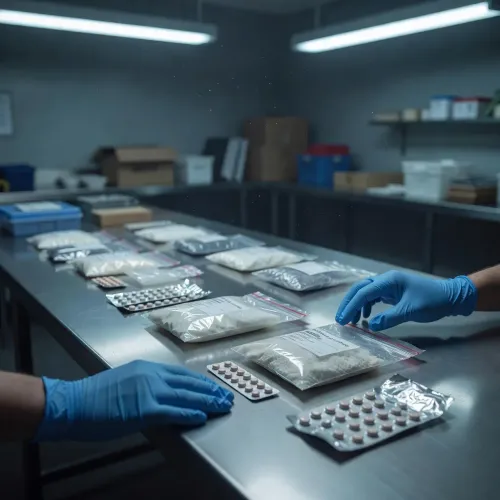
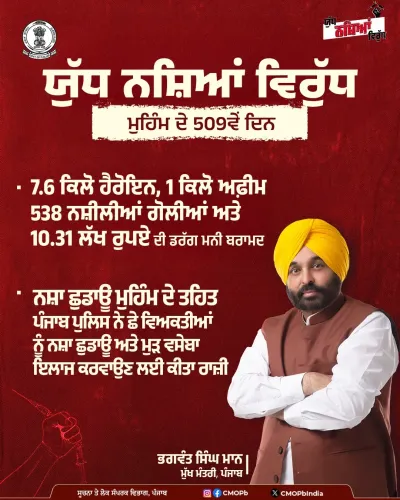
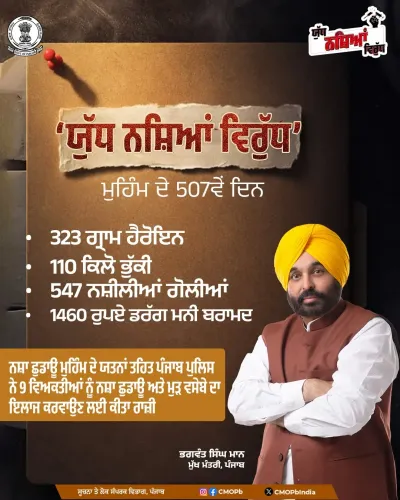
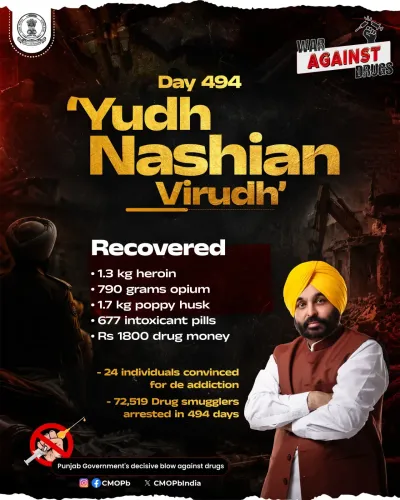
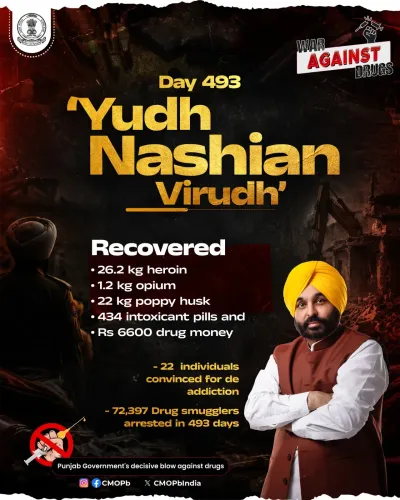
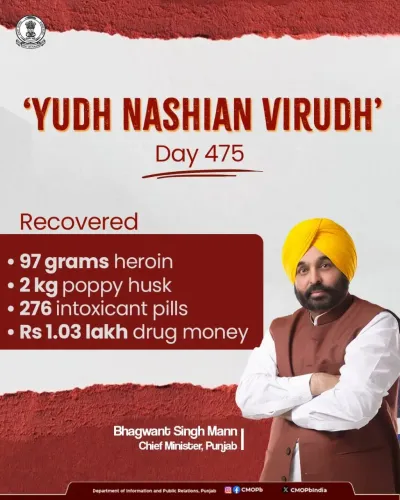
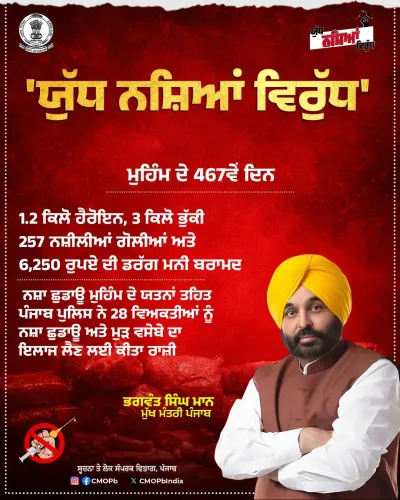
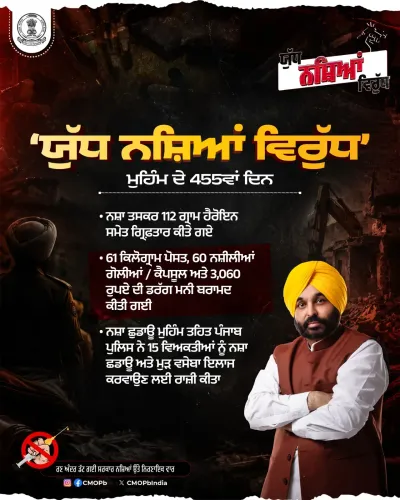
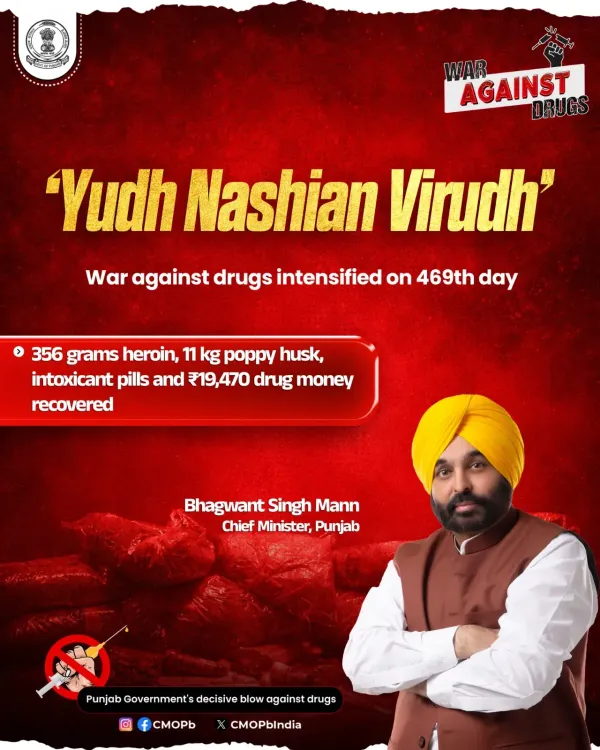
Punjab's 'Yudh Nashian Virudh' anti-narcotics drive has reached its 469th consecutive day, with cumulative arrests touching 68,115 drug smugglers. The latest round of operations yielded 356 grams of heroin, 11 kg of poppy husk, 713 intoxicant pills, and ₹19,470 in drug money, the Chief Minister's Office announced.
Key Takeaways
The 'Yudh Nashian Virudh' campaign completed its 469th consecutive day on 14 June 2026.
Total drug smugglers arrested since the campaign's launch has reached 68,115 .
Latest seizures include 356 grams of heroin , 11 kg of poppy husk , and 713 intoxicant pills .
Police also recovered ₹19,470 in drug money from arrested smugglers.
Punjab shares a long border with Pakistan and has historically been a major transit zone for heroin and synthetic drugs.
Policy observers continue to call for expanded de-addiction and rehabilitation infrastructure alongside enforcement action.
The Chief Minister's Office of Punjab announced on Sunday, 14 June 2026 that the state's ongoing anti-narcotics drive, 'Yudh Nashian Virudh' (War Against Drugs), has entered its 469th consecutive day, with police teams continuing arrests and seizures across the state.
What the latest data shows
In the most recent operational cycle, police teams arrested drug smugglers and recovered 356 grams of heroin, 11 kg of poppy husk, 713 intoxicant pills, and ₹19,470 in drug money. The cumulative arrest tally since the campaign's launch has now reached 68,115 drug smugglers in just 469 days, according to the CMO's post.
The seizures span the full spectrum of narcotics that have historically plagued Punjab — from opiates such as heroin and poppy husk to synthetic intoxicants in pill form — reflecting the multi-front nature of the state's drug supply chain.
Context: Punjab's long battle with narcotics
Punjab shares a long international border with Pakistan and has for decades been identified as a major transit and consumption zone for heroin and synthetic drugs. Cross-border smuggling routes and local distribution networks have made the state a focal point of India's national narcotics-control effort.
Successive state governments have launched enforcement surges since at least 2017, often in tandem with central agencies. Yudh Nashian Virudh — Punjabi for 'War Against Drugs' — is the current administration's flagship supply-side response, combining coordinated police raids, arrests, and seizure reporting to demonstrate sustained institutional pressure on trafficking networks.
Policy backdrop: enforcement within a national framework
The campaign operates within India's wider narcotics-control framework, which emphasises supply-side policing alongside periodic demand-reduction and rehabilitation messaging. Punjab Police is the primary executing agency, coordinating operations across border districts and interior zones where distribution networks tend to concentrate.
State governments have routinely published cumulative arrest and seizure figures to signal continuity of political will — a practice that also allows independent observers to track trends over time. The daily update format adopted by the CMO's office is consistent with this accountability model.
Stakeholders and impact
The drive's most direct beneficiaries are Punjab's youth, who have historically borne the heaviest social cost of the state's drug crisis. Border districts such as Amritsar, Gurdaspur, and Ferozepur remain particularly vulnerable to heroin inflows, making enforcement activity in those zones especially consequential.
Civil-society groups and family welfare organisations have long argued that enforcement alone is insufficient and must be paired with expanded de-addiction and rehabilitation infrastructure. The state's response to that demand remains a live policy question.
What's next
Observers will watch for the next periodic data release as the campaign approaches its 500th day — a milestone likely to prompt a broader official assessment of the drive's impact. Announcements on new de-addiction centres or upgrades to border fencing and surveillance would signal whether the government intends to complement its enforcement surge with structural supply-side and demand-side measures.
Point of View
Timestamped data releases signal institutional resolve in a state where drug abuse has been an electoral flashpoint for over a decade. The cumulative arrest figure of 68,115 in 469 days is striking, but the absence of corresponding data on conviction rates, repeat offenders, or rehabilitation outcomes makes it difficult to assess whether the campaign is disrupting trafficking networks or merely cycling low-level carriers through the system. Punjab sits at the intersection of India's national security concerns and its public-health crisis, and enforcement-heavy approaches have historically shown diminishing returns without parallel investment in demand reduction. The approaching 500-day milestone is likely to sharpen scrutiny of what the numbers actually mean for communities on the ground.
NationPress
19 Sept 2026
Frequently Asked Questions
What is 'Yudh Nashian Virudh' in Punjab?
'Yudh Nashian Virudh' — Punjabi for 'War Against Drugs' — is the Punjab government's flagship anti-narcotics enforcement campaign, involving daily police raids, arrests of drug smugglers, and seizures of narcotics across the state.
How many drug smugglers have been arrested in Punjab's anti-drug drive?
As of Day 469 of the campaign (14 June 2026), the total number of drug smugglers arrested under 'Yudh Nashian Virudh' has reached 68,115, according to the Chief Minister's Office of Punjab.
What drugs were seized in the latest Punjab police operation?
In the latest reported operational cycle, Punjab Police seized 356 grams of heroin, 11 kg of poppy husk, and 713 intoxicant pills, along with ₹19,470 in drug money.
Why is Punjab particularly affected by drug trafficking?
Punjab shares a long international border with Pakistan, making it a major transit and consumption zone for heroin and synthetic drugs. Cross-border smuggling routes and local distribution networks have historically made it one of India's most drug-affected states.
Is Punjab's anti-drug campaign only about arrests?
The current campaign focuses primarily on supply-side enforcement — arrests and seizures — but civil-society groups and health experts have consistently argued that sustained impact requires parallel investment in de-addiction centres and rehabilitation programmes.