Punjab Assembly passes Bill to end outsourcing, covers 28,000 workers
Synopsis
Punjab has done what most Indian states have only debated — legislated the elimination of the contractor layer in government employment. With 26,000 to 28,000 workers gaining direct state contracts and statutory benefits in the first phase alone, the AAP government's unanimous Bill is the most sweeping public-sector labour reform in the state in decades.
Key Takeaways
The Punjab Legislative Assembly unanimously passed the Punjab State Outsourced Personnel (Transition to Contractual Engagement) Bill, 2026 on 10 August 2026 .
Between 26,000 and 28,000 outsourced workers will move to direct government contractual engagement in the first phase.
Private contractor commissions of 15 to 22 per cent deducted from workers' wages will be eliminated.
Eligible workers will receive provident fund, gratuity, ESI, maternity leave, and casual leave benefits.
The Bill covers Group-C and Group-D employees in essential public services who meet prescribed eligibility conditions.
Chief Minister Bhagwant Mann called it 'one of the biggest decisions in Punjab's history' for employee welfare.
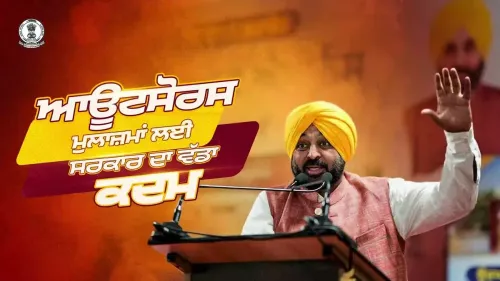
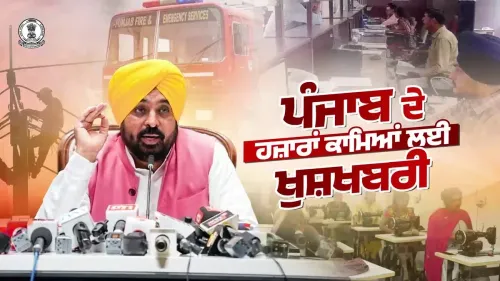
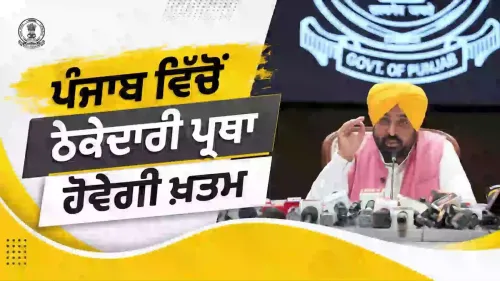
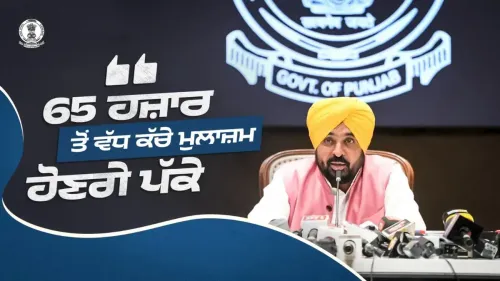
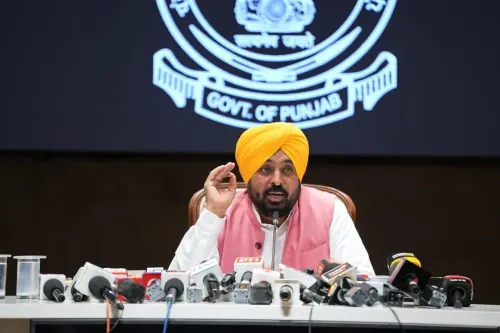
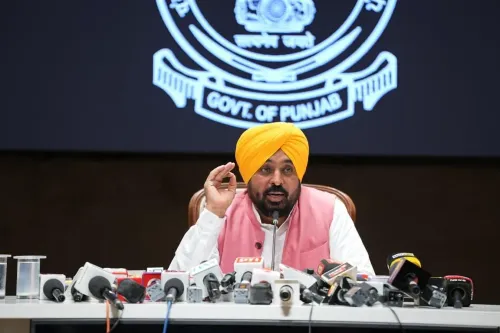
The Punjab Legislative Assembly on Monday, 10 August 2026, unanimously passed the Punjab State Outsourced Personnel (Transition to Contractual Engagement) Bill, 2026, marking a decisive end to the state's decades-old system of government contractual outsourcing. Chief Minister Bhagwant Mann declared that private contractors will no longer have a role in government employment, with between 26,000 and 28,000 outsourced workers set to move into direct contractual engagement with the state in the first phase.
What the Bill Changes
Under the new legislation, eligible outsourced employees in Group-C and Group-D categories engaged in essential public services will be brought directly under government contractual engagement, eliminating the intermediary contractor layer. The Bill also mandates the extension of provident fund, gratuity, Employees' State Insurance (ESI), maternity leave, and casual leave benefits to qualifying workers.
Critically, the 15 to 22 per cent commission that outsourcing agencies previously deducted from workers' earnings will no longer apply, effectively delivering a direct pay increase to those affected.
What the Chief Minister Said
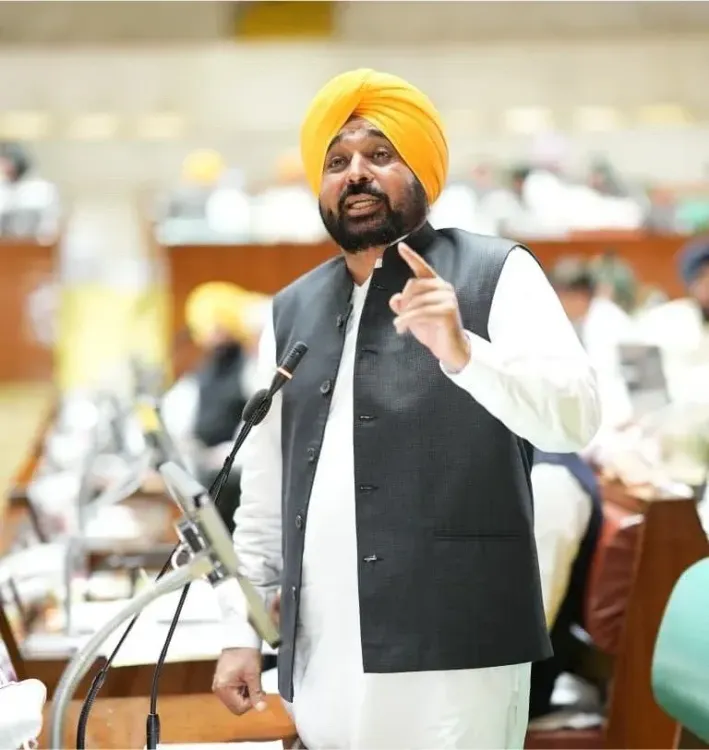
'Punjab State Outsourced Personnel (Transition to Contractual Engagement) Bill, 2026, is one of the biggest decisions in Punjab's history for the welfare and rights of employees. From today, the decades-old system of contractual outsourcing in Punjab will come to an end,' said Chief Minister Bhagwant Mann on the floor of the Assembly.
Mann described the shift in terms that carried clear political weight: 'These employees will no longer remain outsourced; they will become in-sourced employees, meaning they will become members of the government family.' He acknowledged that the persistent uncertainty created by contractor-mediated employment had long functioned as 'a sword hanging over the workers' heads, adversely affecting their jobs and their lives.'
Who Is Covered and When
The first phase covers approximately 26,000 to 28,000 outsourced employees who fulfil prescribed eligibility conditions. These workers, drawn from government departments and government-controlled institutions, are expected to benefit immediately upon the Bill receiving assent. The legislation's scope is confined to Group-C and Group-D categories working in essential public services, meaning higher-grade contract staff and those in non-essential roles may not qualify in this phase.
Context and Significance
Outsourcing of government functions through private agencies has been a common practice across Indian states since the early 2000s, often criticised for creating a two-tier workforce where similarly situated workers receive vastly different protections depending on their employment mode. Punjab's move mirrors, and in some respects goes further than, similar reforms attempted in states including Rajasthan and Telangana in recent years.
The unanimous passage of the Bill signals cross-party support, though the longer-term fiscal impact — including the cost of extending statutory benefits to tens of thousands of additional workers — has not yet been publicly detailed by the state government. With the Aam Aadmi Party (AAP) government framing this as a landmark labour welfare measure ahead of future electoral cycles, scrutiny of implementation timelines and eligibility criteria is likely to intensify in the coming months.
Point of View
But the harder questions begin now. Absorbing up to 28,000 workers into direct contractual rolls — with provident fund, gratuity, and ESI obligations — carries a recurring fiscal cost that the Punjab government, already under debt stress, has not publicly quantified. The distinction between 'contractual' and 'regular' employment also remains: these workers gain benefits but not permanence, meaning a future government could reverse the arrangement. Whether this becomes a durable labour reform or a well-intentioned half-measure will depend entirely on implementation fidelity and whether eligibility criteria are drawn broadly or narrowly in practice.
NationPress
25 Sept 2026
Frequently Asked Questions
What is the Punjab State Outsourced Personnel (Transition to Contractual Engagement) Bill, 2026?
It is a legislation passed unanimously by the Punjab Legislative Assembly on 10 August 2026 that eliminates private contractor intermediaries from government employment. Under the Bill, between 26,000 and 28,000 outsourced workers will be brought into direct contractual engagement with the state government in the first phase, and will receive statutory benefits including provident fund, gratuity, and ESI.
Who benefits from the Punjab outsourcing Bill?
Eligible outsourced employees in Group-C and Group-D categories working in government departments and government-controlled institutions in essential public services are covered. Workers must fulfil prescribed eligibility conditions; the first phase is expected to benefit approximately 26,000 to 28,000 people.
How does the Bill affect workers' salaries?
The Bill eliminates the 15 to 22 per cent commission that outsourcing agencies previously deducted from workers' earnings, effectively raising their take-home pay. Workers will also gain access to provident fund, gratuity, Employees' State Insurance, maternity leave, and casual leave entitlements.
What did Chief Minister Bhagwant Mann say about the Bill?
Mann called it 'one of the biggest decisions in Punjab's history for the welfare and rights of employees.' He said the decades-old system of contractual outsourcing would end and that workers would become 'in-sourced' members of the government family rather than remaining outsourced employees.
Does this Bill make outsourced workers permanent government employees?
No. The Bill transitions eligible workers to direct contractual engagement with the government — not to permanent or regular employment. They gain statutory benefits and job security from direct government contracts, but their status remains contractual rather than permanent.