Punjab Police Hits Day 202 of 'Gangsteran Te Vaar', Arrests Top 59,000

Synopsis
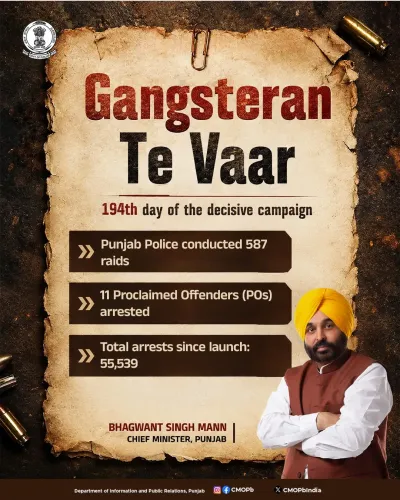
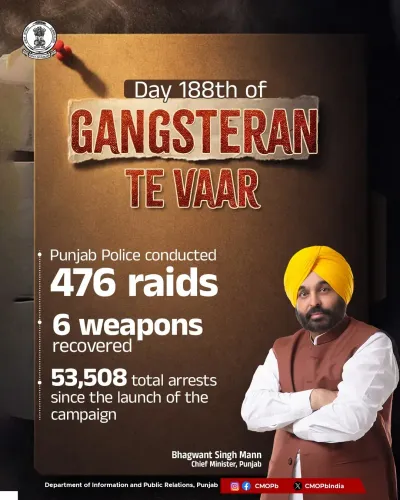
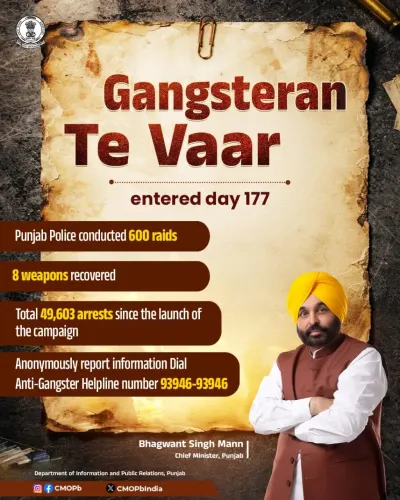
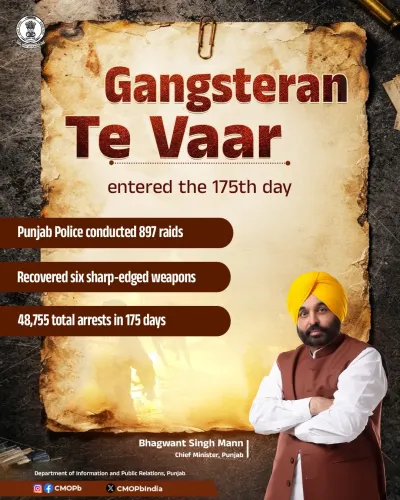
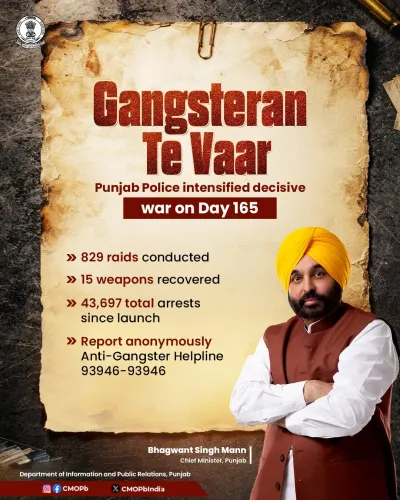
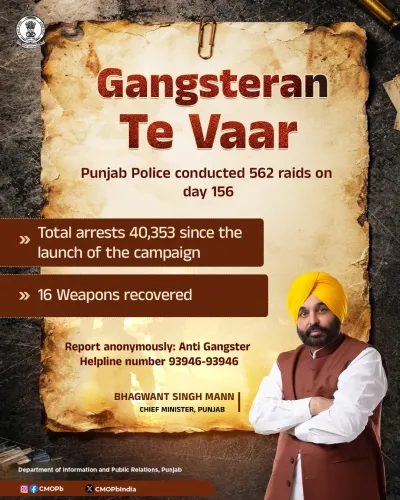
On Day 202 of the 'Gangsteran Te Vaar' campaign, Punjab Police conducted 638 raids, recovered 15 weapons, and crossed 59,021 total arrests. The CMO Punjab highlighted the Anti-Gangster Helpline 93946-93946 for anonymous public tip-offs as the drive continues its daily operational tempo.
Key Takeaways
638 raids were conducted on Day 202 of the 'Gangsteran Te Vaar' campaign at locations mapped to gangster associates across Punjab.
15 weapons were recovered during the Day 202 operations.
Cumulative arrests since the campaign's launch have reached 59,021 .
The campaign is now in its 202nd consecutive day , reflecting an unusually sustained operational tempo for a state policing drive.
Residents can report gangster activity anonymously via the Anti-Gangster Helpline: 93946-93946 .
The drive is anchored in the Bhagwant Mann-led AAP government's 2022 zero-tolerance pledge against organised crime and drugs.
More than half a year in, Punjab's most sustained anti-gangster drive shows no sign of slowing down. On Day 202 of the 'Gangsteran Te Vaar' campaign, Punjab Police conducted 638 raids at locations mapped to gangster associates across the state, recovering 15 weapons and pushing the cumulative arrest count to a landmark 59,021 since the drive's launch — a figure the Chief Minister's Office of Punjab announced on Tuesday, August 11, 2026.
638 Raids, 15 Weapons, One Running Total That Keeps Climbing
The daily operational rhythm of 'Gangsteran Te Vaar' (Gangsteran Te Vaar — 'Strike Against Gangsters') is built around mapped intelligence: police teams target pre-identified locations tied to the associates and support networks of known gangsters, not just the principals themselves. On Day 202, 638 such locations were raided simultaneously across the state. The 15 weapons recovered add to a growing seizure tally that the government updates publicly every day, creating a drumbeat of accountability that is itself part of the campaign's design.
How 59,021 Arrests Reflect a Zero-Tolerance Architecture
Chief Minister Bhagwant Mann's government came to power in 2022 on an explicit zero-tolerance pledge against drugs and organised crime — a commitment the Aam Aadmi Party had made central to its Punjab electoral campaign. 'Gangsteran Te Vaar' is the structural expression of that pledge: daily raids, publicly reported cumulative figures, and a direct pipeline for citizen intelligence. The 59,021 arrests logged over roughly six and a half months signal an operational tempo that goes well beyond a headline-grabbing launch and quiet wind-down — a pattern that has tripped up similar drives in other Indian states.
The Helpline Turning Residents Into Eyes on the Ground
A critical pillar of the campaign is the Anti-Gangster Helpline: 93946-93946. The number allows residents to report wanted criminals, gangster activity, and crime tips anonymously — lowering the personal risk that has historically kept communities silent in gangster-dominated localities. Punjab has long grappled with extortion rackets, contract killings, and drug networks with cross-border dimensions; embedding a public tip line into the daily operational loop is an attempt to close the information gap that organised crime depends on.
Whether the arrest numbers translate into durable disruption of gangster networks — or whether the organisations reconstitute around new figures — will be the real test. For now, the scoreboard keeps moving.
Point of View
Which is core to AAP's governance brand. Crossing 59,000 arrests in roughly six months is a significant number, but the harder question for analysts is whether the arrests are targeting mid-level network nodes or primarily peripheral associates. Punjab's gangster ecosystem has historically shown resilience across policing cycles; the true test of 'Gangsteran Te Vaar' will be whether conviction rates and network disruption follow the arrest curve upward.
NationPress
11 Aug 2026
Frequently Asked Questions
What is the 'Gangsteran Te Vaar' campaign in Punjab?
'Gangsteran Te Vaar' is a sustained anti-gangster policing campaign launched by the Punjab government under Chief Minister Bhagwant Mann, involving daily raids on locations linked to gangster networks, mass arrests, and weapon recoveries across the state.
How many arrests have been made in the Gangsteran Te Vaar campaign?
As of Day 202 of the campaign, a total of 59,021 arrests have been made since the drive's launch, according to the Chief Minister's Office of Punjab.
What is the Anti-Gangster Helpline number in Punjab?
The Anti-Gangster Helpline number is 93946-93946. Punjab residents can use it to anonymously report information about wanted criminals, gangsters, or any criminal activity.
How many raids did Punjab Police conduct on Day 202 of Gangsteran Te Vaar?
Punjab Police conducted 638 raids at locations identified and mapped as linked to gangster associates on Day 202 of the campaign, also recovering 15 weapons.
When did the Bhagwant Mann government launch its anti-gangster policy?
The Aam Aadmi Party government led by Bhagwant Mann came to power in Punjab in 2022 on a zero-tolerance platform against drugs and organised crime, with 'Gangsteran Te Vaar' being the flagship operational campaign implementing that policy.