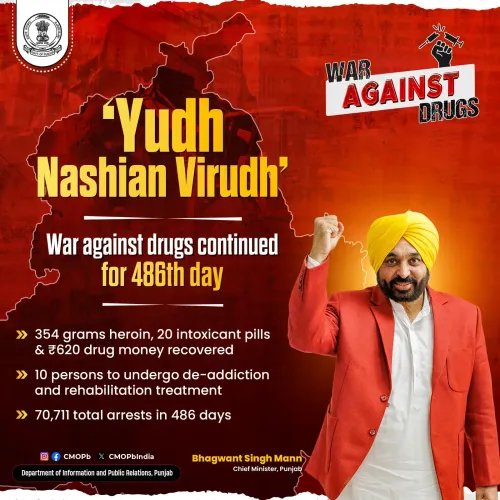
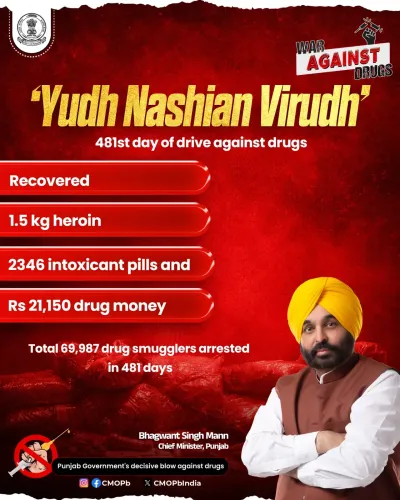
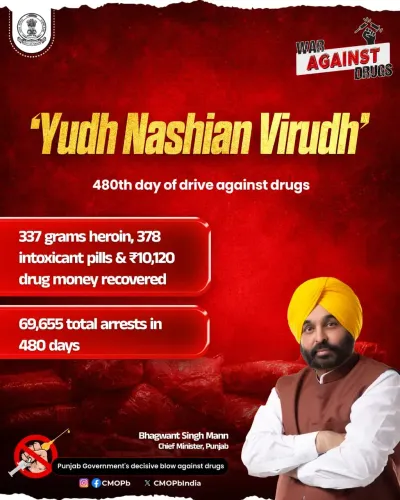
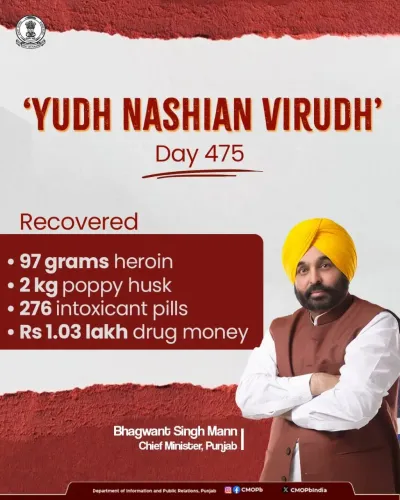
Punjab Police hits Day 489 of Yudh Nashian Virudh, arrests drug smugglers
Synopsis
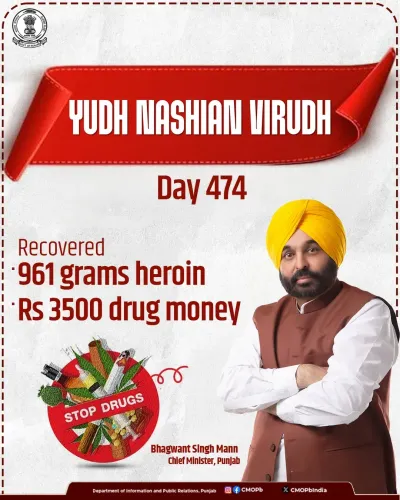
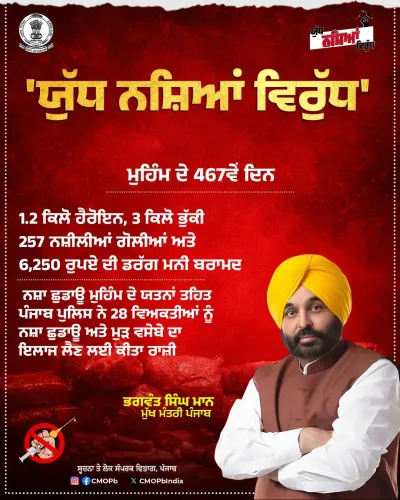
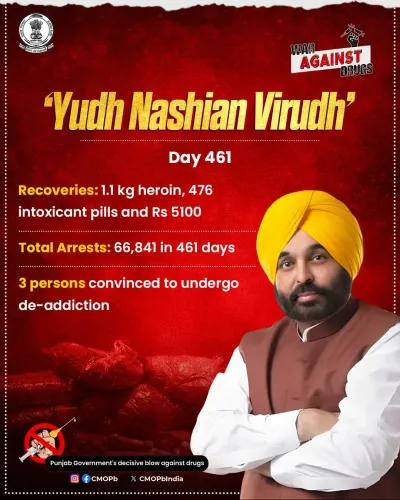
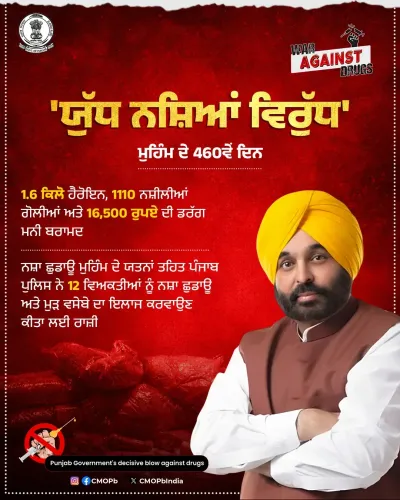
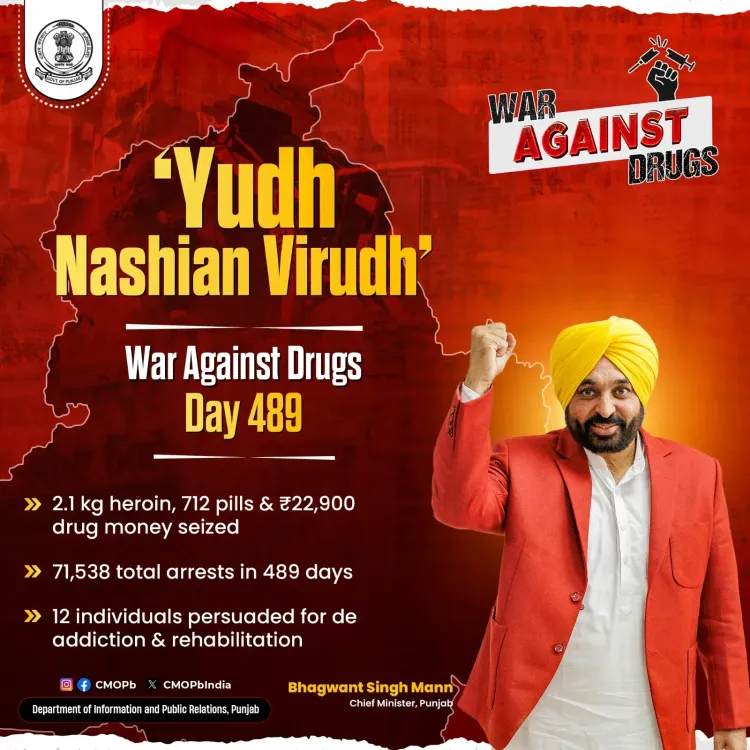
Punjab Police extended its Yudh Nashian Virudh anti-drug campaign to 489 consecutive days on 4 July 2026, seizing 2.1 kg heroin and 712 intoxicant pills, pushing total arrests to 71,538 while convincing 12 more persons to enter rehabilitation.
Key Takeaways
Day 489: Punjab Police continued the Yudh Nashian Virudh drive without interruption into its 489th consecutive day as of 4 July 2026 .
Fresh seizures: Police recovered 2.1 kg heroin , 712 intoxicant pills , and Rs 22,900 in drug money in the latest operation.
Cumulative arrests: The total number of drug smugglers arrested since the campaign launched has reached 71,538 .
Rehabilitation outreach: 12 persons were persuaded by police to voluntarily enter de-addiction and rehabilitation treatment on this single day.
Campaign origin: Yudh Nashian Virudh was launched in March 2022 by the AAP government under Chief Minister Bhagwant Mann as a dual enforcement-and-rehabilitation drive.
The Chief Minister's Office of Punjab announced on Saturday, 4 July 2026 that Punjab Police has continued its anti-narcotics drive Yudh Nashian Virudh into its 489th consecutive day, with fresh arrests of drug smugglers and new seizures of heroin and intoxicant pills.
What the latest drive yielded
In the latest operational update, police recovered 2.1 kg of heroin, 712 intoxicant pills, and Rs 22,900 in drug money from arrested smugglers. The cumulative tally of drug smugglers arrested since the campaign began has now reached 71,538 over 489 days. Beyond enforcement, 12 persons were convinced by police personnel to voluntarily undergo de-addiction and rehabilitation treatment as part of the campaign's outreach component.Context: A campaign born with the AAP government
Yudh Nashian Virudh — translating from Punjabi as 'Yudh Nashian Virudh' ('War Against Drugs') — was formally launched in March 2022, within weeks of the Aam Aadmi Party government led by Chief Minister Bhagwant Mann assuming office in Punjab. The campaign combines hard enforcement — arrests, seizures, and disruption of supply chains — with a rehabilitation track that refers addicts to state-run de-addiction centres. Daily updates published by the Chief Minister's Office are a deliberate transparency mechanism, keeping the campaign in public view.Policy backdrop: Punjab's drug crisis and the enforcement response
Punjab has long been identified as a state acutely vulnerable to drug trafficking, owing to its geographic position along known cross-border smuggling corridors from Pakistan and its documented rates of heroin and synthetic drug dependence, particularly among young males. Previous state governments also ran anti-narcotics operations under the Narcotic Drugs and Psychotropic Substances (NDPS) Act framework through the 2010s, but critics argued those efforts lacked continuity. The current administration has staked significant political capital on demonstrating sustained, measurable progress — hence the daily public reporting of cumulative arrest figures.Stakeholders and impact
The primary beneficiaries of the campaign are Punjab's youth, border-district communities, and families affected by addiction. The dual-track model — enforcement plus rehabilitation — reflects a broader national shift in drug policy, mirroring elements of central government programmes that treat addiction as both a law-and-order and a public health issue. The rehabilitation referral of 12 persons in a single day, while modest in isolation, is part of a cumulative outreach effort that the state government counts alongside arrest statistics. Families in districts such as Amritsar, Tarn Taran, Gurdaspur, and Ferozepur — historically among the worst affected — remain the most direct stakeholders.What's next
The Punjab Police is expected to continue publishing daily consolidated data through the Chief Minister's Office. Analysts and civil society groups will watch for the release of monthly aggregated seizure and rehabilitation figures from police headquarters, as well as any proposals for dedicated de-addiction funding in the upcoming state budget session. Sustaining both the enforcement tempo and the rehabilitation pipeline will be critical to converting daily arrest numbers into a measurable long-term reduction in drug dependency across the state.Point of View
Measurable accountability exercise. Reaching 71,538 cumulative arrests in 489 days signals an operational tempo that far exceeds previous state-level anti-drug campaigns in terms of public documentation, even if independent verification of the figures remains limited. The integration of rehabilitation referrals alongside arrest statistics is notable: it positions the campaign not merely as a crackdown but as a public health intervention, aligning Punjab's approach with the broader national shift toward treating addiction as a dual law-enforcement and welfare challenge. With state elections on the horizon, the sustained daily reporting serves both a governance and a political signalling function — demonstrating that the AAP government is delivering on what was arguably its most prominent pre-election promise to Punjab voters.
NationPress
4 Jul 2026
Frequently Asked Questions
What is Yudh Nashian Virudh in Punjab?
Yudh Nashian Virudh is a statewide anti-drug campaign launched by the Punjab Police in March 2022 under the AAP government led by Chief Minister Bhagwant Mann. It combines daily enforcement operations — arrests of drug smugglers and seizures of narcotics — with outreach efforts to refer addicts to de-addiction and rehabilitation centres.
How many drug smugglers have been arrested in Punjab's anti-drug drive?
As of Day 489 of the campaign on 4 July 2026, the total number of drug smugglers arrested under Yudh Nashian Virudh has reached 71,538, according to the Chief Minister's Office of Punjab.
How much heroin was seized in the latest Punjab Police drug operation?
In the Day 489 update, Punjab Police seized 2.1 kg of heroin, 712 intoxicant pills, and Rs 22,900 in drug money from arrested smugglers.
Does Punjab Police also help drug addicts get treatment?
Yes. As part of the de-addiction component of Yudh Nashian Virudh, police personnel actively counsel individuals struggling with addiction and refer them to rehabilitation centres. On Day 489 alone, 12 persons were convinced to voluntarily undergo de-addiction treatment.
Why is Punjab particularly affected by drug trafficking?
Punjab shares a border with Pakistan and sits along documented cross-border drug smuggling corridors, making it especially vulnerable to heroin and synthetic drug trafficking. The state has historically reported high addiction rates, particularly among young males in border districts.