Punjab Police Saanjh Rahat Kendras screen 1,656 women's cases in two years
Synopsis
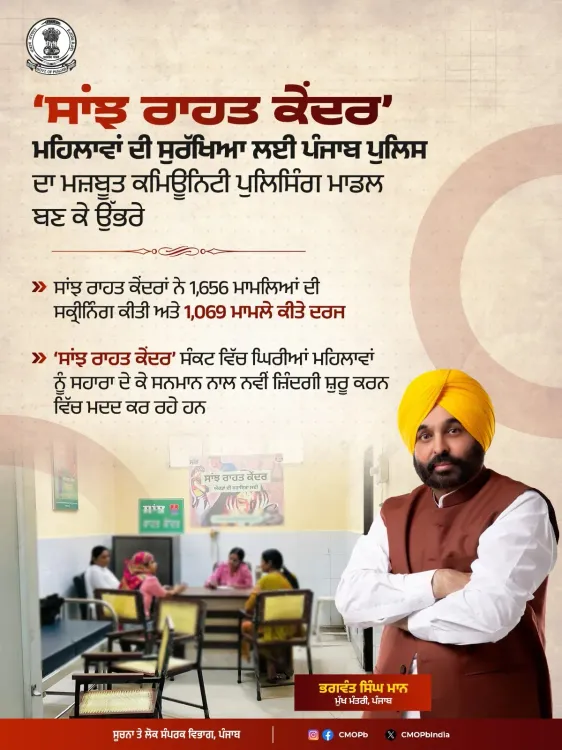
The Chief Minister's Office of Punjab on 15 July 2026 highlighted that Punjab Police's Saanjh Rahat Kendras — community centres providing counselling, crisis intervention, and rehabilitation to women in distress — have screened 1,656 cases and registered 1,069 cases over two years, marking them as a notable community policing model.
Key Takeaways
The CMO Punjab on 15 July 2026 publicised the two-year performance of Saanjh Rahat Kendras , Punjab Police's women-focused community centres.
The Kendras have screened 1,656 cases and formally registered 1,069 cases over the past two years.
Services offered include integrated support, counselling, crisis intervention, and rehabilitation for women in distress.
The Kendras are an extension of Punjab Police 's broader Saanjh community policing framework, operational since 2011–2013 .
The model aligns with a national trend of women-centric one-stop police centres established across Indian states after 2012 .
Potential expansion to additional districts and publication of detailed evaluation data remain key points to watch.
The Chief Minister's Office of Punjab on Wednesday, 15 July 2026 highlighted the performance of the Punjab Police's Saanjh Rahat Kendras, community policing centres dedicated to women's safety, noting that the units have screened 1,656 cases and registered 1,069 cases over the past two years.
Context
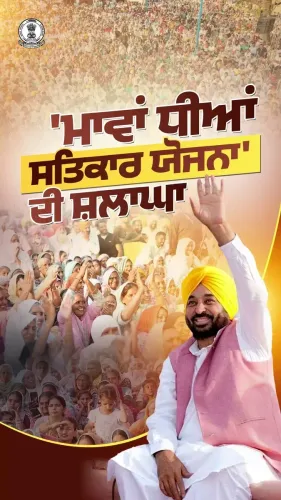
The CMO Punjab post, shared in both Punjabi and English, described the Saanjh Rahat Kendras as having 'ਇੱਕ ਪ੍ਰਭਾਵਸ਼ਾਲੀ ਕਮਿਊਨਿਟੀ ਪੁਲਿਸਿੰਗ ਮਾਡਲ ਵਜੋਂ ਉੱਭਰ ਕੇ ਸਾਹਮਣੇ ਆਏ ਹਨ' [emerged as a strong community policing model]. The centres provide integrated support, counselling, crisis intervention, and rehabilitation services to women in distress. The announcement positions the Kendras not merely as police outposts but as holistic welfare hubs for vulnerable women.
Policy Backdrop
Punjab Police has operated the broader Saanjh community policing framework since 2011–2013, designed to deepen police-public trust and make policing more accessible. The Saanjh Rahat Kendras represent a specialised extension of that framework, narrowing the focus to gender-based violence and women's welfare. Across India, multiple states moved to establish dedicated women-centric police desks and one-stop centres following 2012, combining legal aid, counselling, and immediate crisis response under a single roof — a model the Kendras broadly mirror.
The shift reflects a wider national push to move policing on gender-based violence from a purely reactive posture toward preventive community engagement. By screening cases before formal registration, the Kendras also allow for early identification of at-risk women who may not yet have filed a complaint.
Stakeholders and Impact
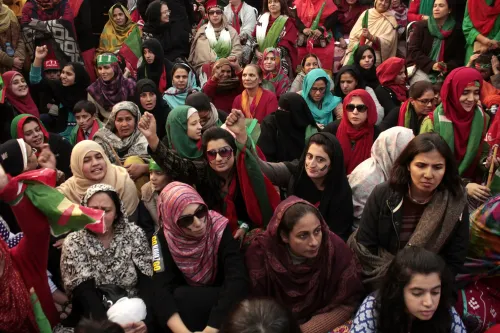
The primary beneficiaries are women in distress across Punjab, including survivors of domestic violence and others facing crisis situations. Over two years, the 1,656 cases screened represent women who approached or were referred to the Kendras; of these, 1,069 cases were formally registered — indicating that a meaningful share of women received structured legal and welfare intervention. Counselling and rehabilitation services offered alongside legal recourse aim to address the full spectrum of a survivor's needs, not just the immediate safety concern.
Community policing models of this kind also aim to reduce the barrier of approaching a police station, which can be intimidating for women in conservative or rural settings. The Kendras' integrated design is intended to make that first step less daunting.
What's Next
The CMO Punjab's public communication of these figures suggests the state government views the Saanjh Rahat Kendras as a replicable success worth publicising. Analysts and welfare advocates will watch whether Punjab moves to expand the Kendra network to additional districts, and whether the state publishes detailed evaluation data — including survivor feedback and downstream outcomes such as conviction rates — to substantiate the model's long-term effectiveness. The broader question is whether this community policing approach can be sustained and scaled as a template for women's safety governance in the state.
Point of View
A politically sensitive issue in Punjab. The 1,069 registered cases out of 1,656 screened suggests the Kendras are functioning as a meaningful filter, not just a symbolic presence. However, the absence of outcome data — conviction rates, recidivism, survivor satisfaction — means the headline figures, while credible as activity metrics, do not yet constitute proof of impact. The broader significance lies in whether this model prompts a formal state-level policy to standardise and expand the Kendra network, which would mark a genuine institutional shift in how Punjab approaches gender-based violence.
NationPress
13 Oct 2026
Frequently Asked Questions
What are Saanjh Rahat Kendras in Punjab?
Saanjh Rahat Kendras are specialised community policing centres run by Punjab Police that provide integrated support, counselling, crisis intervention, and rehabilitation services to women in distress or facing violence.
How many cases have Saanjh Rahat Kendras handled?
Over the past two years, the Kendras have screened 1,656 cases and formally registered 1,069 cases , according to an announcement by the CMO Punjab on 15 July 2026 .
When did Punjab Police start the Saanjh community policing programme?
Punjab Police launched the broader Saanjh community policing framework between 2011 and 2013 to strengthen police-public partnership; the Rahat Kendras are a women-focused extension of that initiative.
What services do Saanjh Rahat Kendras provide to women?
The Kendras offer integrated support, legal counselling, immediate crisis intervention, and rehabilitation services — functioning as a one-stop centre so women in distress do not need to navigate multiple agencies.
Will Punjab expand the Saanjh Rahat Kendra network?
No formal announcement of expansion has been made yet, but the CMO Punjab 's public highlighting of the Kendras' performance figures suggests the state government may consider replicating the model in additional districts.