Punjab seeks MGNREGA staff regularisation under VB-G RAM G scheme
Synopsis
Punjab has formally asked the Centre to regularise over 2,100 MGNREGA workers left in limbo after the BJP-led government replaced the 18-year-old rural employment scheme with VB-G RAM G from 1 July — without a transition plan for contractual staff. With pending salaries unpaid and no national regularisation policy in sight, the dispute is fast becoming a Centre-state flashpoint.
Key Takeaways
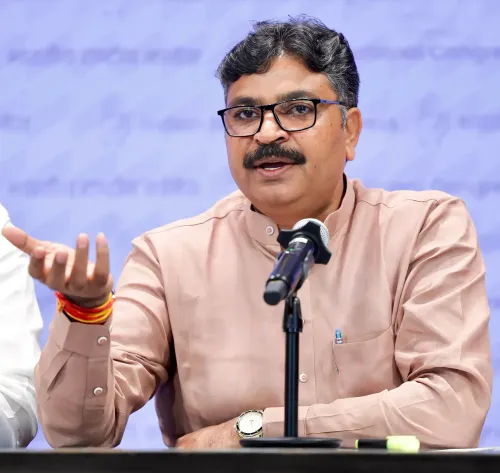
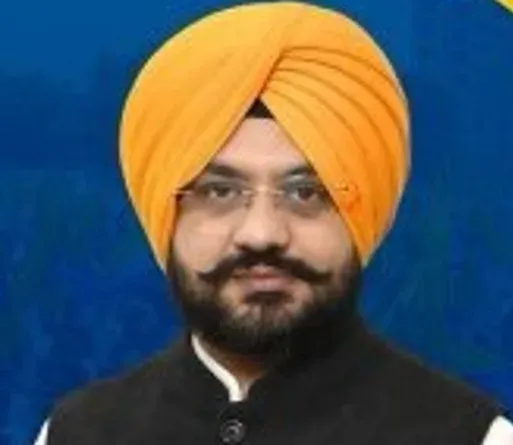
Punjab minister Tarunpreet Singh Sond wrote to Union minister Shivraj Singh Chouhan on 18 July seeking regularisation of MGNREGA employees.
Over 2,100 contractual workers — Technical Assistants, Gram Rozgar Sahayaks, and Computer Operators — are affected in Punjab alone.
The Centre replaced MGNREGA's operational framework with the VB-G RAM G scheme effective 1 July , without a clear transition plan for existing staff.
Punjab has demanded immediate release of pending salaries and a uniform national policy on job security for these workers.
Sond accused the Centre of shifting financial responsibility to states while leaving workers' futures unresolved after 18 years of service.
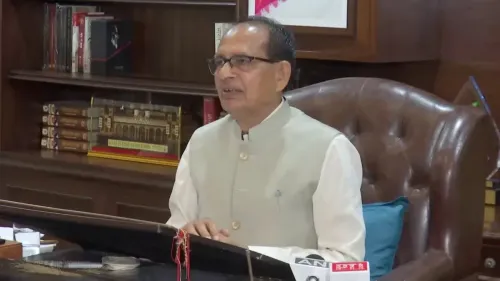
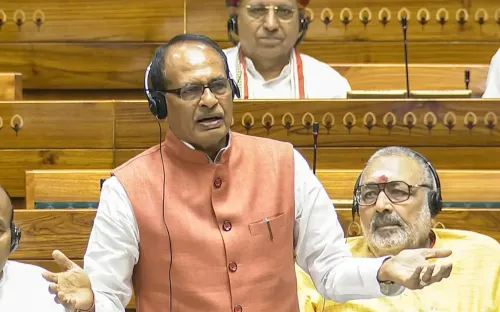
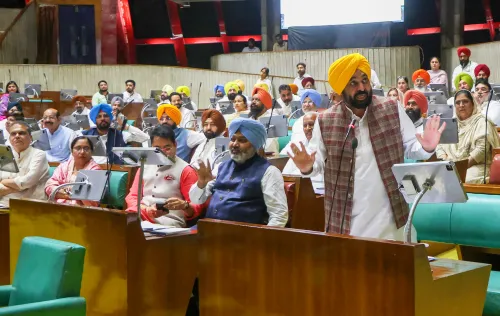
Punjab Rural Development and Panchayat Minister Tarunpreet Singh Sond on Saturday, 18 July wrote to Union Agriculture Minister Shivraj Singh Chouhan, urging the regularisation of MGNREGA (Mahatma Gandhi National Rural Employment Guarantee Act) employees under the newly introduced VB-G RAM G (Viksit Bharat Guarantee for Rozgar and Ajeevika Mission) scheme. The letter also demands a uniform national policy guaranteeing job security for over 2,100 such workers across Punjab.
What Punjab Is Demanding
Minister Sond called on the Centre to immediately release pending salaries owed to MGNREGA field staff and to formulate a national regularisation policy. He argued that employees who have anchored rural development programmes for nearly 18 years — including Technical Assistants, Gram Rozgar Sahayaks, and Computer Operators — cannot be left without a future following the Centre's decision to wind down the existing scheme.
Sond also questioned the Centre's move to shift the financial burden of the new VB-G RAM G scheme onto state governments while leaving the employment status of these workers unresolved.
The Scheme Transition at the Centre of the Row
MGNREGA was enacted around 2005 as a Central Government statute, obligating the Union to provide employment to rural households. In Punjab, the scheme has been operational for close to 18 years, during which roughly 2,000 to 2,100 contractual employees were recruited entirely under Central Government rolls.
According to Sond, the Bharatiya Janata Party (BJP)-led Central Government discontinued the existing MGNREGA operational framework and announced that the replacement VB-G RAM G scheme would come into force from 1 July. The transition, he said, was carried out without a clear roadmap for the contractual workforce.
Political Blame Game Enters the Picture
Sond did not limit his criticism to the Centre. In a pointed statement, he said: 'This is a very sensitive issue, and it is entirely related to the BJP-led Central Government. However, all the Opposition parties, whether it is the Congress, the Akali Dal or the BJP in Punjab, are trying to divert the issue and mislead people so that the entire matter is blamed on the Punjab government. The truth and the facts must be placed before the people.'
The remark signals that the dispute is acquiring a multi-party dimension in Punjab ahead of what is expected to be a contentious political season, with the ruling Aam Aadmi Party (AAP) keen to frame the issue as a failure of Central policy rather than state administration.
The Workers' Situation
The approximately 2,100 affected employees have reportedly not received pending wages, adding financial distress to job uncertainty. Sond emphasised that the Punjab government had 'no role whatsoever' in the scheme's administration, given its entirely Central character, and that the state is standing 'firmly' with these workers.
This comes amid a broader national debate over the fate of contractual staff employed under Centrally Sponsored Schemes, where the line of financial and administrative responsibility between the Centre and states has long been contested. With VB-G RAM G yet to publish detailed operational guidelines, the futures of thousands of similar workers in other states may hinge on how this dispute is resolved.
Point of View
Paid through Central funds, and given no portability or regularisation pathway across nearly two decades. The introduction of VB-G RAM G without a staff transition protocol repeats a pattern seen in other scheme overhauls. If the Centre does not establish a binding national policy now, the same dispute will surface in every state where these workers are deployed, and the political cost will fall on whichever government — state or Central — is easier to blame at election time.
NationPress
17 Oct 2026
Frequently Asked Questions
What is the VB-G RAM G scheme and how does it relate to MGNREGA?
VB-G RAM G (Viksit Bharat Guarantee for Rozgar and Ajeevika Mission) is the Central Government's replacement for the operational framework of MGNREGA, effective 1 July. It was introduced without a clear transition plan for the roughly 2,100 contractual employees who had been working under MGNREGA in Punjab for up to 18 years.
Why is Punjab demanding regularisation of MGNREGA employees?
Punjab argues that these workers were recruited and paid entirely under a Central Government scheme and statute, and that the Centre is therefore responsible for their job security. The state has demanded regularisation and a uniform national policy after the Centre wound down the existing MGNREGA framework.
How many MGNREGA workers are affected in Punjab?
Approximately 2,000 to 2,100 contractual employees — including Technical Assistants, Gram Rozgar Sahayaks, and Computer Operators — are affected in Punjab. Their salaries are reportedly pending and their employment status remains unresolved following the scheme transition.
Who did Punjab's minister write to, and what exactly was demanded?
Rural Development and Panchayat Minister Tarunpreet Singh Sond wrote to Union Agriculture Minister Shivraj Singh Chouhan on 18 July, demanding regularisation of affected staff, immediate release of pending salaries, and the formulation of a uniform national job-security policy for MGNREGA workers.
Is this dispute limited to Punjab?
No. MGNREGA is a Central scheme operational across India, and similar contractual workers exist in other states. The outcome of Punjab's demand for a national regularisation policy could set a precedent for how the Centre handles the workforce transition under VB-G RAM G nationwide.