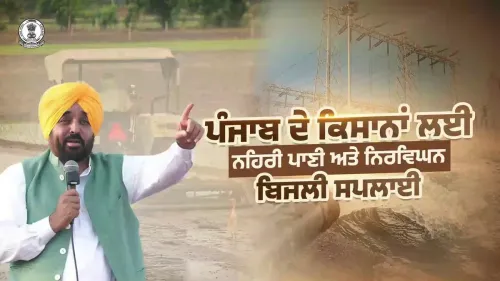
CM Mann: Punjab to Underground Farm & Home Power Lines

Synopsis
Chief Minister Bhagwant Mann has announced that Punjab is removing overhead electric poles and wires from agricultural fields and shifting power supply to farms and homes underground, aiming to eliminate crop damage, accidents, and weather-related outages.
Key Takeaways
The Punjab government is removing overhead electricity poles and wires from agricultural fields under a new infrastructure scheme.
Power supply to both farms and homes will be shifted underground using modern technology.
The move aims to prevent crop damage, electrical accidents, and weather-related power disruptions .
PSPCL , the state power utility, is the implementing body for distribution infrastructure upgrades in Punjab.
The initiative is consistent with the central government's Revamped Distribution Sector Scheme (RDSS) approved in 2021.
Similar underground cabling programmes are already underway in Haryana and Maharashtra .
The Chief Minister's Office of Punjab announced on Saturday, 13 June 2026 that the state government is undertaking a programme to remove overhead electricity wires and poles from agricultural fields, with power supply to farms and homes to be shifted underground using modern technology.
What Was Announced
Chief Minister Bhagwant Mann stated that the Punjab government is carrying out the removal of electric wires and poles installed in fields under a new approach driven by modern technology. In his words: 'ਬਿਜਲੀ ਦੀਆਂ ਤਾਰਾਂ ਅਤੇ ਖੇਤਾਂ ਵਿੱਚ ਲੱਗੇ ਖੰਭਿਆਂ ਨੂੰ ਹਟਾਉਣ ਦਾ ਕੰਮ ਕੀਤਾ ਜਾ ਰਿਹਾ ਹੈ' ('work is being done to remove electric wires and poles installed in fields'). The electricity supply to both farms and homes will be moved underground as part of this scheme.
The government says the underground cabling will prevent crop damage, accidents, and weather-related disruptions to power supply — three persistent problems in Punjab's densely farmed rural belt.
Context
Overhead distribution lines running through agricultural fields have long caused losses for Punjab's farming communities. During harvesting seasons, farm machinery such as combine harvesters can snag low-hanging wires, leading to accidents and crop fires. Monsoon storms routinely bring down poles, cutting supply to villages for extended periods.
Punjab State Power Corporation Limited (PSPCL), the state-owned utility responsible for electricity distribution, is the implementing body for infrastructure upgrades of this nature in the state.
Policy Backdrop
The initiative aligns with the Revamped Distribution Sector Scheme (RDSS), a central government programme approved in 2021 that provides funding support to states for distribution infrastructure modernisation, including underground cabling components. Punjab is among the states that received support under this framework.
Similar underground cabling drives have been undertaken in Haryana and Maharashtra, where high-density farming coincides with frequent storm activity. The broader national goal is to reduce aggregate technical and commercial losses in the power sector and improve distribution reliability across rural India.
Stakeholders and Impact
The primary beneficiaries are Punjab's farmers and rural households. Underground cabling eliminates the risk of electrocution from fallen lines — a recurring cause of farm fatalities — and removes a physical obstruction from fields, potentially allowing more efficient mechanised cultivation.
Uninterrupted power supply is especially critical during the kharif and rabi sowing and harvesting windows, when irrigation pumps run continuously. Reduced outage hours would directly support agricultural productivity across the state.
What's Next
The specific scope, funding breakdown, and district-wise rollout schedule for the underground cabling scheme have not yet been detailed in official public records. Observers will watch for budget allocations in the next state budget cycle and measurable data on reduced outage hours or crop-loss incidents once pilot stretches are commissioned. The pace of PSPCL's on-ground execution will be a key indicator of whether the programme delivers on its stated goals.
Frequently Asked Questions
What is Punjab's underground electricity scheme for farms?
The Punjab government is removing overhead electric poles and wires from agricultural fields and rerouting power supply to farms and homes through underground cables, with the aim of preventing crop damage, accidents, and weather-related outages.
Who announced the underground power line scheme in Punjab?
Chief Minister Bhagwant Mann announced the scheme, with the official communication made through the Chief Minister's Office of Punjab on 13 June 2026 .
How will underground cabling help Punjab farmers?
Underground cables eliminate the risk of farm machinery snagging overhead wires, reduce fire and electrocution hazards, and ensure uninterrupted power supply to irrigation pumps during critical sowing and harvesting periods.
Is Punjab's underground cabling linked to a central government scheme?
The initiative aligns with the Revamped Distribution Sector Scheme (RDSS) , a central government programme approved in 2021 that funds distribution infrastructure modernisation including underground cabling in states like Punjab.
Which other states have done underground electricity cabling for farms?
Haryana and Maharashtra have undertaken similar underground distribution line projects in their agricultural belts to address weather-related outages and crop-damage risks.