Puri at SRCC Centenary: Youth, Energy Security, Viksit Bharat
Synopsis
Union Petroleum Minister Hardeep Singh Puri addressed SRCC's Centenary Conclave 'Pathways to Viksit Bharat' on October 16, citing India's forty-fold university expansion since 1950 and crediting energy diplomacy for keeping fuel supplies stable amid global disruptions.
Key Takeaways
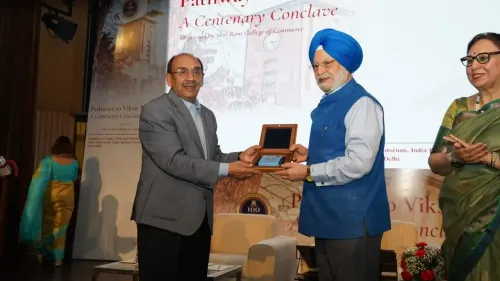
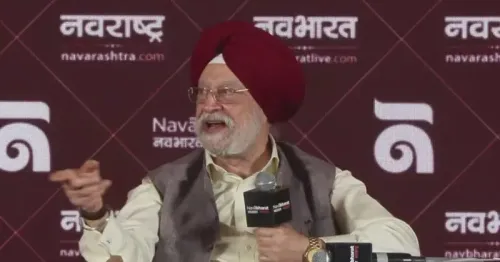
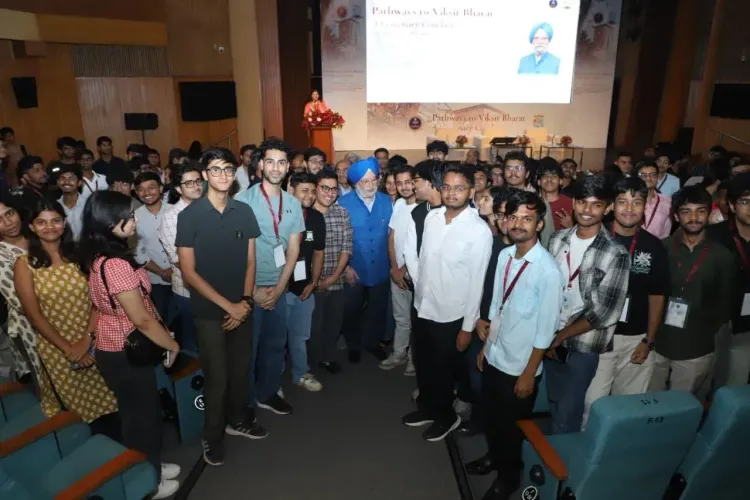
Union Petroleum Minister Hardeep Singh Puri delivered the valedictory address at SRCC's two-day Centenary Conclave , 'Pathways to Viksit Bharat,' on October 16, 2026 .
India's university count grew from 30 in 1950-51 to 1,289 universities and university-level institutions in 2023-24 .
Puri studied at Hindu College, DU , and later taught at St.
Stephen's College , giving his address a personal DU dimension.
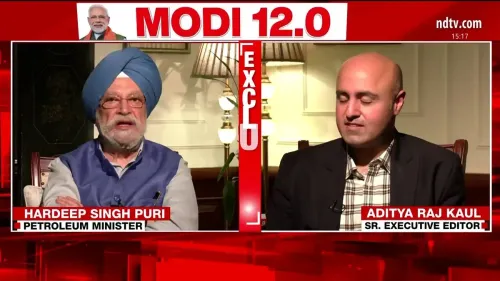
He credited India's post-2022 energy diplomacy for keeping petrol pumps supplied, LPG deliveries uninterrupted , and retail fuel prices contained amid global shocks.
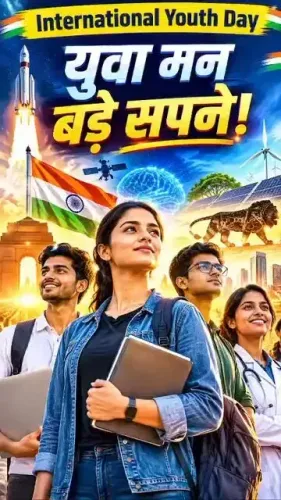
The minister framed India's youth as the key driver of the Viksit Bharat 2047 goal under the Amrit Kaal framework.
He quoted philosopher Alfred North Whitehead to argue that universities must weld imagination to experience — linking education quality to national development.
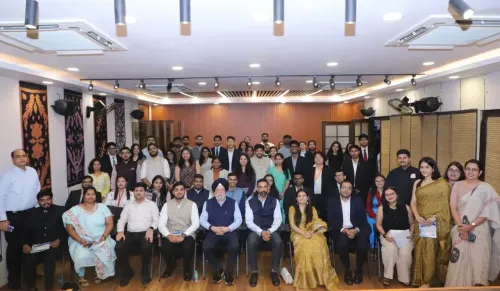
From a student's bench at Hindu College to a minister's podium at Shri Ram College of Commerce — Union Petroleum Minister Hardeep Singh Puri closed the two-day Centenary Conclave, 'Pathways to Viksit Bharat', on Friday, October 16, 2026, weaving together personal memory, education data, and energy diplomacy into a single message for India's next generation.
A minister's homecoming to Delhi University's corridors
Puri described the valedictory session as an occasion that 'brought back fond memories' — he studied at Hindu College, University of Delhi, and later joined the teaching faculty at St. Stephen's College, two of DU's most storied institutions. Addressing a 'young and inquisitive audience,' he reached for Alfred North Whitehead: 'The task of a university is to weld together imagination and experience.' It was not a throwaway quote. It set up everything that followed.
From 30 universities in 1950 to 1,289 today — and what still has to happen
Puri anchored his education argument in a striking number: India had just 30 universities in 1950-51. By 2023-24, that figure had grown to 1,289 universities and university-level institutions — a more than forty-fold expansion in seven decades. He framed the statistic not as a finish line but as a foundation, noting that 'the next step is to ensure that learning translates into skills, meaningful opportunities and research that addresses society's real needs.' The remark echoes the ambitions of the National Education Policy 2020, which set explicit targets for widening higher-education access while tightening the link between degrees and employability.
The SRCC conclave's theme — Pathways to Viksit Bharat — itself encodes the government's Amrit Kaal framework: the window between India's 75th and 100th years of independence in which the country aims to become a fully developed economy by 2047, a goal Prime Minister Narendra Modi has described as a civilisational commitment.
How Indian petrol pumps stayed supplied while the world scrambled
The minister also used the platform to make a pointed defence of India's energy management record. When global supply chains buckled and energy prices spiked in recent years, he said, Indian petrol pumps remained supplied, LPG cylinders continued reaching households, and retail fuel prices stayed contained. His framing was direct: India 'navigated recent supply-chain disruptions and maintained steady energy imports' through what he called 'energy diplomacy under PM Modi Ji's decisive leadership.'
The claim tracks with India's documented pivot after 2022, when New Delhi diversified its crude-oil sourcing — dramatically scaling up discounted Russian crude purchases, maintaining Gulf supply lines, and exploring new partnerships — to insulate domestic consumers from the price shocks that hit European and Asian markets. For a petroleum minister speaking to students about national ambition, the energy record served as a live case study: macro-level diplomacy with a direct, kitchen-table consequence for every Indian family that cooks with gas or commutes on two wheels.
Youth as the engine of a growth 'juggernaut'
Puri's closing argument tied both threads together. 'As India is now in the midst of an unprecedented and ambitious journey through the Amrit Kaal towards becoming Viksit Bharat,' he told the students, 'the youth play a vital role in providing momentum to this juggernaut of growth, development and progress.' The word 'juggernaut' — itself of Indian origin — landed with deliberate weight before an audience of commerce students whose career arcs will unfold almost entirely within that 2047 horizon.
For SRCC, marking a full century of existence with a conclave on national development, the minister's address was a capstone: a bridge between a university's hundred-year journey and a country's next twenty-one.
The real test, as Puri himself framed it, is whether India's ballooning university count translates into graduates who can solve real problems — in energy, in commerce, in every sector the Viksit Bharat ambition demands. The conclave asked the question. The students in that hall will have to answer it.
Point of View
The minister is effectively asking young Indians to see fuel-price stability not as a subsidy story but as a geopolitical achievement they should own. The Viksit Bharat framing is also strategically durable: it sets a 2047 horizon that any government of the next two decades will have to either fulfil or answer for, making today's youth both the intended beneficiaries and the eventual auditors of the promise.
NationPress
17 Oct 2026
Frequently Asked Questions
What is the SRCC Centenary Conclave 'Pathways to Viksit Bharat'?
It is a two-day conclave organised by Shri Ram College of Commerce, University of Delhi , marking the college's centenary year, focused on India's developmental aspirations under the Viksit Bharat framework. Union Petroleum Minister Hardeep Singh Puri addressed the valedictory session on October 16, 2026 .
How many universities does India have now compared to at independence?
India had just 30 universities in 1950-51 . By 2023-24 , that number had grown to 1,289 universities and university-level institutions , a more than forty-fold increase cited by Minister Puri at the SRCC conclave.
What is Viksit Bharat and Amrit Kaal?
Viksit Bharat is India's national aspiration to become a fully developed economy by 2047 , the country's 100th year of independence. Amrit Kaal refers to the 25-year period from 2022 to 2047 that the Modi government has designated as a transformative window for achieving this goal.
How did India manage energy security during global supply disruptions?
After the 2022 global energy disruptions, India diversified its crude-oil sourcing — including significantly scaling up purchases of discounted Russian crude — to maintain domestic supply. Minister Puri stated that Indian petrol pumps remained supplied, LPG deliveries continued , and retail fuel prices stayed contained, attributing this to 'energy diplomacy' under PM Narendra Modi .
What is Hardeep Singh Puri's connection to Delhi University?
Minister Hardeep Singh Puri studied at Hindu College, University of Delhi , and later served as a member of the teaching faculty at St. Stephen's College, DU , before his career in the Indian Foreign Service and subsequently in politics.