Puri Backs GOBARdhan as Blueprint for Bankable Green Energy
Synopsis
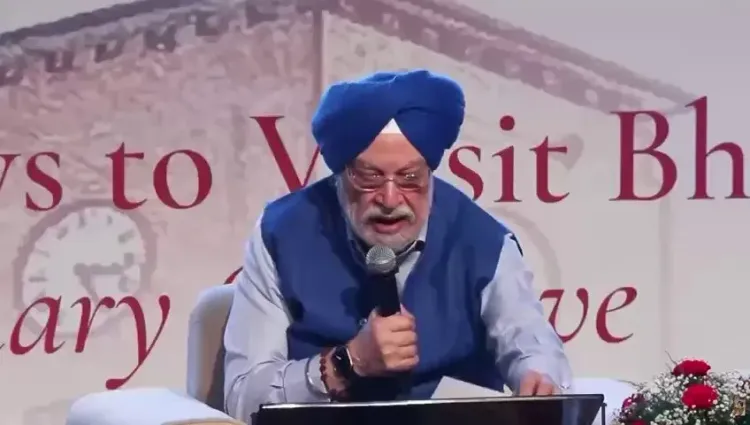
Union Petroleum Minister Hardeep Singh Puri championed the GOBARdhan and SATAT initiatives at a University of Delhi forum, arguing that capital subsidies and guaranteed CBG offtake have made India's waste-to-energy model commercially bankable for farmers and entrepreneurs.
Key Takeaways
Hardeep Singh Puri addressed an event co-hosted by SRCC and University of Delhi on October 16, 2026 , pitching GOBARdhan as a proven green enterprise model.
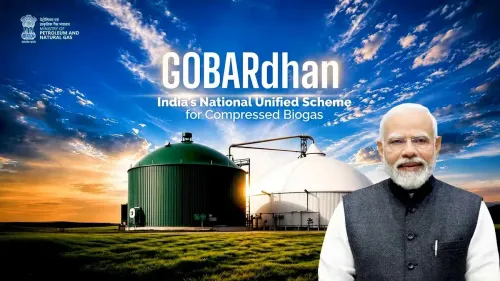
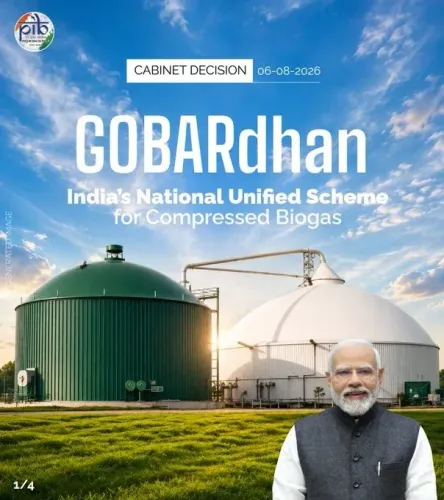
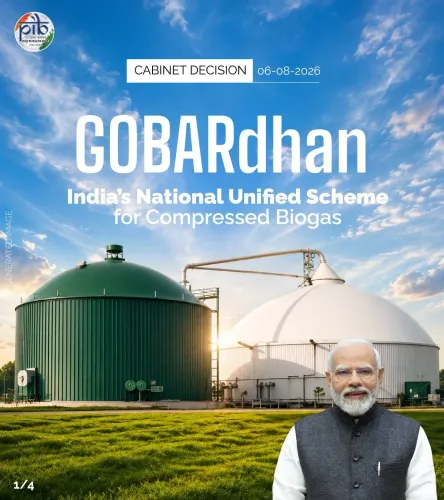
The GOBARdhan scheme , launched in 2018 , converts cattle dung and agricultural waste into Compressed Biogas (CBG) and organic fertiliser.
The SATAT initiative (also launched October 2018 ) targets 5,000 CBG plants with oil marketing companies obligated to purchase CBG output at guaranteed prices.
Puri argued that pairing capital subsidies with a price-floor offtake guarantee removes the two biggest investment risks that historically killed rural energy projects.
The 'Annadata to Urjadata' framing repositions farmers as energy entrepreneurs, linking rural income generation directly to India's fossil-fuel import reduction goals.
The academic forum setting signals a push to build entrepreneurial and policy talent around the CBG sector beyond existing industry channels.
Cattle dung is becoming a balance sheet item — and Union Petroleum Minister Hardeep Singh Puri wants every farmer and entrepreneur to know it. Speaking at an event co-hosted by SRCC and the University of Delhi on Friday, October 16, 2026, Puri invoked Prime Minister Narendra Modi's twin-vision framework — 'Waste to Wealth' and 'Annadata to Urjadata' (food-giver to energy-giver) — to argue that India's compressed biogas push has crossed a critical threshold: it is now commercially viable, not just policy aspirational.
From Dung to Diesel-Equivalent: What GOBARdhan Actually Does
Launched in 2018, the GOBARdhan scheme — Galvanizing Organic Bio-Agro Resources Dhan — was designed to do three things simultaneously: clean up cattle and agricultural waste, generate rural energy, and put money back in farmers' pockets. The scheme sits at the intersection of the Swachh Bharat Mission and India's broader biofuel ambitions, converting organic waste streams that would otherwise rot — or pollute — into Compressed Biogas (CBG), a green substitute for CNG in transport and cooking.
Puri's core argument on Friday was about risk architecture. By pairing capital subsidies with guaranteed offtake at premium prices from oil marketing companies, the government has removed the two biggest deterrents that historically killed rural energy projects before they started: the fear of a lumpy upfront investment and the fear of having no buyer once the plant runs.
SATAT's Role: 5,000 Plants and a Price Floor
The offtake guarantee Puri referenced traces directly to the SATAT initiative — Sustainable Alternative Towards Affordable Transportation — launched by his own Ministry in October 2018. SATAT set a target of 5,000 CBG plants across India, with oil marketing companies committed to purchasing CBG output at notified prices, effectively creating a floor price that makes project financing possible. That price signal, combined with capital subsidies routed through GOBARdhan, is what Puri means when he calls the green enterprise 'truly bankable.'
The 'Annadata to Urjadata' framing is deliberate policy language: it repositions the Indian farmer not merely as a food producer dependent on input subsidies, but as an energy entrepreneur generating a commodity the national grid will buy. It is a supply-side story dressed in rural-welfare clothes — and the numbers behind SATAT suggest it has genuine scale ambitions.
Why the University of Delhi Forum Matters
Puri's choice to make this argument at an academic forum — alongside SRCC, one of India's premier commerce colleges — signals that the Ministry is looking to seed the next generation of CBG entrepreneurs and policy thinkers, not just brief industry insiders. Compressed biogas sits at the convergence of agricultural economics, energy security and climate finance; making that case in a university setting is part of building the human capital pipeline the sector will need.
India's dependence on fossil-fuel imports remains a strategic vulnerability, and every cubic metre of domestically produced CBG is a direct offset. The National Policy on Biofuels and successive Union Budgets have layered mandatory blending targets on top of SATAT's offtake commitments, tightening the policy scaffolding further. The watch item now is whether revised SATAT plant targets — and fresh offtake pricing notifications — arrive in the current fiscal year to accelerate what Puri is calling an already-proven model.
The minister's message, stripped to its core: India has engineered the de-risking architecture. The enterprise opportunity is open. The next move belongs to farmers, investors and the entrepreneurs willing to turn organic waste into a revenue line.
Point of View
Not just an energy-security statistic — blunting rural criticism of the BJP while simultaneously advancing fossil-fuel import substitution. The SATAT-GOBARdhan tandem represents one of the more architecturally sophisticated attempts in Indian energy policy to align private investment incentives with a public-good outcome: guaranteed offtake essentially socialises the demand-side risk while subsidies lower entry barriers. The choice of a premier commerce college as the venue suggests the Ministry is deliberately targeting future deal-makers and policymakers, not just preaching to the converted in industry forums. The real test of the 'bankable' claim will come in the next budget cycle — if revised SATAT targets and updated offtake pricing follow, the rhetoric hardens into policy; if they don't, Friday's speech remains aspirational positioning.
NationPress
17 Oct 2026
Frequently Asked Questions
What is the GOBARdhan scheme?
GOBARdhan — Galvanizing Organic Bio-Agro Resources Dhan — is a central government scheme launched in 2018 to convert cattle dung and agricultural waste into Compressed Biogas (CBG) and organic fertiliser, generating rural energy and income while improving sanitation.
What is the SATAT initiative and how does it help farmers?
SATAT (Sustainable Alternative Towards Affordable Transportation) was launched by the Ministry of Petroleum and Natural Gas in October 2018 with a target of 5,000 CBG plants. Oil marketing companies are committed to buying CBG output at guaranteed prices, reducing the commercial risk for farmers and entrepreneurs who set up biogas plants.
What does 'Annadata to Urjadata' mean?
'Annadata' means food-giver (the traditional role of the farmer) and 'Urjadata' means energy-giver. The phrase captures PM Modi's vision of repositioning Indian farmers as energy producers who can earn revenue by converting agricultural waste into compressed biogas.
How does GOBARdhan make compressed biogas investment less risky?
The scheme combines capital subsidies — which lower the upfront cost of setting up a biogas plant — with guaranteed purchase commitments from oil marketing companies at premium prices, effectively eliminating both the entry-cost barrier and the demand-side uncertainty that previously deterred investors.
What is India's overall policy framework for biofuels?
India's biofuel push is anchored in the National Policy on Biofuels, which sets mandatory blending targets, alongside scheme-level support through GOBARdhan and SATAT. Successive Union Budgets have provided capital backing, framing the strategy as a way to reduce fossil-fuel import dependence while generating rural income.