Puri chairs Hindi Advisory Committee meet at Petroleum Ministry
Synopsis
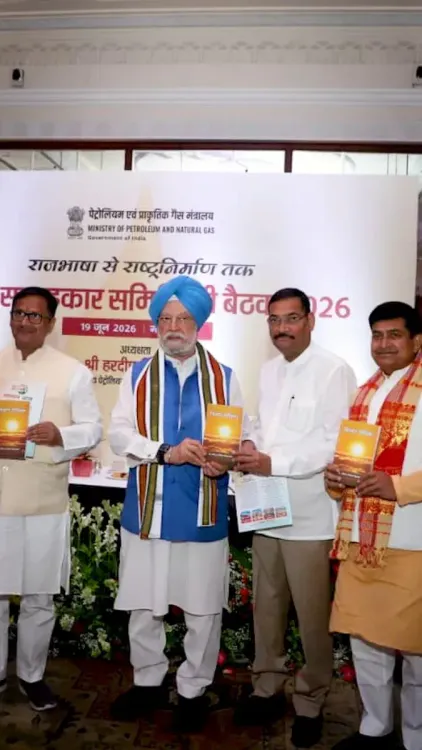
Union Petroleum Minister Hardeep Singh Puri chaired the Hindi Advisory Committee meeting of the Ministry of Petroleum and Natural Gas on 19 June 2026, holding discussions on current Hindi usage in the ministry and measures to promote it further in official work.
Key Takeaways
Hardeep Singh Puri chaired the Hindi Advisory Committee meeting of the Ministry of Petroleum and Natural Gas on 19 June 2026 .
The meeting discussed the extent of Hindi use in the ministry's current official functioning and ways to enhance it further.
The Hindi Advisory Committee is a statutory body mandated under the Official Languages Act, 1963 , required in every central ministry.
Article 343 of the Constitution designates Hindi in Devanagari script as the official language of the Union, the constitutional basis for such committees.
The next key milestone for ministry-level Hindi progress reporting is Hindi Diwas on 14 September .
The minister framed Hindi as a unifying force — 'एकता के घनिष्ठ सूत्र' — in a diverse India, consistent with the government's official language messaging.
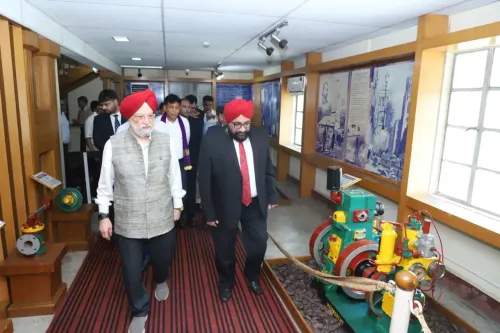
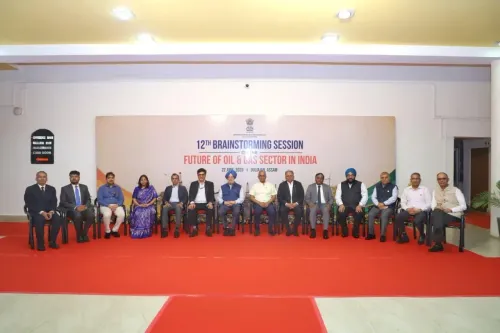
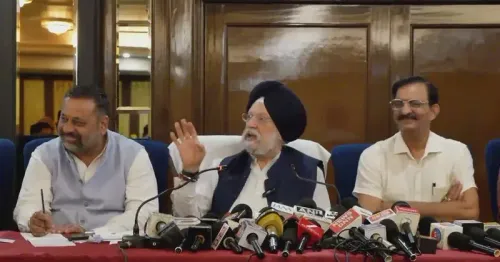
Union Petroleum Minister Hardeep Singh Puri on Friday, 19 June 2026, chaired a meeting of the Hindi Advisory Committee under the Ministry of Petroleum and Natural Gas, reaffirming the government's commitment to expanding the use of Hindi in the ministry's official functioning.
Posting on X in Hindi, the minister wrote: 'राष्ट्रभाषा से राष्ट्रनिर्माण तक!' ('From national language to nation-building!'), framing the session as a step toward using language as a unifying instrument of governance. He stated that 'meaningful discussion' was held on the extent of Hindi's current use in the ministry and on ways to promote it further.
Context
The Hindi Advisory Committee is a statutory body constituted in every central government ministry under the Official Languages Act, 1963, and the Official Languages Rules, 1976. Its mandate is to review the progressive use of Hindi in official correspondence, file-noting, and public communication, and to advise the ministry on meeting targets set by the Department of Official Language.
Central ministries are required to hold these committee meetings periodically and submit progress reports. Friday's session at the Petroleum Ministry is part of this standing institutional requirement.
Policy Backdrop
Article 343 of the Constitution of India (1950) declares Hindi in Devanagari script as the official language of the Union. The constitutional provision is complemented by the Official Languages Act, 1963, which allows English to continue alongside Hindi in official use while prescribing a gradual expansion of Hindi across Union government offices.
Successive governments have maintained these institutional mechanisms without displacing regional languages, which continue to enjoy protections under the Eighth Schedule and the three-language formula. The Hindi Advisory Committee structure is therefore a routine administrative channel, not a policy departure.
Puri, a former career diplomat and senior BJP leader who has held multiple ministerial portfolios since 2017, has consistently used Hindi-language messaging on official occasions to signal alignment with the government's language-promotion agenda.
Stakeholders and Impact
The immediate stakeholders are officials and employees of the Ministry of Petroleum and Natural Gas and its attached public sector undertakings, who may see revised internal guidelines on Hindi usage in correspondence and documentation following the committee's deliberations.
Broader civil society interest centres on the balance between promoting Hindi and protecting linguistic diversity. The government's stated position — reflected in the minister's post — frames Hindi as a 'thread of unity' (एकता के घनिष्ठ सूत्र) in a diverse country, a framing that has both supporters and critics across India's linguistic spectrum.
What's Next
The ministry is expected to issue follow-up directions on Hindi usage targets in line with the committee's recommendations. The annual Hindi Diwas on 14 September typically serves as a milestone when ministries report progress on official language goals, making it the next significant checkpoint for outcomes from Friday's meeting.
Any formal orders or revised targets from the Petroleum Ministry will reflect how seriously the committee's discussions are translated into administrative action in the months ahead.
Point of View
A linkage that resonates with the party's core base while remaining formally within constitutional bounds. Whether the meeting produces substantive targets or remains ceremonial will determine its real policy weight.
NationPress
21 Sept 2026
Frequently Asked Questions
What is the Hindi Advisory Committee in a central ministry?
The Hindi Advisory Committee is a statutory body constituted in every Union government ministry under the Official Languages Act, 1963. It reviews how much Hindi is being used in official work and advises the ministry on meeting progressive-use targets set by the Department of Official Language.
Why did Hardeep Singh Puri hold a Hindi Advisory Committee meeting?
Puri chaired the meeting on 19 June 2026 as part of the mandatory institutional requirement for central ministries to periodically review and promote Hindi use in official functioning. He also used the occasion to publicly reaffirm the government's commitment to Hindi as a unifying national language.
Is Hindi the official language of India?
Yes. Article 343 of the Constitution of India designates Hindi in Devanagari script as the official language of the Union. English continues alongside Hindi in official use under the Official Languages Act, 1963, and regional languages are protected under the Eighth Schedule.
What happens after a Hindi Advisory Committee meeting in a ministry?
Following the meeting, the ministry is expected to issue internal directions on Hindi usage targets for officials and employees. Progress is typically reviewed and reported publicly around Hindi Diwas on 14 September each year.
Who is Hardeep Singh Puri?
Hardeep Singh Puri is a senior BJP leader and former career diplomat who has served in multiple Union ministerial roles since 2017. He currently serves as Union Minister of Petroleum and Natural Gas.