Puri Discusses Oil, LNG Demand Surge with Energy Analyst Fesharaki
Synopsis
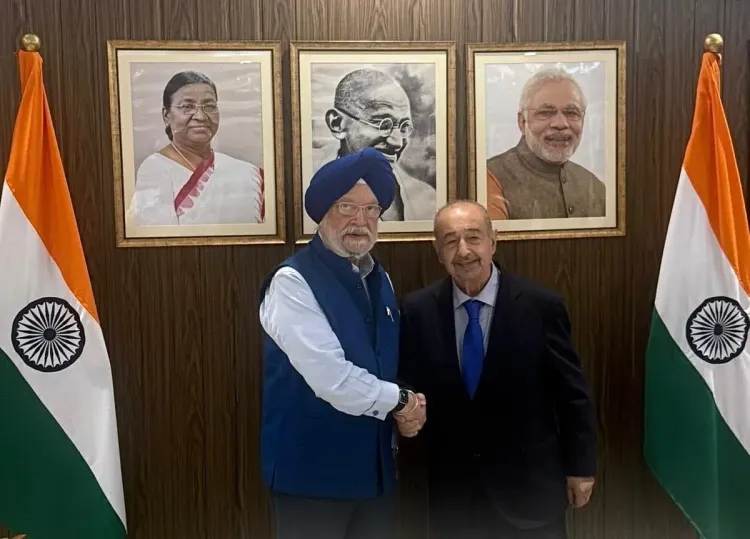
Union Petroleum Minister Hardeep Singh Puri discussed global oil, LNG and LPG market forces with renowned energy analyst Dr. Fereidun Fesharaki, highlighting India's status as the world's fastest-growing oil demand source and flagging Strait of Hormuz volatility as a key price risk.
Key Takeaways
India is the fastest-growing and largest source of incremental global oil demand, according to the minister's conversation with Dr.
North and South America — including U.S. shale, Brazil, and Guyana — are producing record crude volumes, reshaping global supply geography.
Conflict in West Asia and disruption around the Strait of Hormuz are adding volatility and pushing global energy prices higher.
Global demand growth outside India remains 'muted,' making India the principal exception in an otherwise subdued worldwide consumption picture.
OPEC+ production decisions and India's next long-term LNG supply contracts are the two immediate market-defining signals to track.
India's Hydrocarbon Exploration and Licensing Policy (HELP) , introduced in 2016, was aimed at reducing import dependence — a goal that remains a work in progress given India's continued position as the world's third-largest oil importer.
As global crude supply centres shift and conflict rattles the arteries of the Persian Gulf, Union Petroleum Minister Hardeep Singh Puri sat down with one of the world's sharpest energy-market minds — and India's name kept coming up as the single biggest story in global oil demand. The conversation, shared on X on Saturday, 24 October 2026, underscores just how consequential India's energy trajectory has become for markets everywhere.
What Fesharaki and Puri mapped out
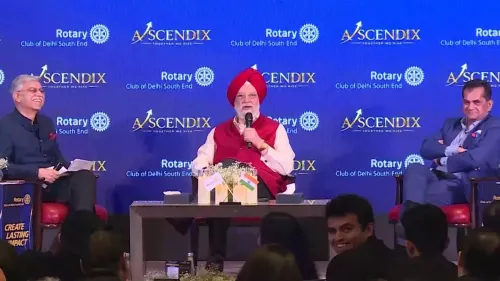
Dr. Fereidun Fesharaki, founder of Facts Global Energy and a veteran observer of oil, LNG, and LPG supply-demand dynamics, joined Minister Puri for what the minister described as a 'fascinating and insightful' exchange. The two covered the full arc of forces reshaping energy markets: record crude output climbing out of North and South America, the emergence of new supply centres, and — paradoxically — a global demand picture that remains broadly muted.
The exception? India. Puri stated plainly that India is 'the fastest-growing and largest source of oil demand growth in the world' — a designation backed by the country's status as the world's third-largest oil importer and consumer. While mature economies plateau and China's post-pandemic demand rebound moderates, India's industrial expansion, rising vehicle ownership, and LPG penetration in rural households are driving incremental consumption that no other single nation currently matches.
Americas' supply surge meets a fragmented Middle East
On the supply side, the conversation highlighted how U.S. shale, Canadian oil sands, Brazil's deepwater Santos Basin, and Guyana's fast-maturing Stabroek fields have collectively repositioned the Americas as the world's dominant crude growth engine. New supply centres are emerging even as OPEC+ manages its own output calculus.
Yet geography still bites. Puri flagged 'conflict in West Asia and the disruption around the Strait of Hormuz' as live volatility drivers pushing energy prices upward globally. The Strait — a narrow choke-point through which roughly one-fifth of global oil trade flows out of the Persian Gulf — remains the single most sensitive node in the world's energy supply chain. Any sustained disruption there hits import-dependent economies like India with near-immediate price consequences.
India's import dependence: the policy backdrop
India's demand dominance carries a structural tension. The government's Hydrocarbon Exploration and Licensing Policy (HELP), introduced in 2016, was designed to stimulate domestic upstream output and moderate the country's deep reliance on Middle Eastern crude. Progress has been gradual; the import bill remains large. That dependence makes the volatility around the Strait of Hormuz a direct fiscal concern for Indian refiners and, ultimately, for fuel prices at home.
Minister Puri's Ministry of Petroleum and Natural Gas has in recent years diversified India's crude basket — leaning into discounted Russian barrels, deepening ties with Gulf suppliers, and exploring long-term LNG supply contracts. The Fesharaki conversation suggests that framing is continuing at the highest analytical level, with an eye on 'the many drivers that will define energy markets in the years ahead.'
What to watch: OPEC+ and India's LNG contracts
Two immediate pressure points will test the dynamics the minister and Dr. Fesharaki discussed. First, upcoming OPEC+ production decisions — whether the group holds, cuts, or eases output caps — will determine how much of the Americas' supply surge actually translates into price relief. Second, India's next round of long-term LNG supply contract announcements will signal how aggressively New Delhi is locking in gas security ahead of a demand curve that only points upward.
For a country that must import the vast majority of its oil and a growing share of its gas, getting these calls right is not a technocratic exercise. It is a cost-of-living question for hundreds of millions of people.
Frequently Asked Questions
Why is India called the fastest-growing source of oil demand in the world?
India is the world's third-largest oil consumer and its demand is expanding faster than any other major economy, driven by industrial growth, rising vehicle ownership, and expanding LPG use in rural areas — even as demand growth in China, Europe, and the U.S. slows or plateaus.
Who is Dr. Fereidun Fesharaki and why does his view on oil markets matter?
Dr. Fereidun Fesharaki is the founder of Facts Global Energy and a globally respected analyst specialising in oil, LNG, and LPG supply-demand dynamics. His assessments are closely tracked by governments, refiners, and trading desks worldwide.
How does the Strait of Hormuz affect India's energy prices?
The Strait of Hormuz carries roughly one-fifth of global oil trade. Any disruption there can restrict supply from major Middle Eastern producers, driving up crude prices that India — as a large importer — must absorb, directly impacting fuel costs domestically.
What is India's Hydrocarbon Exploration and Licensing Policy (HELP)?
HELP, introduced in 2016, was designed to attract investment in domestic oil and gas exploration to reduce India's heavy dependence on crude imports. Progress has been incremental and India continues to import the majority of its oil needs.
Why are North and South America significant to global crude supply right now?
U.S. shale, Canadian oil sands, Brazil's deepwater fields, and Guyana's rapidly developing Stabroek block have collectively driven record crude production in the Americas, creating new supply centres that partly offset OPEC+ output management and geopolitical supply risks in the Middle East.