Puri Hails Modi's Manila Gurdwara Visit at ASEAN Summit
Synopsis
PM Modi participated in redevelopment commencement ceremonies at the historic Gurdwara Khalsa Diwan in Manila during his visit for the 23rd India-ASEAN and 21st East Asia Summits. Union Minister Hardeep Singh Puri detailed a decade of Sikh heritage initiatives, including the Kartarpur Corridor, GST exemption on langar, and the 2021 Kabul-Delhi sacred Swaroops transfer.
Key Takeaways
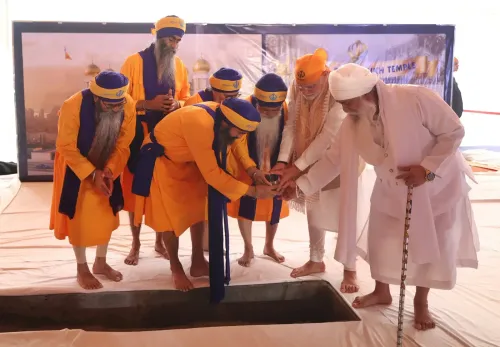
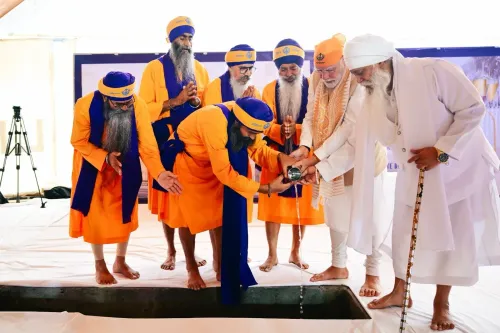
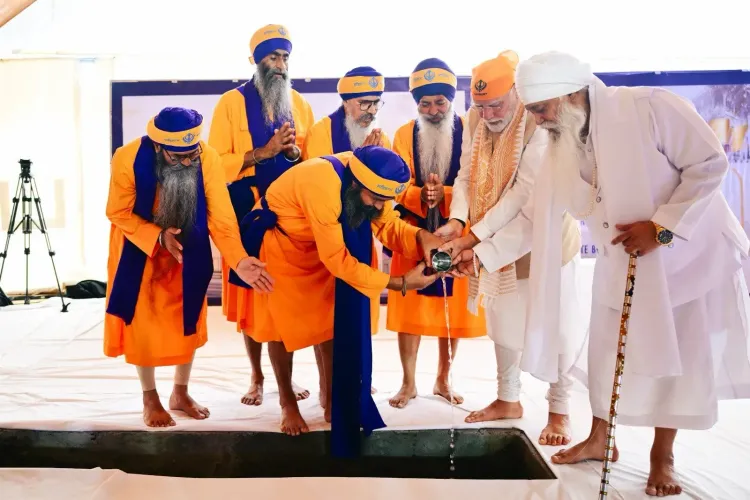
PM Modi attended the ceremony marking commencement of redevelopment works at Gurdwara Khalsa Diwan, Manila during his two-day visit for the 23rd India-ASEAN Summit and the 21st East Asia Summit .
The gurdwara is historically significant for blending Sikh and Buddhist cultural and architectural elements.
Union Minister Hardeep Singh Puri outlined key Sikh heritage milestones under Modi, including the Sri Kartarpur Sahib Corridor (opened November 2019 ) and the removal of GST on Langar Seva .
The government declared December 26 as Veer Baal Diwas and celebrated three major Parkash Purabs — 550th (Guru Nanak Dev Ji), 350th (Guru Gobind Singh Ji), and 400th (Guru Tegh Bahadur Ji).
Puri personally recounted PM Modi's role in arranging the safe transfer of sacred Swaroops of Sri Guru Granth Sahib Ji from Kabul to Delhi in 2021 .
Modi also visited Takhat Sri Harimandir Ji Patna Sahib after the holy relics of Dasam Pita Guru Gobind Singh Ji were placed there for safekeeping and display.
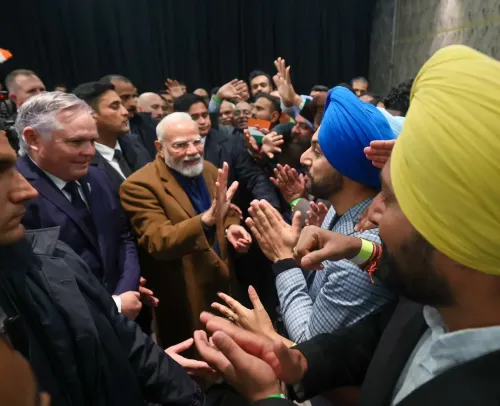
A landmark two-day stop in Manila brought Prime Minister Narendra Modi face-to-face with the Filipino capital's Sikh community on Tuesday, November 17, 2026 — as he participated in a ceremony marking the commencement of redevelopment works at the historic Gurdwara Khalsa Diwan, a site where Sikh and Buddhist architectural traditions meet. Union Petroleum Minister Hardeep Singh Puri, himself a practising Sikh and a former career diplomat, took to X to frame the moment as the latest chapter in a long continuum of Sikh heritage stewardship under Modi's leadership.
A Gurdwara Where Two Faiths Share Ground
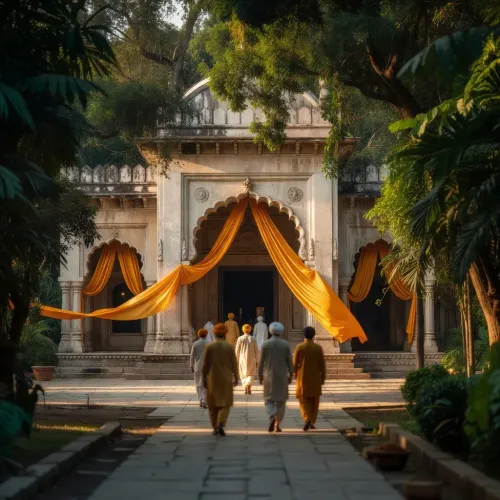
The Gurdwara Khalsa Diwan in Manila is not just another diaspora prayer hall. The site is noted for its distinctive blending of Sikh and Buddhist architectural and cultural elements — a living emblem of the Sikh Sangat's ability to take root, adapt, and serve wherever it has settled. Puri invoked the sacred tradition of Udasis — the journeys undertaken by Sri Guru Nanak Dev Ji across continents — to place this Manila moment inside a centuries-old narrative of Sikh outreach. The commencement of redevelopment works signals a formal, government-backed reinvestment in that heritage.
Modi in Manila: Diplomacy and Cultural Outreach, Together
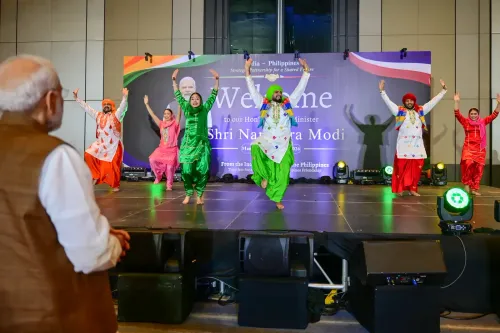
The Manila visit is anchored in hard-edged strategic diplomacy: PM Modi is in the Philippines to attend the 23rd India-ASEAN Summit and the 21st East Asia Summit — two of the most consequential multilateral forums shaping India's Act East posture on trade, connectivity, and Indo-Pacific security. That the same visit includes a stop at a diaspora gurdwara underlines a consistent feature of Modi's foreign travel: pairing high-table statecraft with direct outreach to overseas Indian and Sikh communities.
A Decade of Sikh Heritage Initiatives Puri Lays Out
Puri's post reads almost like a policy register. He lists the Sri Kartarpur Sahib Corridor, opened in November 2019, enabling visa-free Sikh pilgrimage to Gurdwara Darbar Sahib in Pakistan, as a centrepiece achievement. Beyond that: the befitting celebration of the 550th Parkash Purab of Sri Guru Nanak Dev Ji, the 350th Parkash Purab of Sri Guru Gobind Singh Ji, and the 400th Parkash Purab of Sri Guru Tegh Bahadur Ji; the removal of GST from Langar Seva; FCRA approvals for donations to gurdwaras; better connectivity to Sikh holy sites; and the declaration of December 26 as Veer Baal Diwas.
The 2021 Kabul-to-Delhi Sacred Transfer — Puri's Personal Testimony
The minister adds a deeply personal dimension: he recounts Modi personally ensuring the safe passage of the sacred Swaroops of Sri Guru Granth Sahib Ji and an accompanying Sikh delegation from Kabul to Delhi in 2021 — the period of Afghanistan's rapid fall to the Taliban. Puri writes that he was 'immensely blessed to perform seva of the holy Swaroops upon their arrival in Delhi.' He also notes that PM Modi took personal interest in guiding his family and other Sangat members in selecting a permanent home for the holy Jore Sahib of Dasam Pita Guru Gobind Singh Ji and Khalsa Mata Sahib Kaur Ji, and later visited Takhat Sri Harimandir Ji Patna Sahib to pay obeisance to the relics after they were placed there.
What the Manila ceremony and Puri's sweeping account together signal is a deliberate political and diplomatic grammar: Sikh heritage preservation is not an incidental gesture but a structured pillar of India's diaspora engagement — one that now carries a bilateral backdrop of two simultaneous Indo-Pacific summits. Watch whether the gurdwara redevelopment draws formal India-Philippines cultural cooperation agreements, and what joint statements emerge from the ASEAN and East Asia forums in Manila.
Point of View
Framed by Puri's detailed post, is a textbook example of the BJP government's strategy of weaving Sikh cultural diplomacy into major foreign-policy engagements — using diaspora touchpoints to reinforce domestic political messaging while advancing Act East objectives at the ASEAN and East Asia Summits. The enumeration of heritage milestones — Kartarpur, GST relief, Veer Baal Diwas, three Parkash Purab celebrations — reads as a consolidated political balance sheet directed at Sikh voters and the global Sikh community simultaneously. Puri's personal testimonies about the 2021 Kabul transfer and the relic relocation lend an affective authenticity that official government communications rarely achieve. The redevelopment of a Philippine gurdwara blending Sikh and Buddhist traditions also carries a soft-power subtext: India projecting civilisational pluralism in a region where China's cultural footprint is expanding.
NationPress
17 Nov 2026
Frequently Asked Questions
Why did PM Modi visit Gurdwara Khalsa Diwan in Manila?
PM Modi visited the historic Gurdwara Khalsa Diwan in Manila during his two-day trip to the Philippines to attend the 23rd India-ASEAN Summit and 21st East Asia Summit. He participated in the ceremony marking the commencement of redevelopment works at the gurdwara and interacted with members of the Sikh Sangat.
What is special about Gurdwara Khalsa Diwan in Manila?
Gurdwara Khalsa Diwan in Manila is a historic Sikh religious and cultural site that uniquely blends Sikh and Buddhist elements. It serves as an important centre for the Indian and Sikh diaspora in the Philippines.
What Sikh heritage initiatives has PM Modi undertaken?
Key initiatives include the opening of the Sri Kartarpur Sahib Corridor in 2019, celebrations of three major Parkash Purabs, removal of GST from Langar Seva, FCRA approvals for gurdwara donations, declaration of December 26 as Veer Baal Diwas, and improved connectivity to Sikh holy sites.
What happened to the Swaroops of Sri Guru Granth Sahib Ji from Kabul in 2021?
In 2021, as Afghanistan fell to the Taliban, PM Modi personally ensured the safe passage of the sacred Swaroops of Sri Guru Granth Sahib Ji and an accompanying Sikh delegation from Kabul to Delhi. Union Minister Hardeep Singh Puri recounted performing seva of the holy Swaroops upon their arrival.
What is the India-ASEAN Summit 2026 about?
The 23rd India-ASEAN Summit is an annual leaders' meeting that advances India's Act East policy, focusing on trade, connectivity, and security cooperation between India and Southeast Asian nations. PM Modi attended the summit in Manila alongside the 21st East Asia Summit.