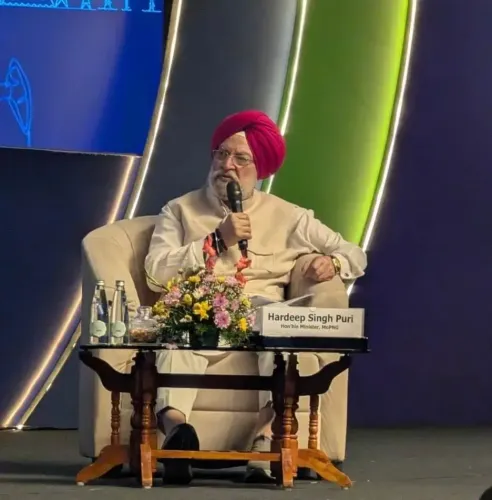
Puri: India Now World's Fourth Largest Crude Refiner
Synopsis
Union Petroleum Minister Hardeep Singh Puri has declared India the world's fourth largest crude oil refiner, pointing to the HPCL Rajasthan Refinery and the 2016 Paradip Refinery as twin milestones under PM Modi that position India as a rare bright spot in global refining investment.
Key Takeaways
India is now the world's fourth largest refiner of crude oil, according to Union Petroleum Minister Hardeep Singh Puri .
Two major refineries — Paradip (2016) and HPCL Rajasthan Refinery (HRRL) — have been dedicated to the nation by PM Narendra Modi .
HRRL , located at Pachpadra, Rajasthan , is a 9 MMTPA new-build project by HPCL , described as a 'rare world-scale addition' to global refining capacity.
India is expanding refining capacity toward 300+ MMTPA even as developed nations see net refinery closures or conversions.
The expansion supports domestic fuel demand, refined product exports to Asia and Africa , and India's broader energy security strategy.
Full commercial commissioning of HRRL and potential petrochemical complex announcements remain key milestones to watch.
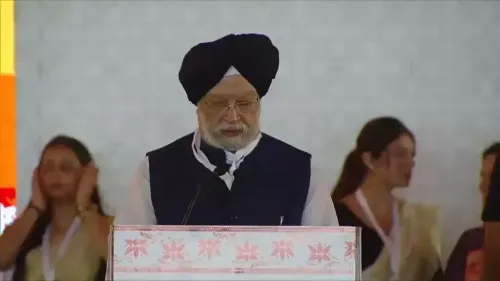
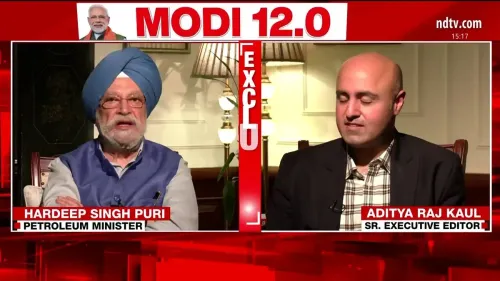
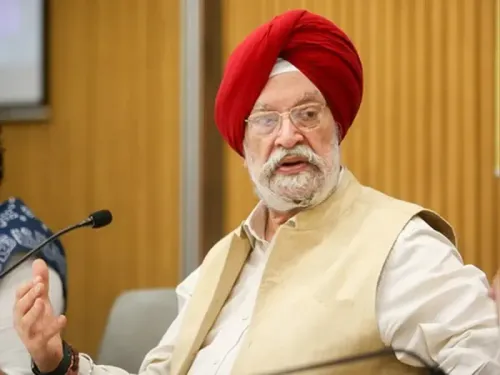
Union Petroleum Minister Hardeep Singh Puri on Saturday, 4 July 2026 declared that India has become the world's fourth largest refiner of crude oil, citing the dedication of two major refineries by Prime Minister Narendra Modi as proof of the country's emergence as a global refining hub at a time when refining capacity is declining across developed economies.
Context
Puri's post highlights a structural shift in the global refining landscape: while OECD nations have seen net closures or conversions of refineries to biofuel facilities over the past decade, India has continued to add large-scale capacity. The minister specifically named the HPCL Rajasthan Refinery Limited (HRRL) — also known as the 'Jewel of the Desert' — as a 'rare new-build, world-scale addition to global refining capacity.'
He drew a direct line from the Paradip Refinery, inaugurated in 2016, to the latest HRRL project, framing both as milestones delivered under PM Modi's tenure that cement India's standing as a 'bright spot in global refining investment.'
Policy Backdrop
The Paradip Refinery in Odisha, operated by Indian Oil Corporation Limited (IOCL), was commissioned in 2016 with a capacity of 15 million metric tonnes per annum (MMTPA) and was one of India's largest greenfield additions at the time. It formed part of successive national plans to raise India's total refining capacity from roughly 230 MMTPA in 2016 toward a target exceeding 300 MMTPA.
The HPCL Rajasthan Refinery, located at Pachpadra, Rajasthan, is a 9 MMTPA new-build project developed by Hindustan Petroleum Corporation Limited (HPCL), a Maharatna public-sector undertaking. The project illustrates the government's policy preference for integrated inland refineries with potential petrochemical linkages, extending the benefits of refining investment beyond coastal clusters.
India's refining expansion also serves strategic goals beyond domestic demand: refined product exports to Asia and Africa have grown, and the broader hydrocarbons vision includes strategic storage and energy security objectives.
Stakeholders and Impact
HPCL is the primary institutional stakeholder, with HRRL representing a significant capital investment in Rajasthan's economy — a landlocked state that stands to benefit from downstream industrial activity, employment, and improved fuel supply logistics. Oil public-sector undertakings and petroleum product exporters are also direct beneficiaries of expanded refining infrastructure.
For consumers and industry, greater domestic refining capacity reduces dependence on imported refined products, supports price stability, and strengthens India's negotiating position in global crude markets. The minister's framing of India as a 'global refining hub' signals continued policy priority for upstream-to-downstream integration across the hydrocarbons value chain.
What's Next
Attention will now turn to the full commercial commissioning of HRRL and any accompanying announcements regarding a petrochemical complex at the Pachpadra site. The Petroleum Ministry's next annual report and Union Budget presentations are expected to update India's overall refining capacity targets and investment pipeline.
As global energy transition pressures mount, India's continued investment in new-build refining capacity signals a long-term bet that domestic and export demand for refined petroleum products will remain robust well into the next decade — a position that places New Delhi at odds with the decarbonisation timelines of many Western economies but aligned with the energy realities of the Global South.
Point of View
Timed to frame the HRRL dedication as evidence that the Modi government's infrastructure ambitions extend into strategic industrial assets, not merely roads and railways. By invoking India's rise to fourth-largest refiner against a backdrop of Western capacity decline, the minister is making a pointed argument that India's development model — sustaining fossil-fuel investment while OECD nations retreat — is a strategic advantage, not a liability. This fits a broader BJP pattern of using PSU milestones to reinforce the 'New India' narrative ahead of state and national electoral cycles. The HRRL project also carries significant political weight in Rajasthan, a perennial swing state, making the timing of its high-profile dedication far from incidental.
NationPress
4 Jul 2026
Frequently Asked Questions
Which country is the fourth largest refiner of crude oil in the world?
India is the fourth largest refiner of crude oil in the world, as stated by Union Petroleum Minister Hardeep Singh Puri in July 2026.
What is HRRL or HPCL Rajasthan Refinery?
HRRL (HPCL Rajasthan Refinery Limited) is a 9 MMTPA new-build refinery located at Pachpadra in Rajasthan, developed by Hindustan Petroleum Corporation Limited (HPCL) and described as a rare world-scale addition to global refining capacity.
When was Paradip Refinery inaugurated and by whom?
The Paradip Refinery in Odisha, operated by IOCL, was inaugurated in 2016 by Prime Minister Narendra Modi. It has a capacity of 15 MMTPA and was one of India's largest greenfield refinery additions at the time.
Why is India called a global refining hub?
India is called a global refining hub because it has continued to add large-scale refining capacity — including the Paradip and HRRL refineries — while many developed nations have closed or converted refineries, making India a rare destination for new refining investment.
What is India's total refining capacity target?
India's refining capacity was approximately 230 MMTPA in 2016 and successive national plans have set targets exceeding 300 MMTPA, with projects like HRRL contributing to that expansion.