Puri: India scaled LPG output to beat rumour-driven demand spike
Synopsis
Union Petroleum Minister Hardeep Singh Puri says India prevented LPG shortages during a global energy crisis by ramping daily production from 34,000 to 55,000 metric tonnes, absorbing a rumour-driven demand spike that pushed bookings from 55 lakh to 90 lakh cylinders per day.
Key Takeaways
Daily LPG cylinder bookings reportedly surged from 55 lakh to 90 lakh due to rumours during a global energy crisis, according to Minister Puri.
India avoided rationing and supply disruption by scaling daily LPG production from 34,000 MT to 55,000 MT .
Minister Hardeep Singh Puri credited PM Narendra Modi with the 'visionary decision' behind the production ramp-up.
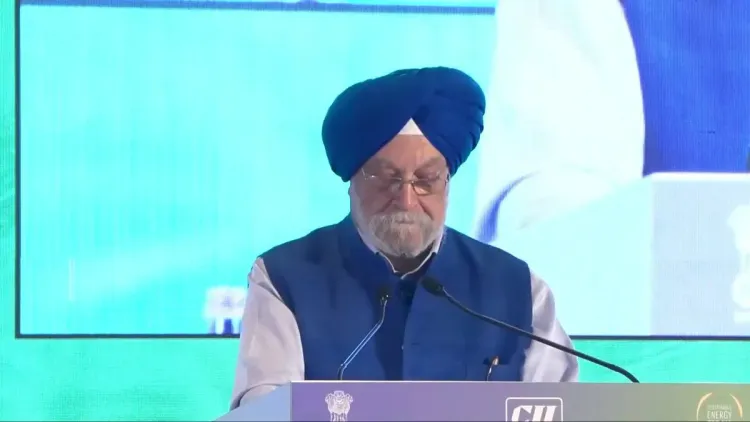
The remarks were made at the CII IECE 2026 industry forum on 7 August 2026 .
The supply resilience builds on a decade of LPG expansion under schemes like Pradhan Mantri Ujjwala Yojana (2016) and Ujjwala 2.0 (2021).
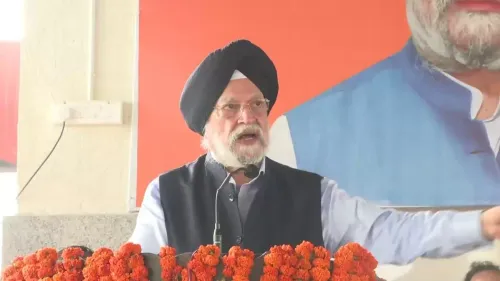
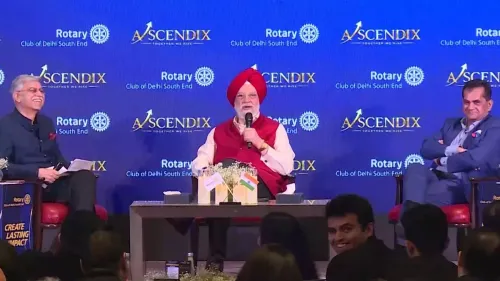
When panic-driven rumours sent daily LPG cylinder bookings surging from roughly 55 lakh to 90 lakh — a near-doubling overnight — India did not blink. Union Petroleum Minister Hardeep Singh Puri, speaking at the CII IECE 2026 event on 7 August 2026, laid out how the country absorbed that shock without a single day of rationing or supply failure.
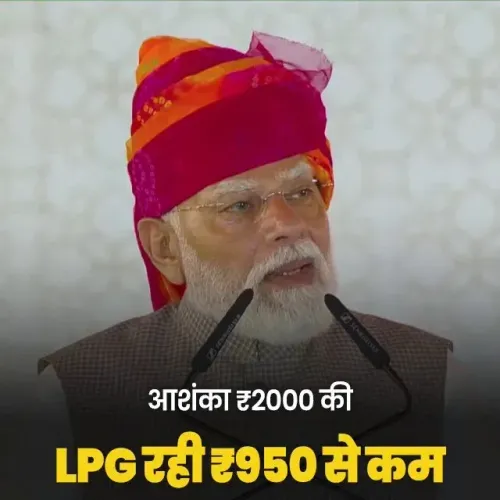
Puri's post, written in Hindi, describes how daily LPG production was ramped up from approximately 34,000 metric tonnes to 55,000 metric tonnes to meet the artificial demand spike. He credits the decision to Prime Minister Narendra Modi, calling it a 'visionary' call that kept household kitchens, industries, transport, and the broader economy running without interruption during a period of global energy turbulence.
Rumours, a global crisis, and a 63% demand spike
The minister's account points to a specific and striking sequence: a global energy crisis creates anxiety, bad actors exploit it by spreading rumours of an impending LPG shortage, and bookings nearly double in response. The stress test was real. What the government claims is equally real — that supply kept pace. No queues, no rationing, no industrial disruption. If the figures cited hold up, the logistics feat is considerable: lifting daily LPG output by over 60 percent at short notice is not a routine operational adjustment.
Puri frames the episode as proof of a new Indian posture: 'संकट आने पर नया भारत घबराता नहीं' — 'when crisis strikes, the new India does not panic.' The line is part political messaging, part genuine policy argument — and the distinction matters.
LPG supply security as a long-term infrastructure bet
The backstory to this resilience stretches back a decade. The Pradhan Mantri Ujjwala Yojana, launched in May 2016, brought LPG connections to below-poverty-line households at scale, dramatically expanding the consumer base. Ujjwala 2.0 in 2021 extended that reach further. More consumers means a larger distribution network — and, critically, more infrastructure to stress-test in a crisis. The investment in supply-side capacity that Puri describes is the downstream consequence of those upstream policy choices.
The CII forum — the Confederation of Indian Industry's International Energy Conclave and Exhibition — gave Puri a high-visibility industry audience to make the case that energy security is not just a welfare programme but a macro-economic stabiliser. The argument: because households and industries never lost gas, economic activity continued uninterrupted even as global markets convulsed.
Whether the specific numbers — 55 lakh to 90 lakh daily bookings, 34,000 to 55,000 MT daily output — can be independently verified remains an open question. But the policy direction they illustrate is consistent with India's documented push toward domestic energy self-reliance.
The real measure of that self-reliance will come not in a single crisis managed, but in whether production capacity and distribution logistics continue to scale with a consumer base that only keeps growing.
Point of View
And a broader public audience being reminded of government competence during external shocks. The production-ramp narrative fits neatly into the BJP's 'New India' self-reliance frame, with Modi positioned as the decisive hand behind the response. The harder policy question — whether India's LPG import dependence was reduced or merely managed through a crisis — is not addressed, and that gap is where the next round of scrutiny is likely to land.
NationPress
8 Aug 2026
Frequently Asked Questions
Why did LPG cylinder bookings suddenly spike in India?
According to Petroleum Minister Hardeep Singh Puri, rumours spread by certain individuals during a global energy crisis triggered panic buying, pushing daily LPG bookings from roughly 55 lakh to 90 lakh cylinders.
Was there an LPG shortage in India during the global energy crisis?
The minister says no — India did not face any LPG shortage, rationing, or disruption to economic activity, because production was rapidly scaled up to meet the demand surge.
How much was India's LPG production increased during the crisis?
Puri stated that daily LPG production was raised from approximately 34,000 metric tonnes to 55,000 metric tonnes — an increase of over 60 percent — to absorb the spike in demand.
What is the Pradhan Mantri Ujjwala Yojana and how does it relate to LPG supply?
Launched in May 2016, Ujjwala Yojana extended LPG connections to below-poverty-line households, significantly expanding India's LPG consumer base and the distribution infrastructure that underpins supply resilience.
What is CII IECE 2026?
It is the Confederation of Indian Industry's International Energy Conclave and Exhibition 2026, the industry forum at which Puri made these remarks on India's LPG supply management.