Rahul Gandhi backs youth protests on Gandhi Jayanti, demands Gyanesh Kumar's resignation
Synopsis
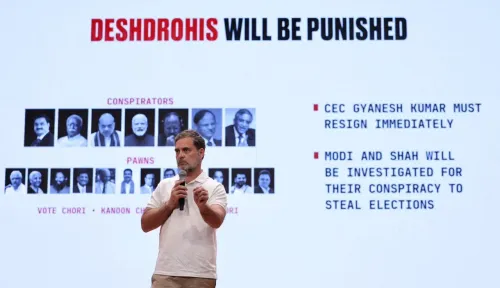
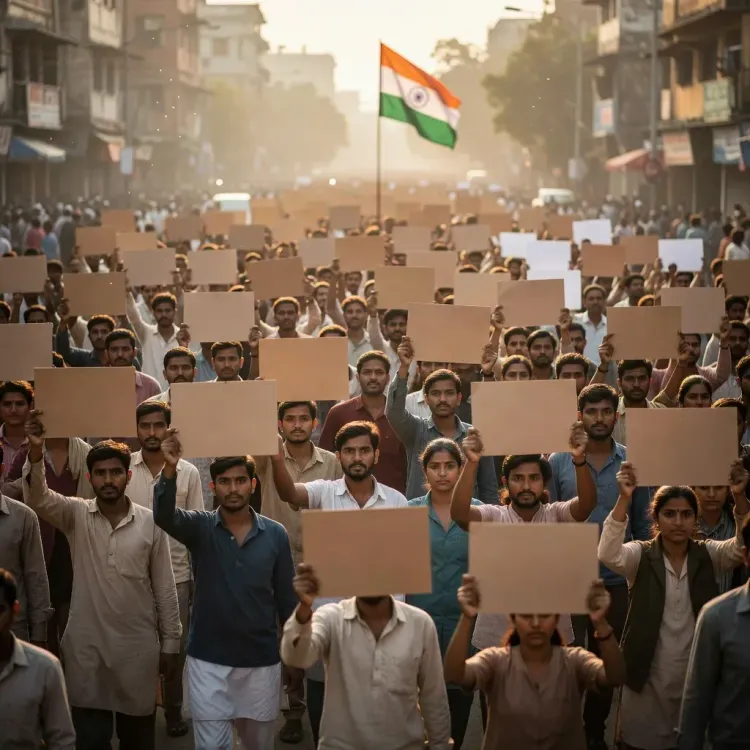
On Gandhi Jayanti 2026, Rahul Gandhi amplified nationwide youth protests demanding Chief Election Commissioner Gyanesh Kumar's resignation over alleged vote fraud, accusing the Modi-Shah government of physically dragging peaceful student demonstrators on the streets.
Key Takeaways
Rahul Gandhi posted on October 2, 2026 (Gandhi Jayanti) backing protests against alleged vote theft.
Protesters are demanding the resignation of Chief Election Commissioner Gyanesh Kumar .
Gandhi described the movement as peaceful and constitutional, invoking the slogan 'Loktantra Bachao' (Save Democracy).
He alleged the Modi-Shah government responded by physically dragging young protesters on the streets.
The choice of Gandhi Jayanti was a deliberate symbolic framing — associating the protest with nonviolent constitutional resistance.
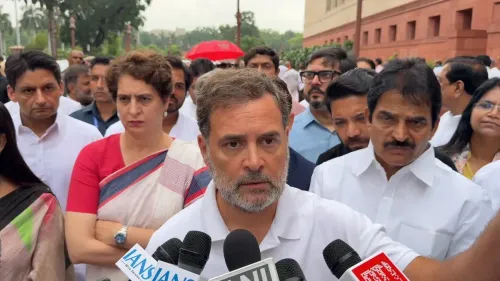
On the 157th birth anniversary of Mahatma Gandhi, Congress leader Rahul Gandhi trained his sharpest political attack yet on the Election Commission — invoking the Father of the Nation's legacy to amplify nationwide youth protests demanding the resignation of Chief Election Commissioner Gyanesh Kumar over alleged vote fraud.
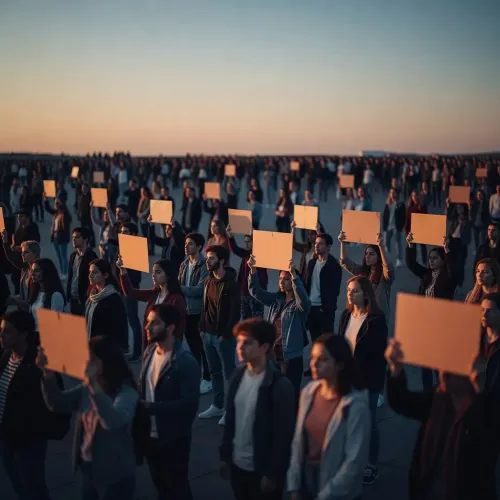
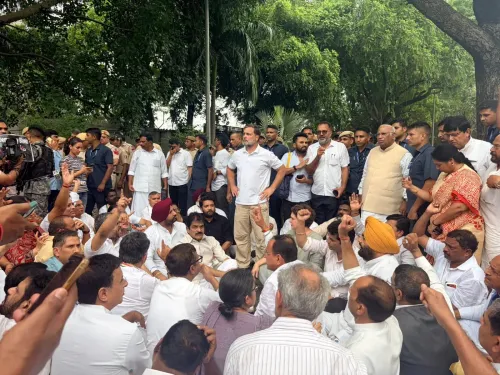
Gandhi posted on Friday, October 2, 2026, in Hindi: 'आज गांधी जयंती है।' ('Today is Gandhi Jayanti.') He then pivoted immediately to the streets: 'And today itself, thousands of young people are on the roads against vote theft — peacefully, without violence, exercising their constitutional right.' The juxtaposition was deliberate — a day consecrated to nonviolent resistance, matched with what Gandhi called a nonviolent constitutional movement.
The demand on the streets: Gyanesh Kumar must go
The protests, according to Gandhi's post, carry a single, unambiguous demand: Chief Election Commissioner Gyanesh Kumar should resign. The slogan 'Loktantra Bachao' — 'Save Democracy' — has framed the agitation. Gandhi described the protesters as 'haazaron naujawan' — thousands of young people — exercising their constitutional right to peaceful dissent.
The charge of 'vote theft' has been a persistent Congress allegation through the electoral cycle, pointing to what the party describes as structural compromises in the Election Commission's independence under the current government. Gandhi did not add new specifics in this post, but the timing — Gandhi Jayanti — lent the protest a pointed symbolic weight.
Gandhi's counter-punch: youth 'dragged on streets' by Modi-Shah government
The sharpest line in Gandhi's post was his description of the government's response. He wrote that the answer from the 'Modi-Shah government' was: 'ladke-ladkiyon ko sadkon par ghaseeta' — 'boys and girls were dragged on the roads.' The allegation directly accuses law enforcement, acting under the government's direction, of using physical force against peaceful student demonstrators.
The contrast Gandhi constructed is classically Gandhian in structure: satyagraha-style peaceful protest on one side, state force on the other. On Gandhi Jayanti, that framing carries political charge well beyond a routine opposition statement.
Why Gandhi Jayanti raises the political temperature
October 2 is not just a public holiday — it is the single most symbolically loaded date in Indian democratic politics. Invoking it in the context of street protests, alleged electoral fraud, and police action against youth creates a moral frame that the ruling dispensation must now actively counter. For the Opposition, Gandhi Jayanti protests aligned with a 'Save Democracy' slogan represent a deliberate escalation of the narrative heading into what promises to be a contested political season.
Whether the protests achieve their stated goal — the resignation of CEC Gyanesh Kumar — or serve primarily as a mobilisation signal to the Congress's youth base, Gandhi's post ensures the moment registers nationally. The streets today, and the symbolism of the date, do the rest.
Point of View
And by anchoring an anti-government protest narrative to it, Rahul Gandhi is attempting to frame the Election Commission controversy as a civilisational, not merely procedural, challenge to Indian democracy. The call for CEC Gyanesh Kumar's resignation signals that the Congress intends to sustain electoral integrity as a primary political battleground. The allegation of police force against students, if it gains traction, adds a human-rights dimension that could broaden the coalition of critics beyond the party faithful. How the ruling dispensation responds — and whether the protests maintain their nonviolent character — will determine whether this moment becomes a genuine inflection point or a symbolic one-day spike.
NationPress
2 Oct 2026
Frequently Asked Questions
Why is Rahul Gandhi calling for Gyanesh Kumar's resignation?
Rahul Gandhi alleges vote theft under the watch of Chief Election Commissioner Gyanesh Kumar and has backed protests demanding his resignation as part of what Gandhi frames as a 'Save Democracy' movement.
What happened on Gandhi Jayanti 2026 in India?
On October 2, 2026, thousands of young people took to the streets across India demanding the resignation of the Chief Election Commissioner, with Congress leader Rahul Gandhi amplifying the protests on social media.
What does 'Loktantra Bachao' mean?
'Loktantra Bachao' is a Hindi slogan meaning 'Save Democracy,' used by protesters to frame their campaign against alleged electoral fraud in India.
What did Rahul Gandhi say about the government's response to the protests?
Gandhi alleged that the Modi-Shah government responded to the peaceful youth protests by physically dragging boys and girls on the streets, implying police or official force against demonstrators.
Who is Gyanesh Kumar?
Gyanesh Kumar is India's Chief Election Commissioner, the head of the constitutional body responsible for conducting free and fair elections; the Congress party has been demanding his resignation over alleged electoral irregularities.