Rahul Gandhi Calls for Safe Streets, Backs GenZ Protests on Women's Safety
Synopsis
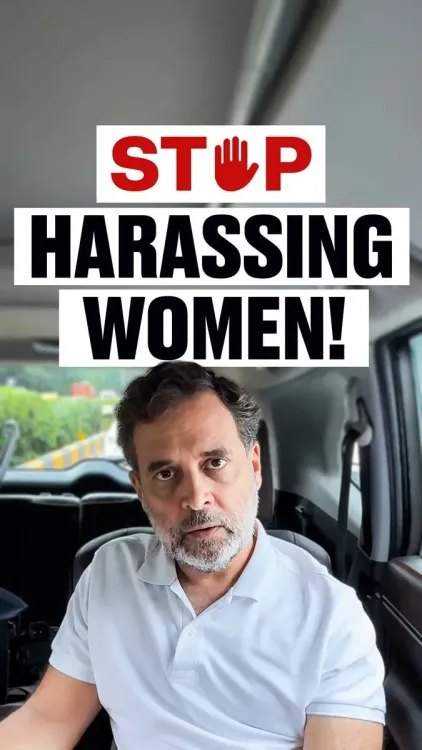
Congress leader Rahul Gandhi on 29 September 2026 posted a forceful call to action on women's safety, accusing the government of victim-blaming, demanding safer streets and swift punishment for attackers, and urging GenZ women across India to join growing street protests.
Key Takeaways
Rahul Gandhi posted on 29 September 2026 demanding the government stop 'punishing women for crimes committed against them.' He accused official responses to gender-based violence of reflecting 'patriarchy at work' by advising women to stay home rather than targeting perpetrators.
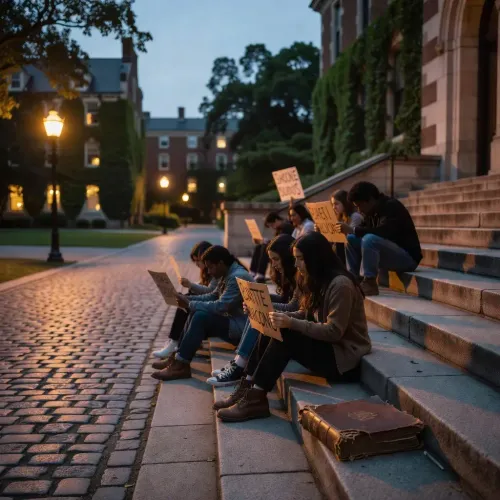
Gandhi called on GenZ women across India to join ongoing student-led street protests in larger numbers.
He outlined three concrete demands: structurally safer streets, confronting male attitudes toward women, and swift punishment for attackers without exception.
Gandhi characterised the government as 'deaf' to women's pain, arguing it would act only under sustained public pressure.
He affirmed peaceful protest as a democratic right, lending political cover to the demonstrations already under way.
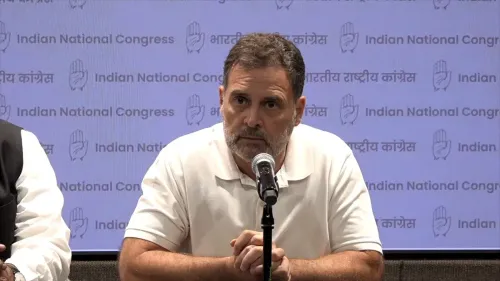
Women across India are afraid to walk the streets — and Congress leader Rahul Gandhi says the government's only answer is to tell them to stay home. On Tuesday, 29 September 2026, Gandhi posted a sharp, unambiguous call to action on X, demanding an end to what he called the 'victim-blaming' logic embedded in official responses to gender-based violence, and urging GenZ women across India to join ongoing street protests in greater numbers.
The victim-blaming charge and what Gandhi is responding to
Gandhi's post names a pattern that opposition politicians and civil society have long identified: when incidents of sexual violence spike, official advisories frequently counsel women to restrict their own movements rather than directing enforcement action at perpetrators. 'Stop punishing women for the crimes committed against them,' Gandhi wrote, framing such advisories as 'patriarchy at work — a system that blames the victim and shields the criminal.'
The Criminal Law (Amendment) Act, 2013, passed after the December 2012 Delhi gang-rape case and informed by the Justice Verma Committee recommendations, was meant to be a structural corrective — steeper penalties, faster trials, expanded definitions of sexual assault. More than a decade on, Gandhi's post signals that, in his reading, implementation has not matched legislative intent.
The GenZ call-out: pressure over persuasion
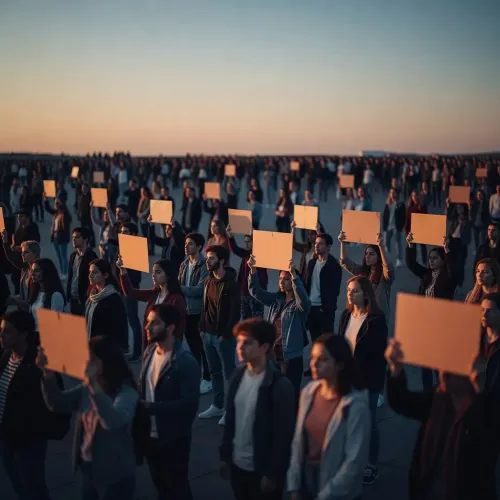
Gandhi does not limit his message to policy argument. He explicitly calls on 'thousands of students and young people already on the streets' to be joined by 'even more young women, especially GenZ across India.' The framing is tactical, not merely symbolic: 'This government is deaf to your pain and will only listen when it's under pressure.'
That is a direct instruction in democratic strategy — scale the protests until the political cost of inaction exceeds the cost of reform. Gandhi closes by affirming that 'peaceful protest is your democratic right,' planting a constitutional flag around the demonstrations and pre-empting any official move to frame them as disorder.
Three demands inside one post
Strip away the rhetoric and Gandhi's post contains three distinct asks: make streets structurally safer through policing and urban design; confront the mindset of men who mistreat women through education and social accountability; and ensure swift, exception-free punishment for attackers. The sequencing matters — he leads with infrastructure and attitude before arriving at punishment, signalling that deterrence alone is not the argument he is making.
Opposition figures have consistently used this three-part frame to challenge both central and state governments, arguing that law-and-order messaging is hollow without investment in street-level safety and a cultural reckoning on gender attitudes. Whether Parliament or any state assembly takes up the pressure generated by the protests Gandhi is amplifying will determine whether this moment moves policy or stalls as political theatre.
The streets are already filling. The question now is whether the numbers grow loud enough to force an answer.
Point of View
He is trying to channel diffuse public anger into organised street pressure with electoral visibility. The framing — 'victim-blaming patriarchy' versus 'safe streets' — repositions Congress on gender politics at a moment when women's safety consistently ranks among voters' top concerns. The invocation of the 2013 Criminal Law Amendment Act lineage implicitly argues that legal tools exist but political will to deploy them does not, a charge that puts the onus squarely on the ruling dispensation. Whether the protests scale to the point that they force a parliamentary debate or ministerial response will be the real test of whether this post moves beyond rhetoric.
NationPress
29 Sept 2026
Frequently Asked Questions
What did Rahul Gandhi say about women's safety on 29 September 2026?
Rahul Gandhi posted on X urging the government to stop 'punishing women for crimes committed against them,' calling advisories that tell women to stay home a form of victim-blaming, and demanding safer streets, accountability for perpetrators, and swift punishment for attackers.
Why is Rahul Gandhi calling on GenZ women to protest?
Gandhi argued that the government would only act on women's safety when placed under sufficient public pressure, and explicitly urged more young women — especially GenZ — to join ongoing student-led street demonstrations to amplify that pressure.
What are the three things Rahul Gandhi demanded for women's safety?
Gandhi called for three things: making streets structurally safer, confronting the mindset of men who mistreat women, and ensuring swift and unconditional punishment for those who attack women.
What is the 2013 Criminal Law Amendment Act and why is it relevant?
The Criminal Law (Amendment) Act, 2013 was passed following the December 2012 Delhi gang-rape case and Justice Verma Committee recommendations; it strengthened sexual offence laws. Gandhi's post implicitly argues that over a decade later, implementation has not matched the law's intent.
Is protesting for women's safety legal in India?
Yes. Peaceful assembly and protest are guaranteed under Article 19 of the Indian Constitution. Gandhi specifically described peaceful protest as a 'democratic right' in his post, reinforcing the constitutional basis for the demonstrations.