Rahul Gandhi calls Modi's rebuke of industrialists a 'confession'
Synopsis
Congress leader Rahul Gandhi on 20 November 2026 turned PM Modi's reported rebuke of industrialists into a sweeping indictment of government economic policy, arguing that demonetisation, GST, and corporate-friendly asset transfers had destroyed MSME jobs while concentrating wealth in monopolistic hands.
Key Takeaways
Rahul Gandhi posted on 20 November 2026 framing Modi's reported criticism of industrialists as a self-incriminating 'confession' on jobs and wages.
Gandhi accused the government of transferring airports, ports, mines, coal, and roads to a narrow set of large businesses that did not generate proportionate employment.
He argued that demonetisation (November 2016) and what he called a 'wrongly implemented GST (July 2017)' devastated MSMEs and small traders — historically the backbone of job creation.
The post targeted the September 2019 corporate tax cut as a policy that benefited large incumbents without translating into meaningful hiring or wage growth.
Gandhi closed with a cultural barb referencing the 2020 pandemic 'thali-tali' appeal, suggesting neither industrialists nor ordinary citizens had reason to applaud government economic performance.
The broadside signals Congress will intensify its unemployment-inflation-wealth-concentration narrative heading into the parliamentary budget session.
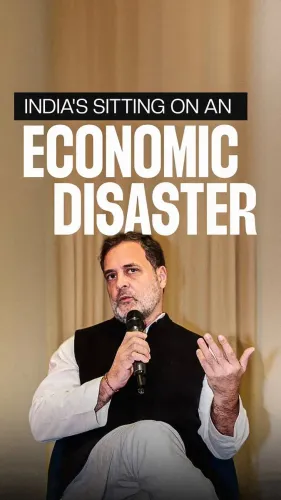
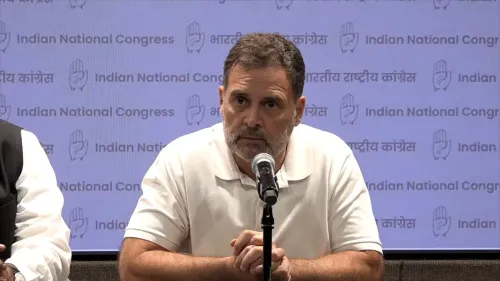
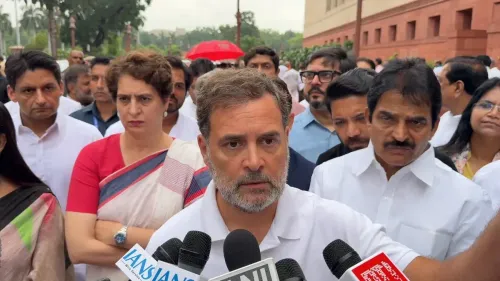
A sharp political counterpunch landed on Friday, 20 November 2026, when Congress leader Rahul Gandhi, Leader of the Opposition in the Lok Sabha, turned Prime Minister Narendra Modi's reported criticism of industrialists back on the government itself — framing the PM's own words as an admission of policy failure rather than a complaint about corporate behaviour.
Gandhi, posting in Hindi on X, quoted Modi as having told industrialists: 'टैक्स घटाया, फिर भी न तनख्वाह बढ़ाई, न नौकरियाँ दीं' ('Taxes were cut, yet you neither raised salaries nor created jobs'). Gandhi's retort was blunt: 'Modi ji, this is not an accusation against them — it is your confession.'
Modi's 'hunger' remark and Gandhi's pointed reply
Gandhi also seized on another reported Modi phrase — 'भूख इतनी है कि पेट भरता ही नहीं' ('The hunger is so great the stomach never fills') — and redirected it. 'Whose hunger is this? The whole country knows,' Gandhi wrote, listing airports, ports, mines, forests, electricity, coal, and roads as assets transferred to a small circle of large businesses. The post did not name specific companies, but the political subtext was unmistakable to observers of the ongoing debate over infrastructure privatisation.
Demonetisation, GST, and the MSME grievance
The Congress leader's sharpest structural argument targeted Micro, Small and Medium Enterprises (MSMEs) — a sector that employs a significant share of India's non-farm workforce. Gandhi argued that the November 2016 demonetisation of ₹500 and ₹1,000 notes and what he called a 'wrongly implemented GST' had devastated small traders and neighbourhood businesses, the very enterprises historically responsible for absorbing entry-level workers.
The Goods and Services Tax, rolled out in July 2017, was designed to unify dozens of central and state levies into a single destination-based system. Critics from the MSME sector have consistently flagged its initial compliance burden — multiple return filings, digital infrastructure requirements, and input-credit delays — as disproportionately heavy for small operations with limited accounting capacity.
The monopoly argument at the core of Gandhi's critique
Gandhi's most direct economic claim was about market structure: 'Monopoly does not create jobs. It raises prices and kills competition.' The argument echoes a critique that opposition parties and some independent economists have raised since the September 2019 corporate tax cut — when the statutory rate for domestic companies was reduced to 22 per cent from 30 per cent — namely, that the fiscal incentive flowed largely to large, incumbent firms, without translating into proportionate hiring or wage growth.
Gandhi closed with a stinging cultural reference: if the audience of industrialists did not applaud, he wrote, Modi should not feel offended — because his policies had left industrialists, small traders, inflation-battered poor and middle-class families, and unemployed youth with nothing worth applauding. The final line, referencing the 2020 'thali-tali' moment during the pandemic — when the government had asked citizens to clap and bang utensils — was delivered as a bookend: 'Get the remaining claps and plates from your leftover devotees.'
The opposition employment narrative heading into the budget cycle
Gandhi's broadside arrives as periodic labour force survey data and MSME credit conditions are expected to come under parliamentary scrutiny in the next session. The Congress party has made the triad of unemployment, inflation, and wealth concentration a central campaign theme since the 2024 general election, and Friday's post suggests the messaging will intensify as budget season approaches.
The question the government will now face, in committee rooms and campaign rallies alike, is the one Gandhi is forcing into plain language: a decade of headline tax reform — and what do the job numbers actually say?
Point of View
He attempts to stitch together urban MSME grievance with broader anti-monopoly sentiment, targeting two distinct but potentially aligned voter blocs. The 'thali-tali' callback is strategically shrewd, keeping a pandemic-era credibility wound fresh. How the ruling party responds — whether by defending the job-creation record or pivoting to GDP metrics — will define the economic battleground ahead of the budget session.
NationPress
20 Nov 2026
Frequently Asked Questions
What did Rahul Gandhi say about PM Modi and industrialists?
Gandhi argued that Modi's reported complaint to industrialists — that tax cuts had not resulted in higher salaries or more jobs — was not an accusation against them but an admission of the government's own policy failure.
How does demonetisation relate to Gandhi's criticism of jobs?
Gandhi contended that the November 2016 demonetisation of ₹500 and ₹1,000 notes, combined with a poorly implemented GST, devastated small traders and MSMEs, which are among India's largest non-farm employers.
What is Gandhi's argument about monopolies and employment?
Gandhi stated that monopolies do not create jobs — they raise prices and eliminate competition. He argued that government asset transfers in sectors like airports, ports, and coal benefited large incumbents rather than broad-based employment.
What was the 2019 corporate tax cut and why is it relevant?
In September 2019, the government reduced the corporate tax rate for domestic companies from 30 per cent to 22 per cent to boost investment. Critics, including Gandhi, argue the cut largely benefited large corporations without commensurate job creation.
What is the significance of Gandhi's 'thali-tali' reference?
During the COVID-19 pandemic in 2020, the government asked citizens to bang utensils and clap to salute frontline workers. Gandhi's closing line recycled this image to suggest that applause — from industry or the public — for the government's economic record is unwarranted.