Rahul Gandhi warns India stands at the door of economic disaster
Synopsis
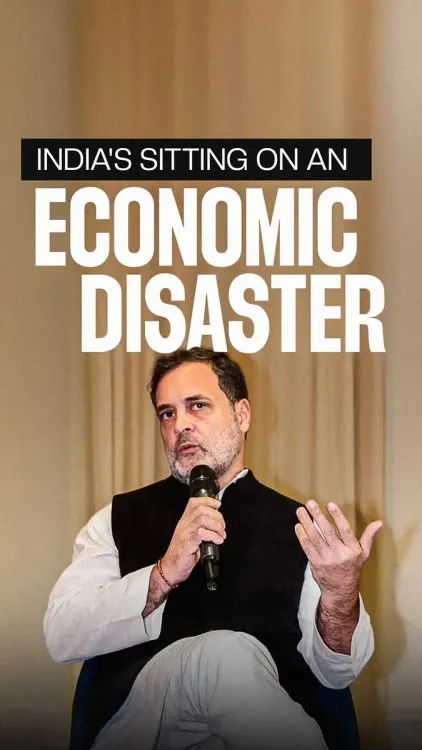
Congress leader Rahul Gandhi on 18 November 2026 declared India is standing at the door of an economic disaster, spotlighting graduate unemployment, the trauma of exam paper leaks, and small businesses crushed by monopolies — framing these as converging crises the government cannot paper over with GDP figures.
Key Takeaways
Rahul Gandhi posted on 18 November 2026 warning that India stands at the door of an economic disaster.
He highlighted three specific vulnerabilities: graduates doubting their degrees will yield jobs, students fearing paper leaks destroying their futures, and small businessmen living under regulatory harassment and billionaire monopoly pressure.
The post draws directly on the legacy of the NEET-UG 2024 paper leak, which triggered nationwide protests and a Supreme Court-monitored probe.
Periodic Labour Force Survey data from 2022–2024 documented elevated graduate unemployment even during periods of GDP growth.
Gandhi's framing positions the opposition ahead of forthcoming parliamentary debates on the Economic Survey and potential examination regulatory reform legislation.
Opposition criticism of market concentration and crony capitalism has featured consistently in Congress economic messaging since the 2019 general election .
Three anxieties. One verdict. Congress leader Rahul Gandhi on Wednesday, 18 November 2026 declared that India is standing at the door of an economic catastrophe — framing the country's jobs crisis, examination-integrity failures, and the dominance of a handful of billionaires as converging fault lines that together threaten a generation's future.
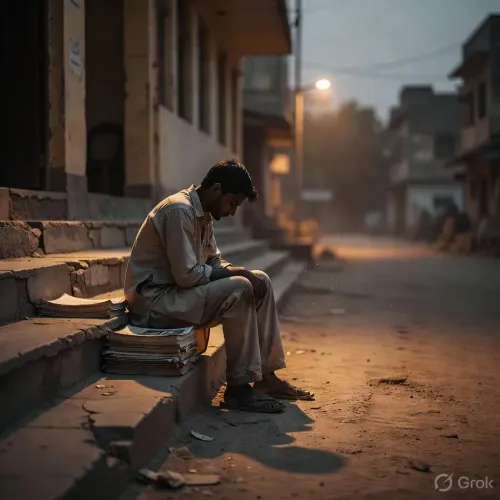
Posting in Hindi, Gandhi spelled out what he called a bitter truth: 'भारत एक आर्थिक आपदा के दरवाज़े पर खड़ा है' ('India is standing at the door of an economic disaster'). He painted three portraits — a young person who no longer trusts that a college degree will get them a job, a student terrified that a paper leak will destroy their future, and a small businessman living in the shadow of government harassment and monopoly by a few billionaires.
Degrees, doubt, and a broken promise of employment
At the core of Gandhi's charge is the growing disconnect between educational attainment and employment outcomes. Periodic Labour Force Survey data and independent consumer-economy research between 2022 and 2024 consistently showed elevated unemployment rates among graduates — a paradox in an economy that was simultaneously posting robust GDP growth figures. The Leader of the Opposition has made this contradiction a signature argument: that headline growth numbers mask a labour market that is failing educated youth at scale.
NEET paper leak: the examination integrity crisis that refused to go away
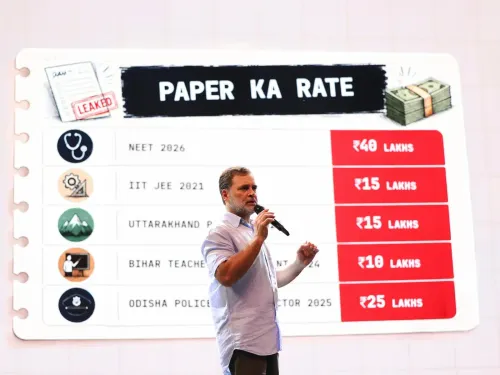
Gandhi's reference to students fearing paper leaks is a direct callback to the NEET-UG 2024 scandal — one of independent India's most damaging examination-integrity crises. The leak triggered nationwide student protests and drew the Supreme Court into a monitored investigation, shaking confidence in the National Testing Agency and the broader competitive-examination ecosystem. For millions of aspirants who spend years and substantial family resources preparing for a single high-stakes exam, the possibility of a compromised paper is not a hypothetical — it is an existential threat to social mobility.
Small business in the shadow of monopoly
The third grievance Gandhi names is arguably the most structurally charged: small businessmen, he says, live under a double pressure — regulatory and administrative harassment from the state, and the fear of being squeezed out by a narrow circle of large conglomerates. This critique of market concentration has been a recurring theme in Congress economic messaging since the 2019 general election, gaining additional traction as debates over crony capitalism and regulatory asymmetry intensified through the mid-2020s. Gandhi has repeatedly argued that the government's economic model rewards a small elite while leaving small traders, vendors, and entrepreneurs structurally disadvantaged.
A political message with parliamentary stakes
The timing is not incidental. With the next Economic Survey and potential legislation on examination regulatory reform both on the parliamentary horizon, Gandhi's post plants a marker for the opposition's position: that the government's economic record must be evaluated not through aggregate growth metrics alone, but through the lived experience of a job-seeking graduate, a paper-leak-anxious student, and a cornered small businessman. These three faces, as he frames them, are not statistical outliers — they are the emerging majority.
When a sitting Leader of the Opposition uses the phrase 'economic disaster', the burden of a rebuttal falls squarely on the treasury benches. The government's answer to these three portraits — not to Gandhi, but to the people he is describing — will define the economic debate heading into the next budget cycle.
Point of View
Examination corruption, and monopoly capitalism — into a single 'economic disaster' frame. By anchoring abstract economic critique in the personal fear of a student or a shopkeeper, he attempts to convert macroeconomic discontent into individual grievance, a tactic the Congress has refined since 2019. The NEET reference is particularly potent because it has judicial weight, making it resistant to government dismissal. If the opposition sustains this triple-axis narrative into the next budget season, it could force the ruling dispensation to address structural unemployment and market concentration on terms not of its choosing.
NationPress
18 Nov 2026
Frequently Asked Questions
What did Rahul Gandhi say about India's economy on 18 November 2026?
Rahul Gandhi declared that India is standing at the door of an economic disaster, pointing to graduate unemployment, paper leaks destroying student futures, and small businesses being squeezed by government harassment and billionaire monopolies.
What is the NEET paper leak controversy Rahul Gandhi referenced?
The NEET-UG 2024 paper leak was a major examination-integrity scandal that triggered nationwide student protests and a Supreme Court-monitored investigation into the National Testing Agency, shaking confidence in India's high-stakes entrance exam system.
Is graduate unemployment really high in India?
Periodic Labour Force Survey data and independent research between 2022 and 2024 documented elevated unemployment rates among degree holders even during periods of strong GDP growth, highlighting the gap between headline economic numbers and labour-market realities.
Why does Rahul Gandhi keep raising the issue of billionaire monopolies?
Congress has consistently argued since the 2019 general election that India's growth model disproportionately benefits a narrow circle of large conglomerates at the expense of small traders and entrepreneurs, a critique tied to concerns over regulatory asymmetry and crony capitalism.
What could follow from Rahul Gandhi's economic disaster warning in Parliament?
The post positions the opposition ahead of debates on India's next Economic Survey and potential legislation on examination reform; it signals that Congress will push the government to defend its economic record on unemployment, exam integrity, and market competition.