Rahul Gandhi condoles rain deaths in Maharashtra, Himachal
Synopsis
Congress leader Rahul Gandhi on 7 July 2026 expressed grief over deaths caused by heavy monsoon rains in Maharashtra and Himachal Pradesh, conveying condolences to bereaved families and wishing a speedy recovery to the injured.
Key Takeaways
Rahul Gandhi posted condolences on 7 July 2026 over rain-related deaths in Maharashtra and Himachal Pradesh .
He described the devastation as 'extremely distressing' and expressed solidarity with families who lost loved ones.
Gandhi also wished a speedy recovery to those injured in the rain-related incidents.
Both Maharashtra and Himachal Pradesh are historically among India's most flood- and landslide-prone states during the southwest monsoon.
Disaster response in India is coordinated by the National Disaster Management Authority , established under the Disaster Management Act, 2005 .
Formal relief packages and NDRF deployments are expected from state and central authorities in the aftermath.
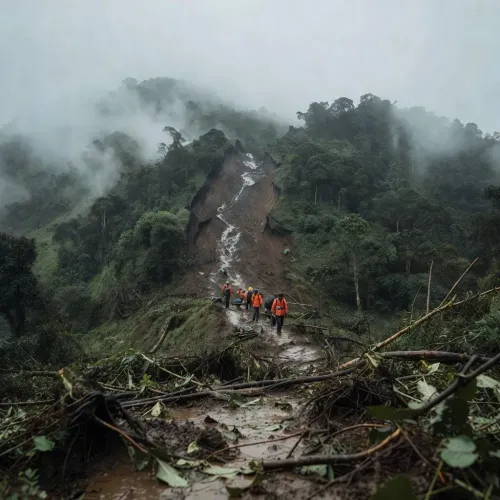
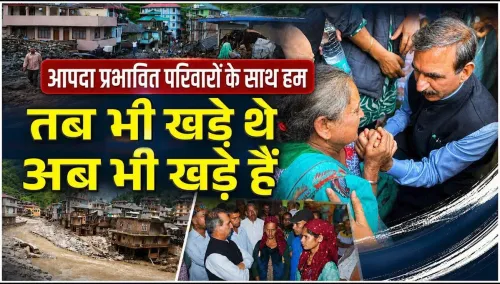
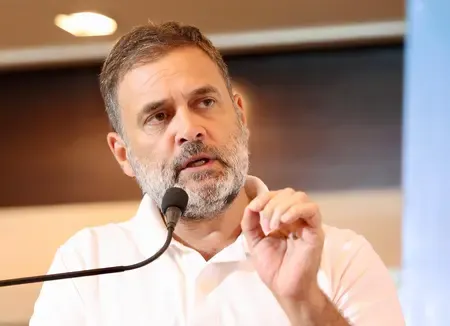
Congress leader Rahul Gandhi, Leader of the Opposition in the Lok Sabha, on Tuesday, 7 July 2026, expressed deep condolences over the deaths caused by heavy monsoon rains across several states, with Maharashtra and Himachal Pradesh bearing the brunt of the devastation.
Posting in Hindi on X, Gandhi described the news as 'atyanth dukhadh' (deeply saddening) and said: 'The news of massive destruction and the deaths of many people due to torrential rains in several states, especially Maharashtra and Himachal Pradesh, is extremely distressing. I express my deepest condolences to all the families who have lost their loved ones in this tragedy and hope for the speedy recovery of the injured.'
Context
The southwest monsoon, which typically intensifies across India between June and September, brings recurring cycles of flooding, cloudbursts and landslides to states along the Western Ghats and the Himalayan foothills. Maharashtra's coastal districts and ghat regions, along with Himachal Pradesh's mountain valleys, are historically among the most vulnerable zones during this period.
Gandhi's post did not cite specific casualty figures, and independently verified numbers for the July 2026 rain events were not available at the time of publication. His statement reflects the broader pattern of political leaders issuing public condolences as monsoon-related fatalities are reported across multiple states.
Policy Backdrop
Disaster response in India is governed by the Disaster Management Act, 2005, which established the National Disaster Management Authority (NDMA) to coordinate relief and rehabilitation efforts. Deployments of the National Disaster Response Force (NDRF) are a standard first-response measure during severe flood events.
Opposition leaders have historically used monsoon tragedies to highlight structural gaps — including delays in early-warning systems, uneven relief distribution, and the slow pace of building climate-resilient infrastructure in flood-prone districts. Gandhi's statement stops short of making any such policy demand, focusing instead on solidarity with affected families.
Stakeholders and Impact
The immediate stakeholders are flood-affected families and residents of rain-hit districts across Maharashtra and Himachal Pradesh. Both states have large rural populations whose livelihoods — agriculture, horticulture and tourism — are acutely exposed to monsoon disruptions.
State governments in both states, along with central agencies, are expected to announce ex-gratia payments for the kin of those killed and mobilise relief teams for affected communities. Parliamentary questions on monsoon preparedness and NDRF deployment timelines are also anticipated when the legislature is in session.
What's Next
Attention will now turn to formal relief packages from the Maharashtra and Himachal Pradesh state governments, as well as any central government announcement on additional NDRF battalions or funds from the State Disaster Response Fund (SDRF). As the monsoon season progresses, pressure on both state administrations and the Centre to demonstrate swift, adequate relief will intensify — and the political discourse around climate-resilient infrastructure investment is likely to sharpen in the weeks ahead.
Point of View
At this stage, escalating to a policy critique of the ruling dispensations. Historically, opposition leaders use the initial condolence window to build public empathy before pivoting to accountability questions around relief adequacy and infrastructure gaps. Whether Gandhi follows this post with harder-edged demands on NDRF deployment timelines or ex-gratia adequacy will be the real indicator of the party's monsoon-season political strategy.
NationPress
7 Jul 2026
Frequently Asked Questions
Why did Rahul Gandhi post about Maharashtra and Himachal Pradesh rains?
Rahul Gandhi posted on 7 July 2026 to express condolences over deaths caused by heavy monsoon rains in Maharashtra and Himachal Pradesh, two states that face severe flooding and landslides every monsoon season.
What did Rahul Gandhi say about the rain deaths?
Gandhi described the destruction and deaths as 'extremely distressing,' conveyed deep condolences to families who lost loved ones, and expressed hope for the speedy recovery of the injured.
Which states were affected by heavy rains in July 2026 according to Rahul Gandhi's post?
According to Gandhi's post, several states were affected, with Maharashtra and Himachal Pradesh specifically mentioned as facing heavy devastation.
What is India's official disaster response mechanism for floods?
India's disaster response is coordinated by the National Disaster Management Authority (NDMA), set up under the Disaster Management Act, 2005, with the National Disaster Response Force (NDRF) deployed for on-ground relief operations.
What usually happens after political leaders issue monsoon condolence statements in India?
Condolence statements are typically followed by state government announcements on ex-gratia payments to kin of the deceased, NDRF deployments, and, in some cases, parliamentary questions on monsoon preparedness and relief distribution.