Rahul Gandhi Raises Student's Despair in Prayagraj Visit
Synopsis
Congress leader Rahul Gandhi shared a Prayagraj student's despair — years of preparation, family land sold, parents in debt, and nothing to show — calling it a systemic failure, not the student's personal defeat.
Key Takeaways
Rahul Gandhi met a student in Prayagraj on August 8, 2026 , who said he had 'no road left' after years of competitive exam preparation.
The student's family had sold land and taken on debt to fund his preparation — a common sacrifice among aspirants in UP's coaching hubs.
Gandhi explicitly framed the outcome as 'the defeat of the system,' not the individual, shifting moral responsibility to public recruitment machinery.
The post references a thirteen-day timeline, suggesting a specific unresolved administrative or result-related grievance.
Prayagraj is one of India's largest concentrations of government-job aspirants, making it a symbolically loaded location for this encounter.
The post continues Gandhi's strategy of using individual stories to humanise the youth unemployment debate ahead of parliamentary sessions.
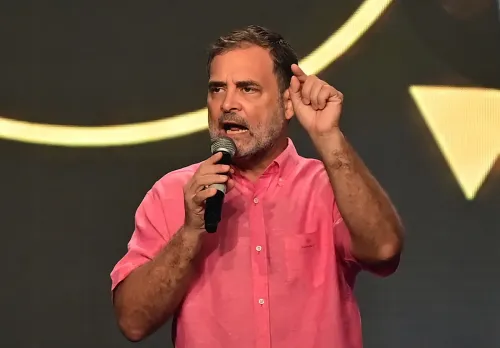
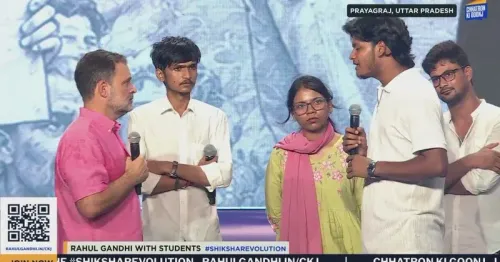
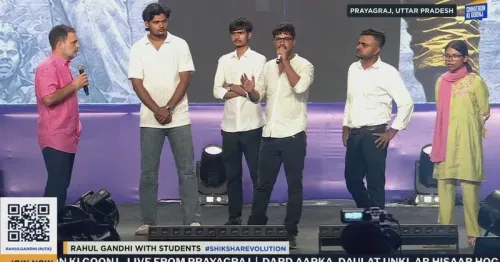
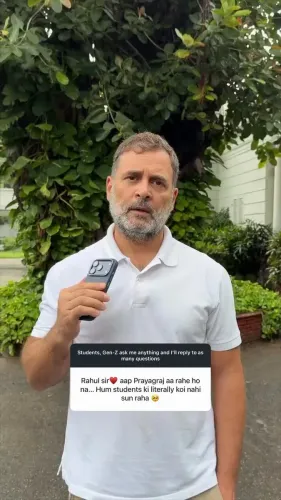
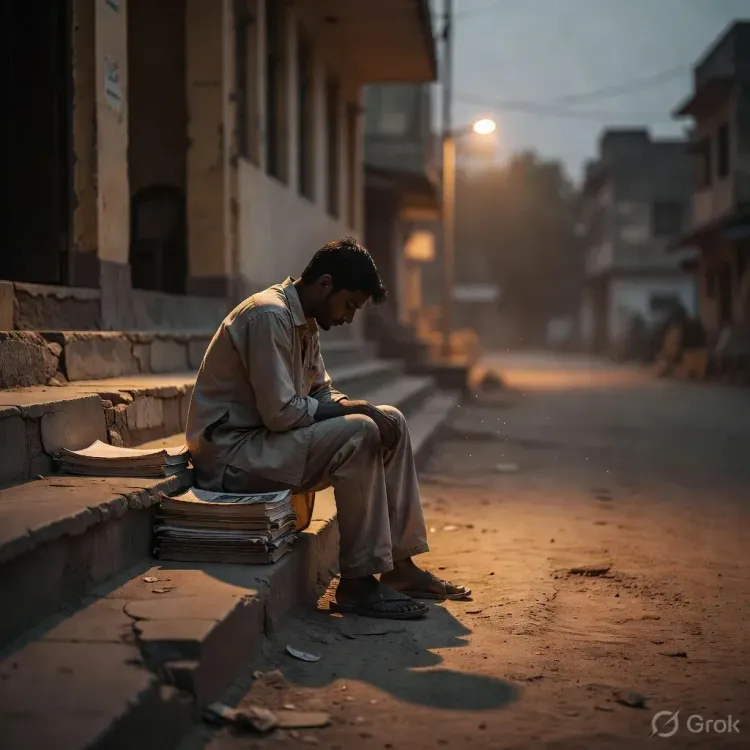
A young man's words — 'ab mere paas koi raasta nahi bacha' ('I have no road left') — stopped Congress leader Rahul Gandhi cold during a visit to Prayagraj on Saturday, August 8, 2026. Years of preparation, family land sold, parents buried in debt — and still nothing to show for it. Gandhi shared the encounter the following morning, and the weight of that single conversation became the sharpest indictment he could level at the system.
One student's story, a city full of them
Prayagraj is not an accidental backdrop. The city in Uttar Pradesh is one of India's most concentrated hubs for competitive exam coaching — its lanes thick with aspirants from small towns and villages who arrive carrying their families' entire financial and emotional stake. The student Gandhi describes is not an outlier; he is a composite portrait of millions. Land liquidated, loans taken, years surrendered to a government job vacancy that never materialised.
Gandhi was direct in his framing: 'Yeh haar uski nahi hai. Yeh us vyavastha ki haar hai' — 'This is not his defeat. This is the defeat of the system that refused to reward his labour.' The line is a deliberate rhetorical move, shifting moral culpability from the individual to the machinery of public recruitment.
Thirteen days and counting
The post cuts off mid-sentence — 'Terah din ho gaye — griha...' ('Thirteen days have passed — home...') — the truncation itself reading like an unfinished grievance. Gandhi appears to be tracking a specific timeline, though the precise exam result or administrative deadline he references remains unspecified in the post. The incompleteness adds urgency rather than diminishing it.
What is clear is the broader pattern Gandhi is stitching together: a recurring opposition argument that India's public recruitment pipeline — slow, opaque, and vastly undersupplied relative to demand — is failing an entire generation of aspirants who did everything right and still lost.
Youth unemployment as political ground
As Leader of the Opposition in Lok Sabha, Gandhi has consistently used individual stories — rather than aggregate statistics — to make the employment debate visceral and human. The strategy is deliberate: a number like '8 crore unemployed youth' can be disputed; a young man who sold his family's land cannot be argued away.
Parliamentary sessions ahead are expected to see the opposition press the government on employment data and the status of recruitment schemes. This post plants the narrative stake early — a face, a voice, a city, a debt — before the chamber debates begin.
The student in Prayagraj said he had no road left. Gandhi's job now is to make sure the country hears which road was closed — and who locked the gate.
Point of View
Named-but-unnamed student over aggregate unemployment statistics, he makes the crisis harder to deflect with data. The Prayagraj setting is not incidental — it signals that the government's recruitment pipeline is failing even the most committed aspirants in one of UP's highest-density coaching corridors. The truncated '13 days' reference suggests a live, unresolved case Gandhi intends to return to, converting a social media post into the opening chapter of a parliamentary pressure campaign. The broader arc is clear: the opposition is moving from macro employment critiques to micro, verifiable human stories as the more durable political weapon.
NationPress
9 Aug 2026
Frequently Asked Questions
What did Rahul Gandhi say about the Prayagraj student?
Gandhi recounted meeting a student in Prayagraj who told him 'I have no road left' — the student had spent years preparing for competitive exams, his family had sold their land and taken on debt, yet he had nothing to show for it. Gandhi called it a failure of the system, not the student.
Why is Prayagraj significant for competitive exam aspirants?
Prayagraj in Uttar Pradesh is one of India's largest hubs for government-job coaching, drawing aspirants from across the state and beyond who invest years and significant family money preparing for limited public sector vacancies.
What is Rahul Gandhi's current political position?
Rahul Gandhi is the Leader of the Opposition in the Lok Sabha and a Member of Parliament from Rae Bareli, representing the Indian National Congress.
What does the '13 days' reference in Rahul Gandhi's post mean?
Gandhi's post references a thirteen-day timeline but the text is truncated. The specific exam result, administrative deadline, or event he is tracking is not detailed in the post and remains unspecified.
How does Rahul Gandhi typically raise the youth unemployment issue?
Gandhi consistently uses individual human stories — rather than statistics — to highlight youth unemployment, framing systemic failures through personal accounts of aspirants who prepared for years but found no opportunity in the public recruitment pipeline.